
Nigeria-Morocco Gas Pipeline Nears Final Investment Decision for $25 Billion Energy Project
The Nigeria-Morocco Gas Pipeline (NMGP), a massive infrastructure undertaking valued at approximately $25 billion, is moving toward a critical milestone as it approaches the Final Investment Decision (FID). This strategic project, designed to bridge West African energy reserves with European markets, represents a significant shift in regional energy logistics and economic integration.
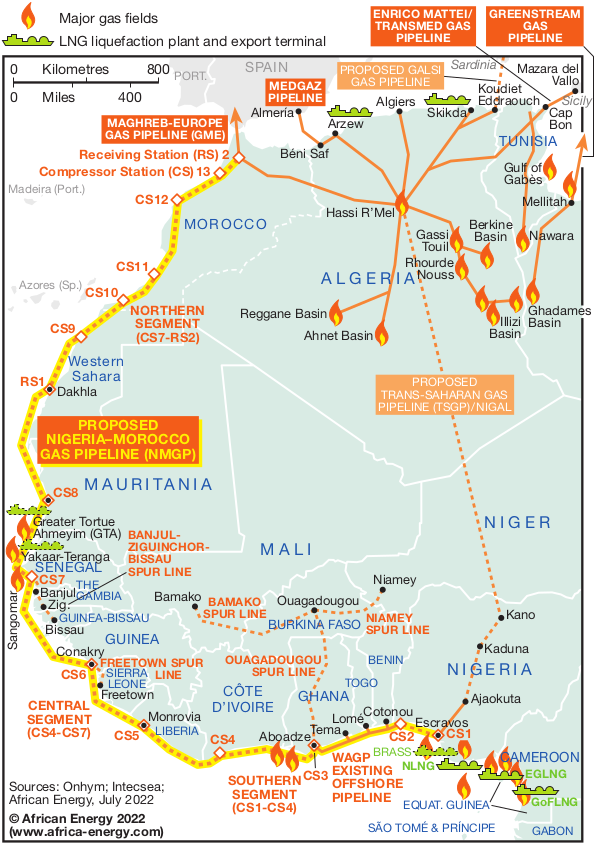
Spanning approximately 6,000 kilometers, the pipeline is engineered to transport natural gas from Nigeria across the West African coast to Morocco. From there, the system will connect to the Maghreb-Europe Gas Pipeline (GME) network, facilitating exports to Europe. This decision highlights the growing importance of African energy corridors in diversifying global gas supplies.
The project has garnered unprecedented regional cooperation, with 13 African nations now officially committed to the initiative. These include Nigeria, Benin, Togo, Ghana, Côte d’Ivoire, Liberia, Sierra Leone, Guinea, Guinea-Bissau, the Gambia, Senegal, Mauritania, and Morocco. According to recent reports, the project is now in a preparatory phase, with technical and institutional frameworks being finalized to pave the way for construction.
Institutional momentum has been driven by high-level coordination between the Moroccan National Office of Hydrocarbons and Mines (ONHYM) and the Nigerian National Petroleum Corporation (NNPC). Amina Benkhadra, Director General of ONHYM, and Mele Kyari, CEO of the NNPC, have been central to the project’s advancement. The project is expected to receive official validation during an upcoming ECOWAS (Economic Community of West African States) summit, further cementing the intergovernmental support necessary for a project of this scale.
Beyond its role as an export conduit for Europe, the intergovernmental agreement for this $25 billion project is positioned as a catalyst for sustainable economic development across the participating nations. The pipeline is expected to drive local job creation, expand electrification, and enhance energy security throughout West Africa.
To ensure a seamless integration with the international pipeline, Morocco has proactively moved to upgrade its own domestic capabilities. The Moroccan government recently issued a Call for Expressions of Interest (AMI) targeting both national and international operators to expand and reinforce the country’s national gas infrastructure. This move underscores the strategic necessity of aligning domestic grids with the incoming regional flow.
The transition toward the FID, which was anticipated as early as the second half of 2024, underscores investors’ focus on long-term energy stability in the region. As the project moves from the technical planning stage to active construction, it remains one of the most mature and widely supported regional energy initiatives in Africa.
