
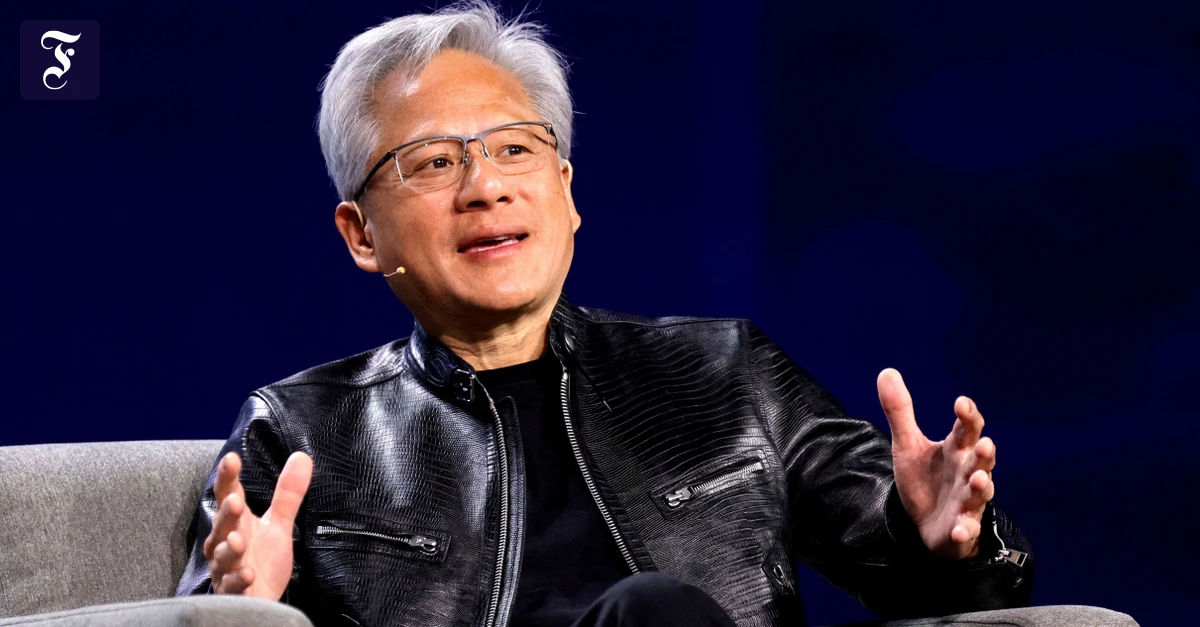
Nvidia shares rose nearly three percent in after-hours trading. Currently valued at approximately $4.8 trillion, Nvidia is by far the world’s most valuable company. The company has also outperformed other technology stocks since the beginning of the year, even amidst a challenging market environment.
Nvidia reported a 73 percent increase in revenue to $68.1 billion for the reported quarter. Analysts had, on average, predicted $66.2 billion. Growth was 62 percent in the prior quarter. Net income surged 94 percent to $43.0 billion, resulting in a profit margin exceeding 63 percent. This strong financial performance underscores Nvidia’s dominance in the rapidly expanding AI market.
Investments Continue Despite AI Bubble Concerns
Nvidia remains optimistic for the next quarter, forecasting revenue of $78.0 billion, which would represent a 77 percent increase.
The company is benefiting significantly from the current investment boom surrounding artificial intelligence, holding a dominant position in the AI chip market. Despite growing concerns about a potential AI bubble, demand for Nvidia’s products remains strong. The continued investment signals confidence in the long-term potential of AI technologies.
Several of the largest U.S. Technology companies have announced massive increases in their investments this year. Amazon, for example, has announced investments of $200 billion, up from $131 billion last year. Alphabet, Google’s parent company, plans to increase its investments from $91 billion to as much as $185 billion.
A remaining uncertainty for Nvidia is the Chinese market. The company faces export restrictions there, with the situation changing frequently. In December, Nvidia achieved a win when U.S. President Donald Trump allowed the company to sell its H200 chip series in China. While not part of the latest Blackwell series, these chips remain among the most powerful offered by the company. The approval came with the unusual condition that Nvidia would remit 25 percent of its H200 chip sales in China to the U.S. Government as a type of export tariff.
Whether this will lead to a revival of business in China remains to be seen. The Chinese government requested last year that the company purchase chips from domestic suppliers. Nvidia stated This proves still unclear whether imports of H200 chips into China will be permitted. Chief Financial Officer Colette Kress said that no revenue from China was included in the outlook for the next quarter.
Customers Like Meta and Google Aim to Reduce Nvidia Dependence
While Nvidia’s competitors are currently far behind, they are making progress. Among the traditional semiconductor specialists, Advanced Micro Services (AMD) is currently the most significant challenger. This week, AMD announced a larger partnership with internet company Meta, estimated to be worth more than $100 billion. Meta, the parent company of Facebook and Instagram, plans to purchase chips from AMD that will provide an additional computing capacity of six gigawatts. The agreement includes a provision for Meta to acquire up to a ten percent stake in AMD. Meta CEO Mark Zuckerberg called the partnership an critical step to “diversify” its supply chain. AMD recently closed a similar alliance with OpenAI, the developer of the ChatGPT AI program.
Meta is not relying solely on AMD and recently formed another alliance with Nvidia. OpenAI also announced a far-reaching partnership with Nvidia last year, though it has not yet been finalized, and the Wall Street Journal recently reported that negotiations have stalled. Huang stated in a conference call that he believes the two sides are close to an agreement.
Beyond AMD, Nvidia also faces competition from other sources. Some of its key customers, including Google, Amazon, and Microsoft, are also developing their own AI chips. Their goal is not only to reduce their previous dependence on Nvidia by using these chips in their own data centers. Google, in particular, is reportedly trying to sell its chips to other companies. Analyst Jacob Bourne of market research firm Emarketer said: “The competitive landscape is changing.”
The last quarter of Nvidia’s 2025/2026 fiscal year ended January 25. For the full year, the company reported a revenue increase of 65 percent to $215.9 billion. Net income increased by 65 percent to $120.0 billion dollars.
