
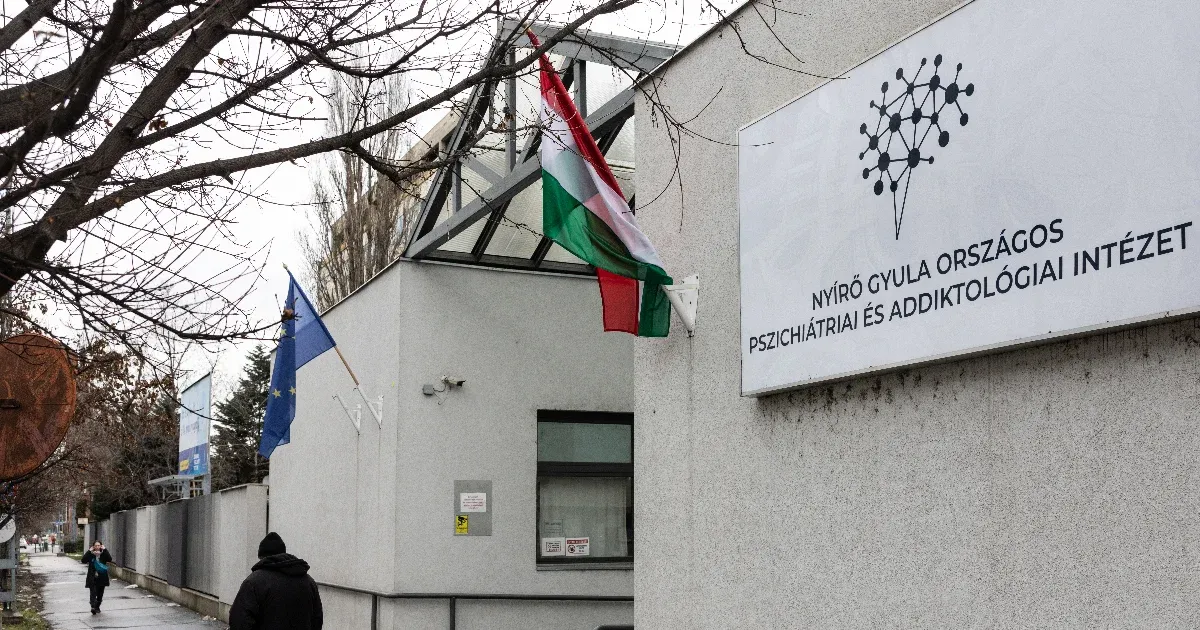
Budapest’s largest psychiatric hospital is facing a potential collapse in services as dozens of doctors have tendered their resignations in protest of the hospital’s leadership. The crisis at the Nyírő Gyula National Psychiatric and Addiction Hospital highlights growing concerns about the state of mental healthcare in Hungary.
As of March 2, 27 doctors at the Nyírő OPAI have submitted letters of resignation, but will only be released from their positions on March 6 unless Ézsi Robin, the hospital’s director, resigns beforehand. Robin, who previously led a magic academy, has been at the center of discontent since his appointment in 2024, with critics pointing to his lack of psychiatric expertise.
The situation escalated after the National Hospital Directorate (OKFŐ) established an investigative committee on February 24 to assess the state of psychiatric care at the Nyírő OPAI and in Budapest. However, the OKFŐ has stated it will only take action regarding Robin’s position after the committee completes its investigation, the timing of which remains unclear.
The growing unrest began in January, when 40 doctors at the Nyírő OPAI signed a petition calling for the closure of two hospital wards and citing unsustainable workloads, inadequate conditions, and a tense work environment. The petition explicitly blamed the hospital’s leadership for the exodus of more than a dozen specialists and numerous other healthcare workers over the past two years.
In February, professional organizations and psychiatrists rallied in support of their colleagues. Doctors in Budapest announced they would no longer take on extra shifts beyond what is legally required if the OKFŐ and the government do not meet their demands: Robin’s removal, ensuring adequate specialist coverage for emergency psychiatric care, and a restructuring of the Budapest psychiatric care system. More than 500 Hungarian psychiatrists voiced their support for these goals.
The Hungarian Medical Chamber (MOK) stated that, despite this widespread support, the OKFŐ and the government have “instead tried to get psychiatrists to abandon the above professional demands.” The chamber accused the OKFŐ of attempting to “force its will” by transferring doctors from understaffed departments to the Nyírő OPAI and imposing a hiring freeze on several psychiatric units. “Our colleagues should not be defeated, but given space for professional arguments,” the chamber said in a Facebook post.
The OKFŐ responded to inquiries about the chamber’s claims by reiterating its previous statement regarding the ongoing investigation into the resignations.
