
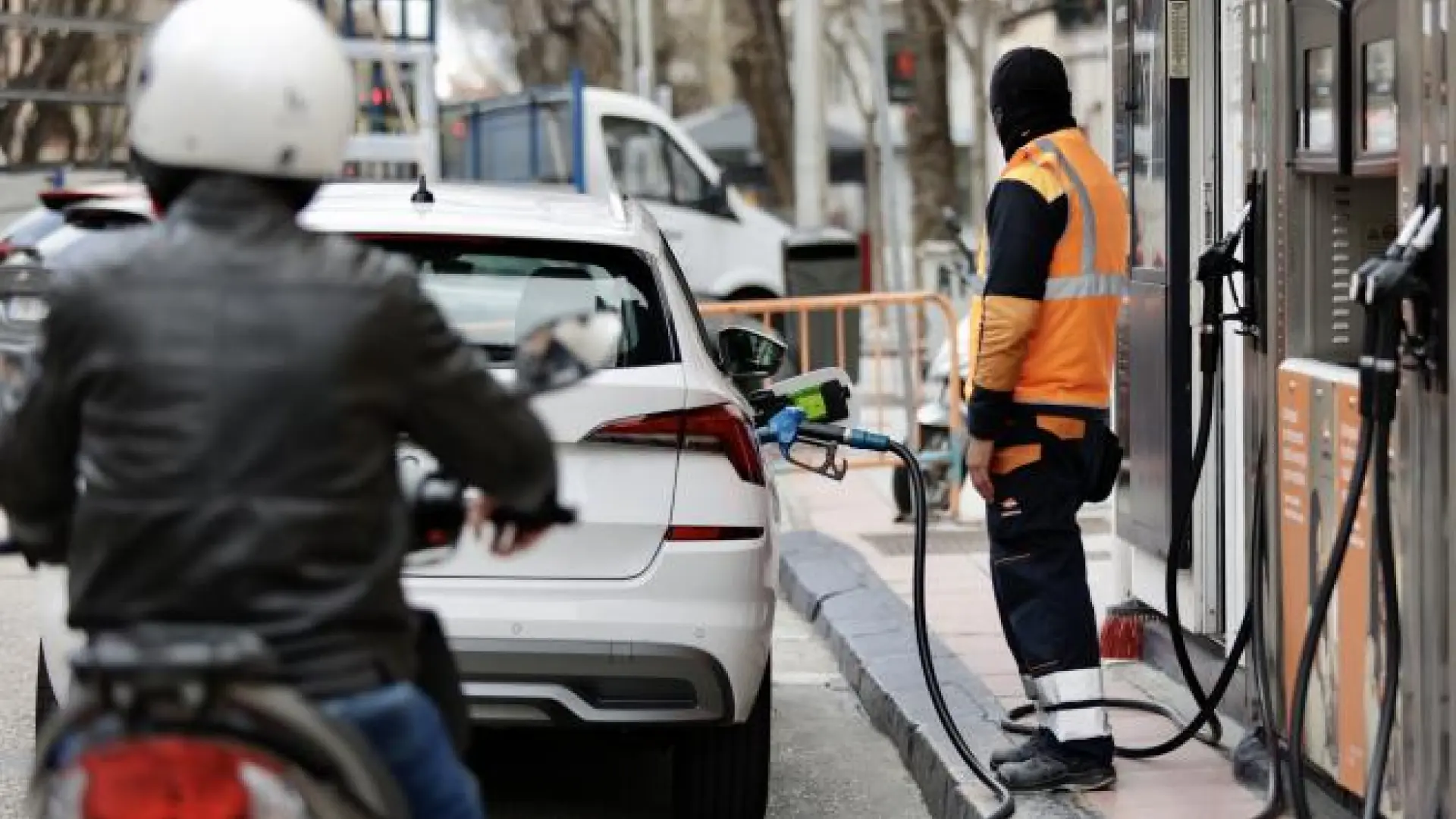
Crude oil prices surged past $100 a barrel this week, fueled by the escalating conflict between the U.S., Israel, and Iran – a level not seen since Russia’s invasion of Ukraine in 2022. The spike in oil prices is already impacting fuel costs for consumers, with significant increases at the pump.
Data from the Spanish Confederation of Service Station Entrepreneurs (CEEES) indicates a substantial rise in fuel prices between March 2 and March 9. Diesel prices jumped 9.21%, while gasoline prices soared 18.98% during the same period. This rapid increase has prompted questions about how fuel prices are determined and why oil price fluctuations are so quickly reflected at gas stations.
“The prices of fuels we buy at gas stations are normally set by cost of replacement, meaning how much it will cost the company managing the gas station network to replenish the fuel they are selling,” explains Roberto Gómez-Calvet, Professor of Business at the European University of Valencia and an expert in energy policies. “Normally, market fluctuations are little, but in recent days, with crude oil prices rising steadily, the effect is being translated instantly at the pump.”
Gómez-Calvet likewise noted that price decreases are typically slower to materialize, as companies need to sell through existing inventory purchased at higher prices. “The decrease in prices is slower because there is caution in lowering prices until there is certainty that the cost of replenishment will not exceed the market price,” he said.
The Spanish Association of the Fuel Industry points out that fuel prices aren’t solely dependent on crude oil prices, but also influenced by the behavior of refined raw materials and international wholesale gasoline and diesel prices, particularly in European markets. Distribution and transportation costs, along with taxes – representing between 45% and 50% of the final cost – contribute to the price consumers pay.
A common misconception is that gas stations hold significant fuel reserves purchased at lower prices. Nacho Rabadán, Director General of CEEES, clarifies that “stations do not have a large storage capacity.” He explains that many stations purchase fuel daily, twice weekly, or weekly, leading to the perception that they are speculating on prices when, in reality, their inventory turns over quickly.
In Spain, gas stations fall into two categories: those owned by major companies and independent stations, which comprise 70% of the market and are divided into branded and unbranded stations. Branded stations operate under contract with a major oil company, with a pricing formula tied to international product quotations. “If I am a branded gas station and order product today, my purchase price will be determined by the international product quotation at that moment,” Rabadán stated.
Unbranded stations, which “can buy from anyone,” also see their suppliers link prices to international quotations, “regardless of when they purchased the product.”
Economists often refer to the “rocket and feather” effect to explain the asymmetrical transmission of oil price changes to consumers. According to economist Juan Luis Jiménez, “In times of uncertainty in oil markets, like the current situation due to the Middle East war, the rocket and feather models explain a behavior of retail (and wholesale) companies that negatively affects consumers.”
“The idea is simple: in the event of rising raw material costs, the retail price rises immediately, even if the oil being sold today was purchased months ago. But when that same cost falls, the retail price takes much longer to update and fall,” Jiménez said. “Ultimately: the lack of competition between gas stations, and throughout the supply chain, leads to us paying more for gasoline and diesel, especially at this time, exacerbating risks of inflation in the country.”
