
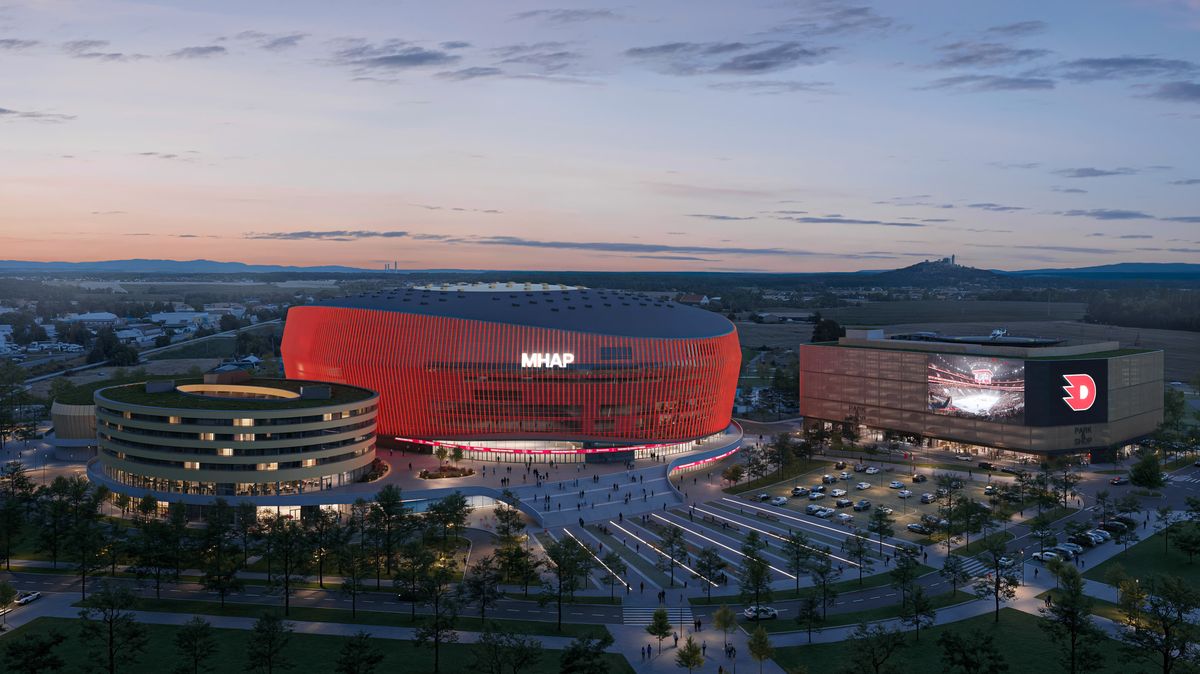
A developer is aiming to begin construction on a multi-purpose sports complex this summer, with completion targeted for fall 2029. The project, spearheaded by an entrepreneur, will involve the full remediation of a registered landfill, funded by the company at a cost of 1.5 billion Czech crowns.
The city of Pardubice is currently reviewing a request for a 30 million Czech crown subsidy over twenty years to support the operation of an ice rink component of the complex. The developer proposed that the city would receive financial benefits through increased tourism and job creation. However, city officials have expressed concerns that the requested amount is too high.
“Mr. Dědek is a tough negotiator,” Pardubice Mayor Jan Nadrchal stated.
The developer argued that city support for the complex would eliminate the need for municipal investment in projects like parking garages or additional ice rinks, citing a successful model used elsewhere. He emphasized the need for both parties to share this vision, acknowledging that an agreement has not yet been reached. However, he stated that the project’s viability does not hinge on the city’s financial contribution.
Pardubice city representatives are scheduled to discuss a planning agreement between the developer and the city at a meeting in March.
The project includes plans to develop surrounding infrastructure, with portions eventually being transferred to the city. The agreement also addresses transportation connections and land swaps. Further discussion will involve expansion plans in the Hůrka district and future operational collaboration.
Near the former barracks in Hůrka, the developer is considering building a speed skating arena, referred to as the Winter Sports Complex. However, the land in question, adjacent to Highway I/36, is currently owned by the city.
“It is realistic to open the Winter Sports Complex as well, but it requires cooperation from the municipality. I am prepared to co-invest and build a beautiful hall,” the developer said.
Following two Olympic medals won by young speed skater Metoděj Jílek, the possibility of building the hall is seen as more realistic, provided additional partners join the effort.
“Martina Sáblíková has collected medals, and having an ambassador is particularly important, especially for young children. Now, Metoděj Jílek is the driving force behind this sport,” the developer said, adding that the investment in a speed skating or curling hall would cost one billion Czech crowns.
“It’s not a dramatic amount. In Inzell, Germany, it’s crowded, and athletes from Poland could come; the potential is great,” the developer added.
