
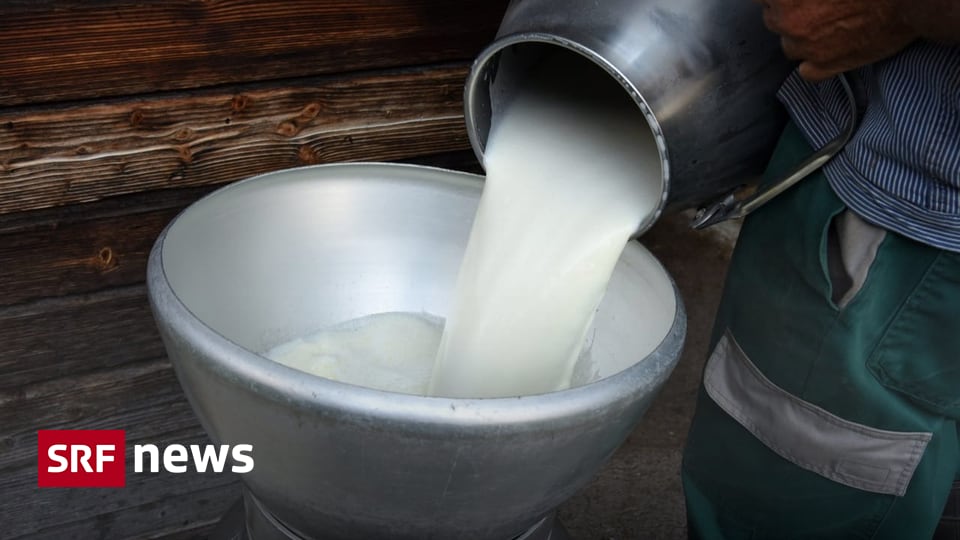
- The Canton of Appenzell Ausserrhoden conducted voluntary PFAS testing between October 2025 and March 2026.
- Results show that approximately one-third of the farms tested had elevated PFAS levels in their milk.
- If the EU’s maximum levels are adopted in Switzerland, the affected farms could face an existential threat.
Testing revealed elevated levels of PFAS, often called “forever chemicals,” in milk from farms in the Appenzell Ausserrhoden canton, raising concerns about potential impacts to the local agricultural industry. The findings approach as European regulators prepare to implement stricter limits on these chemicals in food products.
The investigations in Appenzell Ausserrhoden were prompted, in part, by the so-called “Amcor case” in the neighboring canton of St. Gallen. There, PFAS-containing substances from firefighting foam on the site of a packaging company entered the environment. Increased contamination was subsequently detected in the northeast, including near the border with Appenzell Ausserrhoden.
In October, the canton launched an investigation and called on agricultural businesses to voluntarily have their milk and drinking water – water provided to livestock – analyzed. The evaluation was carried out by the intercantonal laboratory in Schaffhausen. The results are now available.
PFAS levels in milk from 58 farms exceeded the current EU guideline of 0.02 micrograms per kilogram. In some cases, the values were only slightly higher, while in others they were significantly exceeded. Milk is a particularly useful indicator, as cows absorb the substances through their feed, allowing conclusions to be drawn about the contamination of an entire farm.
Elevated levels were also found in the drinking water at nine farms without milk production. A total of 169 farms participated.
Contamination Concentrated in Two Regions
The investigation did not reveal a widespread problem. The data clearly shows increased contamination in two regions: in the Vorderland near the St. Gallen border and in the Mittelland around Bühler AR.
Local legacy contamination, such as wastewater from industry flowing into wastewater treatment plants, is identified as a likely cause.
No Milk Standard Yet in Switzerland
The situation is delicate, even though Switzerland currently has no legal maximum level for PFAS in milk. The EU guideline was used for the investigation.
The EU is expected to introduce binding PFAS maximum levels in food by 2027, which will likely also apply to Switzerland.
This could mean that contaminated Swiss milk or other products like cheese, which exceed an EU maximum level, may not be sold or exported in the future.

The 67 affected farms should now clarify the causes of the elevated PFAS levels. The canton is conducting in-depth investigations for this purpose, such as soil samples or checks of spring water. All of this is free of charge for the farms and is being covered by the canton, which is providing more than 700,000 Swiss francs for this purpose.
The canton and the farms are now appealing to the federal government: they need practical solutions – not hasty bans, but enough time for adjustments. Because for some farms in Appenzell, their highly existence is at stake. The goal is to determine now whether a problem exists and use the time to comply with the maximum levels from 2027 as PFAS-free as possible or to adjust the farms accordingly.
Here are links to national studies
