

Polis is an open-source platform designed to aggregate opinions from tens of thousands of people, fostering common ground even amidst disagreement. Since its launch in 2012, the platform has facilitated extensive discussions involving over 10 million participants, and is now becoming a key component of democratic infrastructure in nations like Taiwan, the United Kingdom, and Finland.
Polis
https://pol.is/home2
GitHub – compdemocracy/polis: 🌌 Open Source AI for large scale open ended feedback
https://github.com/compdemocracy/polis
The Computational Democracy Project | The Computational Democracy Project
https://compdemocracy.org/
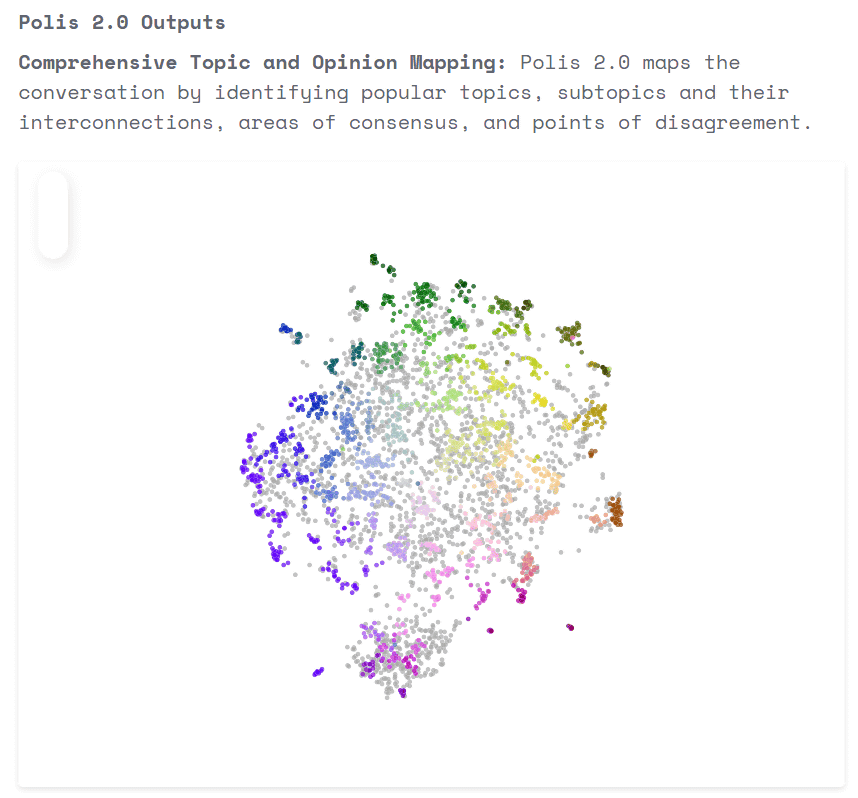
A key innovation of Polis lies in its interface, intentionally omitting the “reply” button often found in online discussions, which can contribute to polarization. The system analyzes participant voting patterns using machine learning and statistical algorithms. When users respond with “agree,” “disagree,” or “pass” to short statements, Polis processes this data as a “voting matrix.” It then utilizes principal component analysis and k-means clustering to visualize opinion distribution and automatically generate groups. By design, the absence of a traditional “reply” function structurally prevents flame wars and harassment, although focusing on identifying “bridging statements” – points of consensus across different groups.
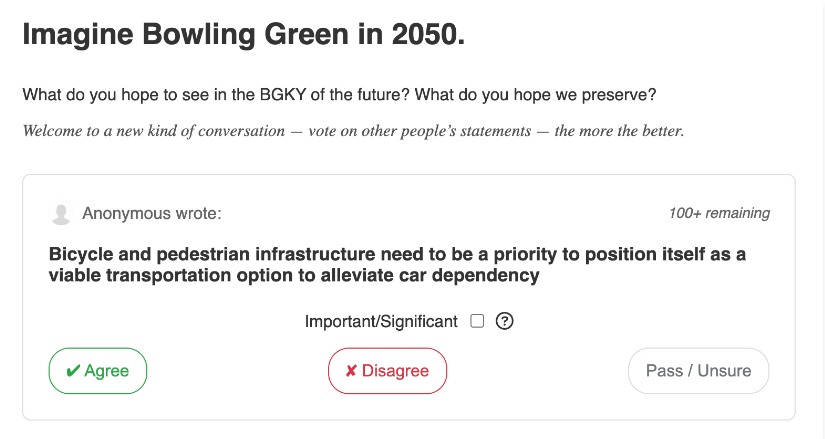
The latest version, Polis 2.0, supports simultaneous participation from millions of users through a distributed cloud infrastructure. It also incorporates real-time summarization and automated translation powered by large language models (LLMs), along with advanced topic analysis capabilities using the EVōC library. The platform’s operation relies on Docker infrastructure, with security features including SSL certificate setup for OpenID Connect (OIDC) authentication simulator and JWT key generation.
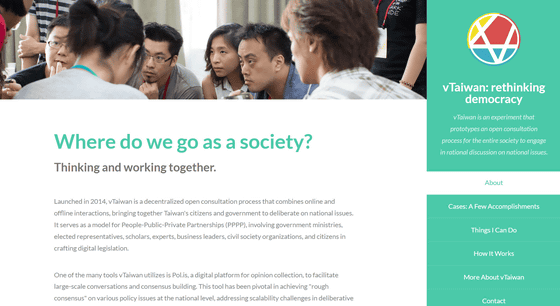
Polis gained prominence in Taiwan following the 2014 Sunflower Student Movement protests.

After the protests, the government sought ways to better incorporate citizen voices. They invited members of the civic hacking group “g0v” to advise the government, and Audrey Tang was appointed Digital Minister at the age of 35. Tang spearheaded the design of “vTaiwan,” a large-scale, citizen-participatory opinion aggregation process, with Polis at its core.
A tangible outcome of vTaiwan’s operate involved discussions surrounding Uber regulations. Despite initial strong disagreements, the platform helped participants identify a shared concern – “passenger safety” – which was supported by 95% of those involved. This consensus paved the way for the development of specific regulatory proposals. In Taiwan, Polis has played a significant role in the drafting of over 12 bills and regulations, including those addressing revenge porn and fintech regulation, becoming deeply embedded as a national-level democratic infrastructure. The Taiwanese experience demonstrates a pioneering model for using technology to build genuine consensus, rather than simply relying on majority rule.
Beyond Taiwan, Polis is being utilized in Finland to design elderly care support and mental health services for children, based on resident feedback. In the United Kingdom, it has been used for consultations on national security and to inform parking policy at the local level. The United Nations Development Programme (UNDP) deployed Polis in the largest online deliberation exercise in history, engaging 30,000 young people in Bhutan, Timor-Leste, and Pakistan. The platform is also being used by governments in Singapore and the Philippines, the Austrian Climate Assembly, and the city of Bowling Green, Kentucky, among other diverse locations, to address complex challenges.
Polis is released under the AGPL-3.0 license and is built using a variety of languages, including JavaScript, Python, TypeScript, and Clojure. The Computational Democracy Project, a U.S.-based non-profit that develops and maintains the platform, aims to design a more equitable and decentralized democracy by leveraging advanced statistics and machine learning, not only to streamline existing power structures.
この記事のタイトルとURLをコピーする
・関連記事
民主主義は数学的に不可能なのか? – GIGAZINE
複数の公正さの基準を常に同時に満たす選挙制度は設計できないとする「アローの不可能性定理」とは? – GIGAZINE
「多数決」以上に民意を反映できる選挙方法とはどのようなものなのか? – GIGAZINE
たった1人の候補者ではなく最大5名までを「順位付け」して投票する新投票方式がスタート、何が狙いなのか? – GIGAZINE
インターネット投票は安全ではないため、公の選挙では使用すべきでない – GIGAZINE
大規模な選挙が国民の睡眠に悪影響を及ぼす可能性があるとの調査結果 – GIGAZINE
「全部プーチンの投票箱」「投票者数を勝手に水増し」などロシアの不正選挙の実態を選挙管理人が解説 – GIGAZINE
