
Maternal Vitamin D Levels During Pregnancy Crucial for Child’s Immune Health and Allergy Prevention
Research from the Korea National Institute of Health indicates that Vitamin D levels during pregnancy play a pivotal role in determining a child’s immune system strength and susceptibility to allergies as they grow. According to the Korea Disease Control and Prevention Agency, children born with insufficient Vitamin D levels may experience a significant decrease in immune function and Vitamin D metabolism, both of which are critical for healthy childhood development.

Vitamin D is well-known for its essential role in bone formation and growth, but it is equally vital for maintaining a balanced immune response. The study suggests that a deficiency at birth increases the likelihood of infants becoming sensitive to multiple allergic antigens simultaneously during early childhood, potentially destabilizing their long-term immune balance.
The findings, which were published online in the international academic journal Allergy on January 19, were the result of a long-term cohort study known as COCOA. Led by Professor Hong Su-jong of the National Medical Center and Research Professor Oh Hye-young of Ulsan University College of Medicine, researchers tracked 322 children from birth through childhood.
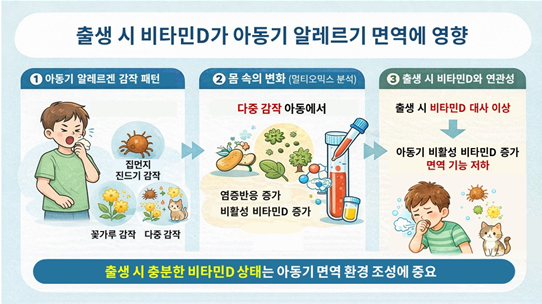
Through this observation, researchers categorized pediatric allergic reactions into three primary types: house dust mite-type, pollen-type, and multi-sensitization. The latter refers to a state where a child is hypersensitive to several different allergic triggers at once.
To delve deeper into the biological mechanisms, the research team utilized multi-omics technology—which analyzes proteins and metabolites simultaneously—to examine the blood of 57 children aged seven. The analysis revealed that children with multi-sensitization exhibited higher levels of immune response substances related to allergies and proteins associated with oxidative stress, which can cause cellular damage, compared to other groups.
A key discovery involved the presence of inactive Vitamin D. Whereas Vitamin D obtained from sunlight or food must be converted into an active form by the liver and kidneys to regulate immunity and bone growth, the study found that multi-sensitized children had higher levels of the inactive form. As the levels of inactive Vitamin D increased, markers for immune inflammation also rose.
The data specifically highlighted a connection between prenatal health and childhood outcomes: children with lower Vitamin D concentrations in their cord blood at birth tended to accumulate more inactive Vitamin D as they aged. This underscores how early nutritional status can create a lasting impact on a child’s biological resilience.
These findings suggest that maintaining optimal Vitamin D levels during pregnancy is a critical factor in safeguarding a child’s future respiratory and immune health, potentially reducing the risk of complex allergic conditions in later childhood.
For more information on pediatric health and nutrition, readers can explore related reports on allergy risks, immune deficiency, and the impact of prenatal Vitamin D.
