
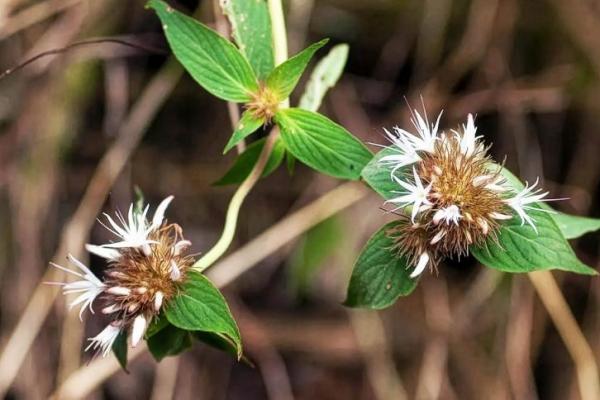
A newly discovered plant in West Africa is challenging established understandings of plant genetics and evolution. Virectaria stellata, found growing on sandstone cliffs in Guinea, exhibits unique star-shaped hairs-a trait previously undocumented within its botanical family, the Rubiaceae. Researchers are investigating whether this unusual characteristic arose from random mutation or, more intriguingly, through horizontal gene transfer from a related species.
Mutiul Alim | Monday, January 19, 2026 07:33 WIB
Stellata, a plant native to Guinea (Photo: Earth)
A small plant discovered growing on sandstone cliffs in West Africa is puzzling scientists with its unusual genetic characteristics. The plant, known as Virectaria stellata, displays star-shaped hairs—a trait never before documented within the Rubiaceae botanical family. This discovery challenges conventional understanding of plant evolution, adaptation, and genetic inheritance.
The unique plant was found at three locations along sandstone cliffs in Guinea, West Africa, during botanical conservation surveys conducted in 2019. While seemingly unassuming, microscopic examination revealed extraordinary detail in the structure of its surface hairs. These hairs branch out from a single central point, forming a star-like shape, referred to as stellate hairs.
The research was led by Faya Julien Simbiano from Université Gamal Abdel Nasser de Conakry, with support from scientists at the Royal Botanic Gardens, Kew, according to Earth on Monday, January 19.
Researchers initially identified the plant as a new species within the Virectaria genus, as its flowers and fruits aligned with the genus’ characteristics, though not with any previously known species. Specimens were collected from the Forécariah and Kindia regions, with the first samples taken on November 1, 2019. Mapping the locations revealed a highly restricted range, a common pattern for species dependent on rare and isolated cliff habitats.
What makes Virectaria stellata truly remarkable is the presence of these stellate hairs. These structures typically function to reduce evaporation, protect leaf surfaces from excessive heat, and deter insects. However, this type of branching hair has never been reported before within the Rubiaceae family.
“The stellate hairs were first recorded in the Rubiaceae family with this species,” Simbiano explained, immediately raising questions about how this unusual trait could have emerged. Is it simply the result of random mutation, or is there a more complex mechanism at play?
Interestingly, similar stellate hairs are commonly found in the Acanthaceae plant family, particularly in the genus Barleria, which also grows in the Guinea region. The striking microstructural similarity between the hairs of Barleria and Virectaria stellata is too significant to ignore.
The researchers then considered the possibility of horizontal gene transfer—the transfer of genetic material between species without sexual reproduction. This mechanism is known to occur in bacteria and some plants, though it is rarely reported in non-parasitic plants like Virectaria. Understanding how genes move between species is crucial for understanding the evolution of plant traits.
In the plant world, bacteria can insert DNA into plant cells, and if that DNA reaches reproductive tissues, the trait can be inherited. Cultivated sweet potatoes, for example, are known to carry bacterial DNA in their genomes, proving that this process can occur naturally.
Horizontal gene transfer is more easily explained in parasitic plants due to the direct connection between the host and parasite tissues. However, Virectaria stellata is not a parasite, so the potential pathway for gene transfer remains a mystery that requires further investigation.
Another possibility is that DNA transfer occurred through organelles like mitochondria, as found in the species Amborella trichopoda. However, since hair shape is controlled by core genes, not organelle genes, this mechanism isn’t sufficient to fully explain the origin of the stellate hairs.
Previous research on the model plant Arabidopsis thaliana has shown that the formation of branched hairs involves many genes working together. This suggests that the emergence of stellate hairs is unlikely to be caused by a single gene change, but rather a complex combination of genetic alterations.
The situation became even more intriguing when researchers discovered a specimen resembling Virectaria stellata at another location approximately 60 miles from the main site, but lacking the stellate hairs. This specimen possessed transparent spiral hairs, potentially representing an ancestral form or even a closely related, distinct species.
To confirm whether horizontal gene transfer has occurred, scientists are planning a comprehensive genome analysis. By comparing the DNA sequence of Virectaria stellata with that of its close relatives and Barleria species, they can construct a phylogenetic tree to more accurately trace the origin of the genes.
This process is not straightforward, as researchers must rule out laboratory contamination and ensure that genetic similarities are not simply the result of parallel evolution. Only with strong evidence from multiple genes can the claim of gene transfer be scientifically accepted.
In the wild, Virectaria stellata lives in crevices of vertical sandstone rocks at elevations between 1,300 and 3,000 feet. Its roots penetrate the rock crevices to capture brief runoff water, while the stellate hairs help retain moisture in the harsh environment.
The plant’s distribution range is estimated to be only about 46 square miles. While currently categorized as low risk, climate change, mining activities, and seasonal fires remain potential threats to its survival.
Overall, Virectaria stellata offers a new perspective on the flexibility of plant evolution. If the hypothesis of gene transfer is proven, this case will become one of the rare examples of how non-parasitic plants can acquire new traits from other species.
KEYWORD :
plant gene transfer Virectaria stellata cross-species gene transfer
