
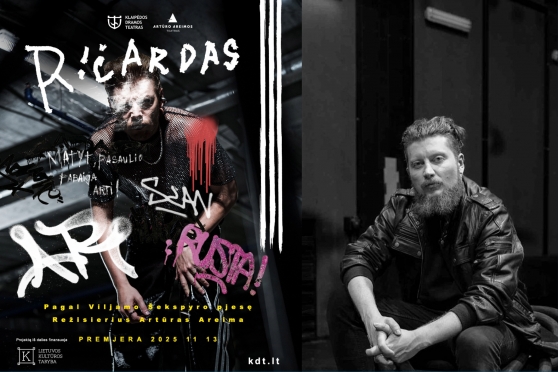
A planned production of Shakespeare’s *Richard III* at the Klaipėda Drama theater in Lithuania has been halted following a physical altercation between the director and an actor in early November. The incident, which lead to one hospitalization and the director’s termination, has ignited a conversation about workplace ethics and artistic boundaries within Lithuania’s state-supported arts sector[[3]]. With €48,000 in public funding already invested, the cancelled production raises critical questions about accountability and the wellbeing of artists[[1]].
Power, Theater, and the Ethics of Creation: A Production Shut Down
A physical altercation between an actor and Lithuanian director Arturs Areima has led the Klaipėda Drama Theatre to cancel its highly anticipated production of Shakespeare’s Richard III. While the details of the incident remain undisclosed, the shutdown has sparked a debate about the ethical boundaries of artistic interpretation and the rehearsal process.
According to a statement released by the Klaipėda Theatre, the decision to halt the production came after discussions with the creative and technical team. “This is more than half of the Klaipėda Drama Theatre’s employees who have been working on the production for more than six months, so if they do not see an opportunity to continue working on the play, ‘Richard III’ is currently not possible,” [1] the statement reads. The theatre also consulted with a Psychological Crisis Assistance Center, prioritizing the emotional well-being of those involved. This unprecedented situation has prompted theatre leadership to re-evaluate its overall processes to ensure ethical communication is maintained in the workplace.
The conflict occurred in early November, just a week before the scheduled premiere, resulting in one actor being hospitalized and prompting the theatre to involve the police. Areima’s contract has been terminated, and Gintaras Grajauskas, the theatre’s artistic director, stated that the director will not receive payment for his work. The incident has garnered significant attention in Lithuanian media, with reports indicating the production had received €48,000 in funding from the Activity Support Program [2].
Ironically, Areima gave an interview to the newspaper Menų Faktūra on September 30th of this year, titled “What happens when charisma becomes more important than morality” [3], outlining his vision for the play. “Richard III is not just a tyrant of the past. He is a mirror in which we see reflections of smiling authoritarianism, political manipulation, and moral decay even today. [..] This is a play about what happens when charisma becomes more important than morality and conviction is pushed aside. Shakespeare shows how democracy collapses not overnight, but through a quiet, universal agreement not to resist. Through one unanswered question. Through one unspoken doubt. Through one fundamental human weakness: the desire to believe what is useful, not what is true,” Areima said in the interview. The intended message, so clearly articulated for audiences, now reads as a striking self-indictment.
The cause of the physical altercation, and the extent of responsibility held by both the director and the actors, remains unclear. However, the events in Klaipėda raise questions about whether the resources used to create art – often presented as a “mirror of the times” and a challenge to societal norms – are sometimes drawn from the same playbook employed by those in power. As funding and accolades are bestowed upon ambitious projects, can we be certain that human dignity isn’t compromised behind the scenes? Do ethics and morality apply solely to politicians, business leaders, judges, police officers, and educators? Do the hierarchical structures inherent in any state, municipal, or private institution guarantee a high level of morality and ethical communication?
