
Tim Labmino Kembangkan RunSight, Teknologi Berbasis AI Untuk Akses Lebih Inklusif
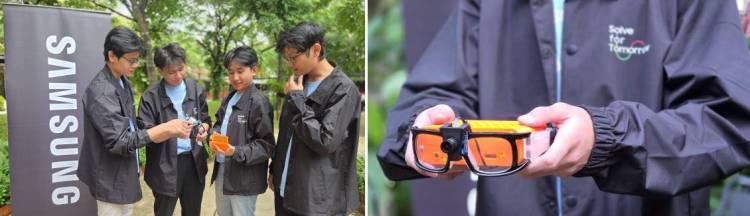
A team from Universitas Indonesia has developed RunSight, an AI-powered smart glasses prototype designed to act as a virtual running guide for visually impaired athletes. The project, spearheaded by Tim Labmino, recently earned global recognition as a Samsung Solve for Tomorrow (SFT) Global Ambassador.
The development of RunSight was fostered through the Samsung Solve for Tomorrow program, which provided Tim Labmino with a structured environment to validate the problem, design a prototype, and test its impact. The team views SFT not merely as a competition, but as a learning ecosystem bridging academic research with practical, inclusive solutions.
The project began with an empathetic approach, initially exploring general navigation solutions for the visually impaired. However, through direct observation and interviews, the team identified a specific need: enhancing safety and independence during running.
Unlike walking or city navigation, running presents unique challenges – higher speeds, increased collision risks, and a need for quick, easily understood guidance. Existing solutions often focus on daily mobility, but weren’t designed for the fast pace and lane awareness required for athletic activity. Initially focused on general navigation, the team pivoted to address the specific challenges faced by visually impaired runners.
“We initially developed a general navigation concept. However, we realized that running presents very different challenges – it’s faster, more dynamic, and requires instant responses,” explained Anthony Edbert Feriyanto from Tim Labmino. “This is where our biggest pivot occurred. We decided to focus on track running and design a lightweight, camera-based wearable that is both comfortable and affordable. On the software side, we also transformed from a single AI model to a multi-model pipeline to provide much more precise and adaptive guidance. For us, innovation isn’t just about sophisticated technology, but about how technology truly understands the needs of its users.”
Technically, RunSight recognizes objects in the user’s surroundings, reads the running track, and adjusts guidance based on the user’s speed. This information is delivered through real-time voice instructions, helping users maintain direction and speed while running.
Acting as a “virtual guide runner,” RunSight captures video which is then processed in real-time by onboard AI to detect lane markings and obstacles. The system then provides real-time voice instructions to keep the user centered in the lane and safely avoid obstructions.
Optimizing the AI presented a key challenge for the team.
“The biggest challenge was maintaining accuracy as real-world conditions changed, while also keeping the model lightweight for real-time performance,” Feriyanto stated.
To optimize the RunSight prototype, Tim Labmino conducted safety tests under various track conditions, lighting, and crowd densities. The system’s logic was designed with a “safety-first” principle, utilizing thresholds, frame smoothing, and conservative rules to avoid abrupt or jarring instructions. This approach led to global recognition through Samsung Solve for Tomorrow.
Bagus Erlangga, Head of Corporate Marketing at Samsung Electronics Indonesia, emphasized that Samsung Solve for Tomorrow is about fostering a problem-solving mindset among young people, not just innovation.
“Tim Labmino demonstrates that when empathy is combined with technological capabilities like AI, inclusive and relevant solutions for society emerge. This is the kind of innovation we want to continue to encourage – technology that is advanced, responsible, and impactful,” he said.
At the global Samsung Solve for Tomorrow event, Tim Labmino brought more than just international recognition. They carry a commitment to further develop RunSight, expand its impact, and pave the way for more innovations rooted in empathy. Through this journey, Tim Labmino aims to demonstrate that young Indonesians are capable of creating technology and are willing to apply it to address real-world challenges.
Foto: istimewa
