
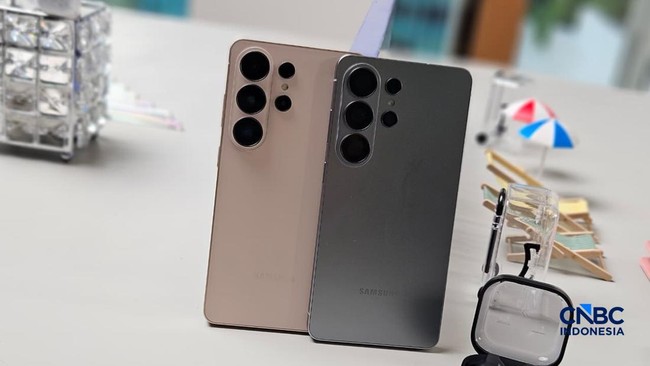
Jakarta, CNBC Indonesia – Samsung’s new Galaxy S26 series has launched with significant price increases across the lineup. In Indonesia, the base model Galaxy S26, with a standard configuration of 12GB of RAM and 256GB of internal storage, is priced at Rp16.5 million, a Rp1.5 million increase over the previous generation.
The 12GB/512GB variant sees an even larger price jump of Rp2.5 million. Similar price increases apply to the Galaxy S26+, with increases of Rp1.5 million for the 12/256GB model and Rp2.5 million for the 12/512GB version.
Samsung is offering higher RAM options for its premium Galaxy S26 Ultra, featuring 16GB paired with 1TB of internal storage. This configuration carries a price tag of Rp32 million.
Previously, the highest-end Galaxy S25 Ultra was equipped with 12GB of RAM and 1TB of storage, priced at Rp29 million.
The price increases for the Samsung Galaxy S26 series aren’t limited to Indonesia. Reuters reported on Thursday, February 26, 2026, that several models sold in the United States and South Korea have also seen price hikes.
Reuters suggests these price increases are also a way for Samsung to “test the waters” amid pressure from a memory chip crisis, which is increasing production costs and eroding consumer electronics manufacturers’ margins.
The Chip Crisis Dilemma for Samsung
Earlier in January, Samsung warned that a chip shortage, driven by the “AI boom,” would put pressure on its smartphone and display businesses. Simultaneously, high demand for chips from various sectors is boosting Samsung’s chip business.
At the end of January, Samsung reported a more than threefold increase in operating profit and a record high for the fourth quarter of 2025. This underscores Samsung’s strength as a leading memory chip manufacturer amid surging demand for chips used in AI development, which is driving up prices.
However, Samsung also cautioned that rising chip prices would increase production costs in its smartphone and display businesses.
“A significant shortage of memory products is expected to continue for the time being,” said Kim Jaejune, Samsung’s memory chip business executive, to analysts during an earnings conference call on January 2026, as quoted by Reuters on Thursday, February 26, 2026.
Samsung’s chip business, a primary source of revenue, saw a 470% jump in operating profit to a record high of 16.4 trillion won in the fourth quarter of 2025, accounting for more than 80% of its total profit.
Conversely, its mobile business profit declined 10% to 1.9 trillion won, pressured by rising chip prices.
“Memory price increases are expected to surprise on the upside this quarter, while the cost burden on the mobile business will intensify,” said Sohn In-joon, an analyst at Heungkuk Securities.
Impact on Samsung’s Mobile and Display Businesses
Samsung’s smartphone and display divisions warned of a “challenging year” in 2026 due to cost pressures from rising memory prices.
The smartphone division plans to collaborate with key partners to ensure a stable product supply, aiming to drive resource efficiency and minimize potential profit declines, according to Cho Seung, a Samsung smartphone executive.
In a recent interview with Reuters, Samsung Co-CEO TM Roh described the current chip shortage as unprecedented. He added that the company may raise prices further.
Those words proved true with the substantial price increases across the entire Galaxy S26 flagship series. It remains unclear whether Samsung’s mid-range Galaxy A series will also face similar price increases.
Analysts suggest the chip crisis will likely have the biggest impact on lower-priced phones, as these manufacturers operate on smaller margins and rely on volume. Higher chip memory prices will inevitably put pressure on the pricing of budget smartphones.
“How this division [Samsung Mobile] maintains margins going forward will be a key issue,” said Ko Yeongmin, an analyst at Daol Investment & Securities.
Samsung’s display business also anticipates weaker smartphone demand this quarter due to rising chip prices and expects customers to push for price reductions.
The display business’s operating profit more than doubled to 2 trillion won in the fourth quarter of 2025, thanks to strong sales from the iPhone 17 series from its key customer, Apple.
Add as a preferred
source on Google
