
A recent analysis by GameReactor explores Sega‘s tumultuous journey through the 1990s video game console wars, detailing a pattern of innovative hardware releases undermined by strategic missteps and a tendency toward internal competition. The piece examines how Sega repeatedly responded to Nintendo’s successes with technically superior yet ultimately fragmented offerings-add-ons and competing systems-that confused consumers and ultimately contributed to the company’s decline despite initial market advantages.
The history of gaming could have taken dramatically different turns with even minor changes in strategy, a point illustrated by the missteps of Microsoft in the Xbox 360 era and Nintendo’s role in elevating Sony to its current position as a gaming giant. Another company often overlooked, yet capable of fundamentally altering the industry, is Sega.
Sega launched the Master System in 1985, an 8-bit console that, in many respects, surpassed the Nintendo Entertainment System (NES). This generation already signaled a clear divergence from Nintendo’s approach. Sega was willing to experiment, testing the boundaries of what a console could be. This led to peripherals like the SegaScope 3D active glasses, the Sega Sports Pad trackball, the Handle Controller flight controller, and the Paddle rotary controller.
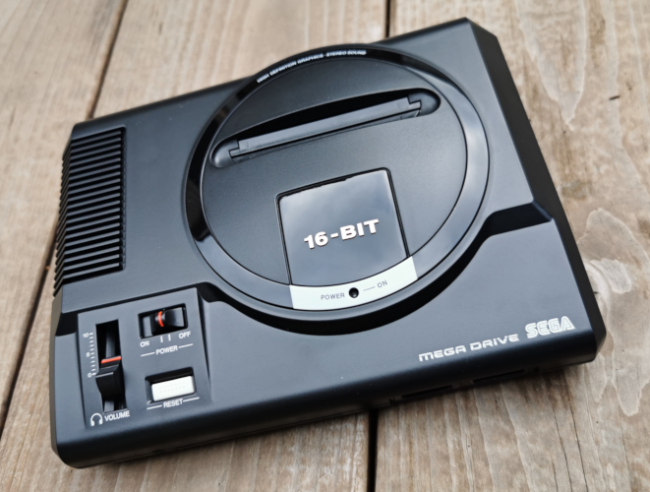
These quirky accessories, initially released with limited quality, now command high prices among collectors. The Master System didn’t achieve the sales Sega hoped for, and by 1989 (1990 in Europe), the company was preparing to launch the Mega Drive – arguably its most famous and beloved console. The Mega Drive proved to be a stroke of genius. Nintendo was planning to stick with cartridges featuring built-in chips, driving up their cost, while the Mega Drive was only slightly more expensive than the NES, and offered a compelling library of games.
Here’s a look at a vintage advertisement:
As a Nintendo player at the time, I remember being captivated by games like James Pond and Phantasy Star in toy stores. Their graphics, resembling something from another world, were a revelation. The arrival of Sonic the Hedgehog in 1991 marked a turning point, giving Super Mario its first real competitor and igniting a console war.
Sega was, at its core, an arcade game maker, and it leveraged that expertise with the Mega Drive, filling the platform with fast-paced, challenging action games and an attitude that made gaming cool – or at least cooler – ultimately paving the way for the PlayStation and its focus on style. As Sega itself put it in its advertising: “Sega does what Nintendon’t.”
Watch the ad here:
https://www.youtube.com/watch?v=ZDnZDXHuC_w/
Nintendo’s conservative business practices also played a role. Nintendo treated third-party partners as both competitors and allies, and imposed strict limitations on their game development. If you were making a game for Nintendo, you could only do so within those boundaries, and you were also restricted in the number of games you could release. Sega, in contrast, was more lenient, attracting developers who had grown frustrated with Nintendo’s restrictions. This freedom also led to a greater number of mature-rated titles. A prime example is Mortal Kombat, which Sega released with all its gore intact, while Nintendo heavily censored it.

By the time the Super Nintendo Entertainment System (SNES) finally replaced the NES (1991 in the US, 1992 in Europe), the Mega Drive had a two-year head start. The SNES had several advantages, but the Mega Drive was already established, and, according to many developers, easier to develop for (partly because the Sega console had a faster processor and required less complex assembly language programming). This continued to attract third-party support, resulting in games that often surpassed those on the technically superior SNES.

Sega was in a strong position. But Sega remained… Sega, a company that seemed determined to try everything. For example, when Nintendo released the comparatively weak Game Boy, Sega responded with the Game Gear, a handheld with graphics comparable to the Master System but boasting a large color palette. They then added a TV tuner as an accessory, allowing you to watch television on a portable gaming device – which seemed like science fiction at the time.
They continued to innovate. Like the Master System, Sega released a plethora of quirky Mega Drive accessories, including the Sega Activator (a precursor to the Kinect), the Sega Channel Assistant TV support, the Sega Sports Pad motion controller, and the Mega Drive Karaoke unit. If they had an idea, they released a device for it.

And in this second part, we come to the Mega CD, a CD-ROM add-on for the Mega Drive that Sega released in 1992. This was a direct response to the SNES, and once again gave Sega the most powerful hardware, with CDs (which at the time held only a few megabytes of game data – often presented as megabytes to inflate the numbers) offering seemingly limitless storage and sound that made the SNES’s chip sound like it was screaming into a cardboard tube. There were games like Final Fight and Sonic CD that technically felt more like Neo Geo than 16-bit. And CDs were significantly cheaper to produce than cartridges.
Even Nintendo started to worry, beginning development on the Nintendo PlayStation, which I wrote about here. But… sales were poor. You needed both a Mega Drive and a Mega CD, and Sega released new models of both, making them difficult to pair. They even released a multi-functional super version that integrated everything. While the Mega Drive was easy to develop for, the Mega CD was not, as it had to work in conjunction with the base console.

When the SNES finally replaced the NES (1991 in the US, 1992 in Europe), the Mega Drive had a two-year head start. It was already well-established, and, according to a consensus among developers, easier to make Sega games on (partly because the Sega console had a faster processor and required less complex and more direct assembler programming). This continued to attract third-party support, and games often surpassed those on the technically more powerful SNES.


So Sega was in a favorable position. But Sega remained… Sega, the company that seemed to try everything. For example, when Nintendo released the extremely weak Game Boy, Sega responded with the Game Gear, a handheld with graphics comparable to the Master System but boasting a large color palette. They then added a TV tuner as an accessory, allowing you to watch television on a portable gaming device – which seemed like science fiction at the time.
They continued to push forward. Like the Master System, Sega released a plethora of quirky Mega Drive accessories, including the Sega Activator (a precursor to the Kinect), the Sega Channel Assistant TV support, the Sega Sports Pad motion controller, and the Mega Drive Karaoke unit. If they had an idea, they released a device for it.

And in this second part, we come to the Mega CD, a CD-ROM add-on for the Mega Drive that Sega released in 1992. This was a direct response to the SNES, and once again gave Sega the most powerful hardware, with CDs (which at the time held only a few megabytes of game data – often presented as megabytes to inflate the numbers) offering seemingly limitless storage and sound that made the SNES’s chip sound like it was screaming into a cardboard tube. There were games like Final Fight and Sonic CD that technically felt more like Neo Geo than 16-bit. And CDs were significantly cheaper to produce than cartridges.
Even Nintendo started to worry, beginning development on the Nintendo PlayStation, which I wrote about here. But… sales were poor. You needed both a Mega Drive and a Mega CD, and Sega released new models of both, making them difficult to pair. They even released a multi-functional super version that integrated everything. While the Mega Drive was easy to develop for, the Mega CD was not, as it had to work in conjunction with the base console.
But why stop there? This showed consumers didn’t want host add-ons. Two years after the Mega CD’s release, in 1994, came the 32X. Another accessory with improved performance and expensive games, and difficult to develop for. The 32X was an even bigger failure.
However, if there were more plans, Sega wouldn’t be Sega. Because simultaneously, they were also developing Neptune, which would be a Mega Drive with the 32X built-in. This was in 1994, the same year Sega launched the Saturn in Japan. So, in the same year the Saturn launched, the Mega Drive launched a 32-bit accessory that made upgrading unlikely and discouraged consumers from buying another console.
But why stop there? Because alongside the Saturn, Sega also planned Jupiter. Another console, using cartridges. Fortunately, that ship was scrapped in favor of the Saturn, but the damage was done. The Saturn was a great console, and I actually prefer playing Saturn games to PlayStation 1 games now, as many of its 2D games still hold up, while the more primitive 3D-heavy PlayStation is harder to enjoy in 2025. The Saturn was designed for 2D in an era that demanded three dimensions.
Sega was in a strong position. But Sega remained… Sega, those madmen who seemed to try everything. For example, when Nintendo released the extremely weak Game Boy, Sega responded with the Game Gear, a handheld with graphics comparable to the Master System but boasting a large color palette. They then added a TV tuner as an accessory, allowing you to watch television on a portable gaming device – which seemed like science fiction at the time.
