
Spanish Pediatricians Advocate for Changes to Vaccination Schedule Amid Resurgence of Infectious Diseases
Several vaccine-preventable infectious diseases, including measles, hepatitis A and meningococcal disease, are showing signs of increasing in Spain and across Europe in recent years. This trend highlights the importance of ongoing vigilance and adaptation in public health strategies.
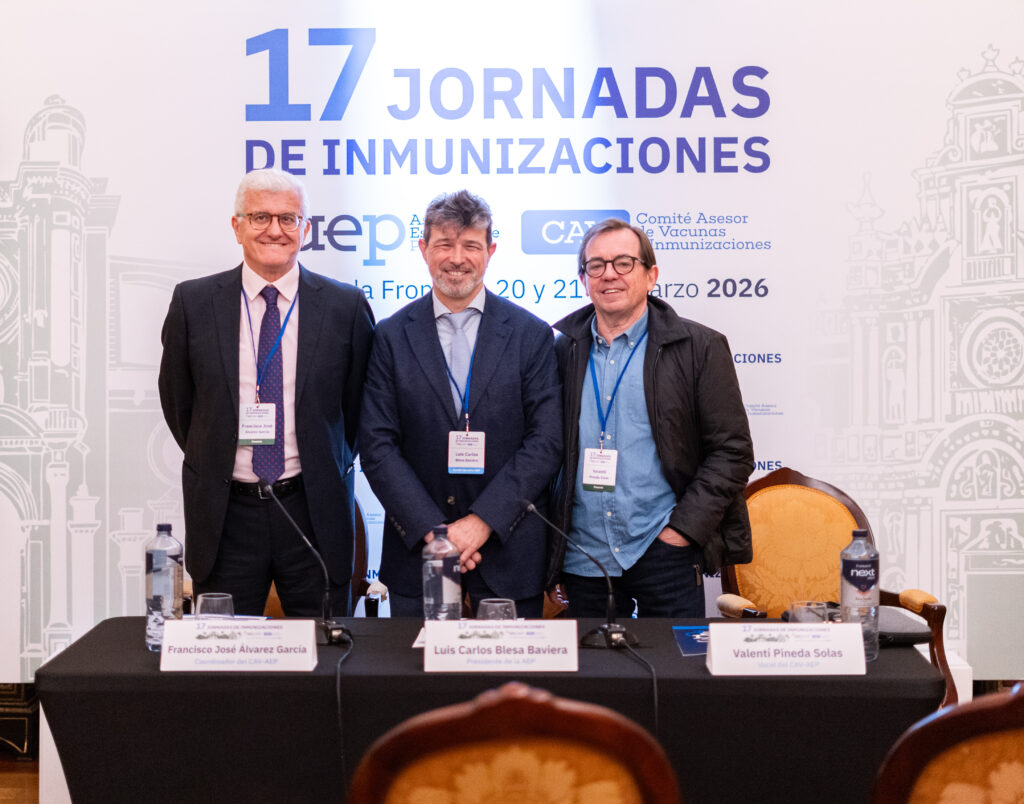
The issue is being discussed at the XVII Immunization Conference of the Spanish Association of Pediatrics (AEP), which brings together over 300 vaccine and immunization specialists in Jerez de la Frontera, from today through Saturday.
In response to this situation, Spanish pediatricians are calling for key changes to the vaccination schedule:
- Advance the second dose of the measles vaccine to 2 years of age
- Introduce the hepatitis A vaccine for infants aged 12-15 months, and a booster dose for children and adolescents who are not vaccinated
- Expand meningococcal B vaccination to include adolescents, not just infants
According to Dr. Francisco Álvarez, coordinator of the AEP’s Vaccine and Immunization Advisory Committee (CAV-AEP), “the resurgence of some infections does not mean that vaccines have stopped working. This phenomenon is often related to temporary declines in vaccination coverage, epidemiological changes, or the importation of cases from other countries.”
Measles Cases Nearly Double in One Year

Measles, one of the most contagious viruses, is experiencing a resurgence in several countries, including Spain, to the point where the World Health Organization (WHO) has removed its “measles-free” status.
Recent epidemiological data shows 397 cases were reported in 2025, nearly double the 227 cases recorded in 2024. These numbers underscore the continued threat posed by this highly contagious disease.
To prevent the spread of the virus, at least 95% of the population needs to be vaccinated with two doses. However, in Spain, coverage for the second dose is around 93%, with variations between regions. This lower coverage may contribute to increased transmission, along with, as Dr. Álvarez explains, “the flow of people from countries with lower vaccination coverage, which favors the transmission of measles among unvaccinated people.”
Measles is not a mild illness; in infants under one year traditional, who have not yet been vaccinated, and in people with underlying health conditions, it can cause serious complications such as pneumonia or neurological damage. The CAV-AEP recommends moving the second dose of the triple vaccine to 2 years of age, as is already done in Andalusia, to strengthen protection against potential outbreaks.
Meningococcal B: One in Four Adolescents are Carriers

Meningococcal disease is a serious bacterial infection that produces disease through five serogroups: A, B, C, W and Y. Although the incidence in Spain is low thanks to vaccination, serogroup B is now the most common.
Experts are particularly concerned that this is a devastating disease due to its rapid evolution, potentially affecting previously healthy individuals and progressing to fulminant sepsis or severe meningitis within hours.
It can occur at any age, but the risk is highest in infants under one year old and increases again in adolescence and young adulthood, as well as in people with risk factors (asplenia, immunodeficiencies, treatment with complement inhibitors, etc.).
In the last three years, following the pandemic, there has been a progressive increase in cases, with serogroup B being the most prevalent in Spain. Currently, one in four adolescents is colonized by meningococcus, meaning they carry the pathogen in their nasopharynx without developing the disease, making this age group one of the main reservoirs of the bacteria in the population.
The CAV-AEP suggests protecting all infants under 12 months against serogroups ACWY, not just C as is currently done, and extending vaccination against serogroup B to adolescents, taking advantage of the health check-up they receive at age 12 in Primary Care.
Hepatitis A: Increasing Cases in Several Regions

Hepatitis A is as well showing a change in its epidemiological pattern in Spain, with a significant increase in cases in recent years.
In response to this situation, the Ministry of Health conducted a specific epidemiological assessment in December 2024 to analyze the increase in infections. According to the latest data from the National Epidemiological Surveillance Network (RENAVE), as of week 52 of 2025, 1,864 cases of hepatitis A had been reported in Spain, compared to 1,035 cases registered in the same period of the previous year, almost doubling the incidence in one year.
This increase occurs in a country traditionally considered to have low endemicity for this disease, where vaccination against the virus was previously recommended mainly for at-risk groups or during outbreaks. Currently, only Catalonia, Ceuta, and Melilla include the hepatitis A vaccine in the childhood immunization schedule as a standard practice.
However, the increase in cases observed in recent years has led the CAV-AEP to review its recommendations. As Dr. Valentí Pineda, a pediatrician on the Vaccine and Immunization Advisory Committee of the AEP, points out, “the situation forces us to strengthen epidemiological surveillance and reinforce prevention through vaccination.”
Experts advocate for the systematic incorporation of hepatitis A vaccination at 12-15 months of age, along with a booster strategy for children and adolescents who have not been vaccinated.
A Broader Vision of Vaccination

Beyond specific measures against each pathogen, pediatricians emphasize the need to address the prevention of infectious diseases from a broader perspective, taking into account the interaction between different factors that influence their appearance and spread.
AEP President Dr. Luis Carlos Blesa Baviera advocates for an integral vision of health: “Today we know that preventing infectious diseases requires a ‘One Health’ vision, integrating human, animal and environmental health, especially in a context where many emerging infections originate in the interaction between these areas. Vaccines are one of the most effective tools to protect the population and avoid the impact of diseases we thought were under control.”
He also stresses that protection does not depend solely on individual vaccination, but on the immunization of the family environment. “Vaccinating parents, caregivers and family members helps reduce the circulation of pathogens and create a protective barrier around children, especially the youngest or those who have not yet completed their vaccination schedule. And vaccinating children helps protect the health of vulnerable adults, such as the elderly or people with chronic illnesses.”
This protection is particularly relevant during the first 1,000 days of life, from conception to two years, a critical period for brain development, immune system maturation, and future metabolic health. “During this period, the foundations of lifelong health are established, so preventing infectious diseases is essential,” adds the AEP president.

