
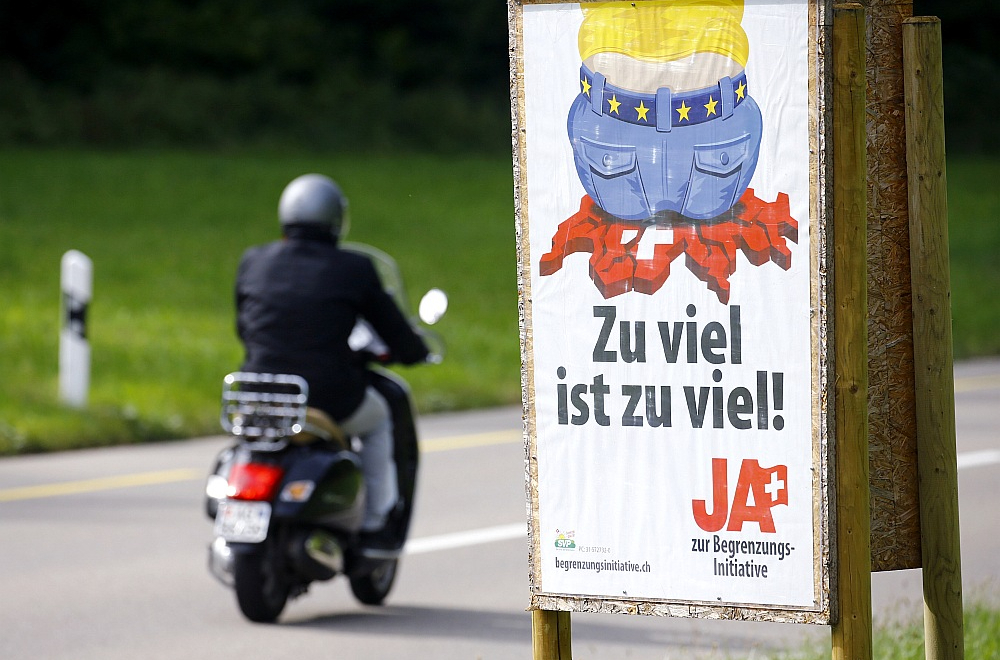
Switzerland will hold a referendum on June 14, 2026, to decide whether to limit the country’s permanent resident population to 9.5 million by 2050, a move that reflects a growing debate over national sovereignty and economic integration in the Alpine nation.
The vote comes as Switzerland, known for its direct democracy, grapples with balancing economic needs – particularly a reliance on skilled labor from abroad – with concerns about maintaining its quality of life and cultural identity. The referendum was triggered by an initiative from the Swiss People’s Party (SVP), a national-conservative, Eurosceptic, and anti-immigration group.
According to the proposal, if the population reaches 10 million, the government would be required to revise existing legislation and international agreements, including those concerning the free movement of people with the European Union, to curb population growth. This could involve restricting asylum grants, family reunification, and the issuance of residence permits. The SVP argues that without such measures, Switzerland will experience a “population explosion” around 2040, straining resources and diminishing living standards.
“For too long, the influx of people has been too great! We require to limit it!” reads a slogan used by the SVP in its campaign. The party, which has consistently won elections since 1999 and holds the largest faction in parliament, claims that unchecked immigration is driving up housing costs, overburdening social services and public transportation, and suppressing wages.
“The fact that the population of Switzerland is growing rapidly, and faster than in neighboring countries, is a fact.”
Switzerland’s population has risen dramatically in recent decades, from 3.3 million in the early 20th century to over 9.1 million currently, with approximately 30% of residents being foreign nationals. While a significant portion of these foreign nationals come from EU countries, the influx has fueled debate about the country’s capacity to absorb novel residents. The development underscores the challenges faced by many European nations in managing migration and its impact on national identity.
The proposal is facing opposition from most of Switzerland’s political parties, as well as business organizations. Opponents argue that limiting immigration would harm the Swiss economy, which relies heavily on foreign workers in sectors such as healthcare, hospitality, and construction. Economiesuisse, the country’s leading business federation, has labeled the SVP’s initiative a “chaos initiative,” warning that it could lead companies to relocate to other countries.
According to a public opinion poll conducted in November 2025, 48% of Swiss voters were prepared to vote in favor of the initiative, while 41% were opposed, and 11% remained undecided. The Federal Council, Switzerland’s seven-member executive body, also opposes the SVP’s proposal.
The referendum is taking place in a context where referendums are common in Switzerland due to its liberal legislation – parties or citizen groups only need to collect 100,000 signatures within 18 months to put a question to a national vote. However, the debate over population limits has taken on particular significance, forcing Swiss voters to choose between a more isolationist path and maintaining close ties with the European economic system. A separate vote will also be held on June 14 regarding changes to the Civil Service Act concerning alternative civilian service options, but the population limit is the central issue driving public discussion.
Choose your social media platform to follow LASI.LV: Facebook, X, Bluesky, Draugiem, Threads or Instagram. Join our readership to receive specially selected useful, practical and up-to-date content.
Subscribe to the LASI.LV editor’s newsletter here.
Subscribe to the newsletter and receive twice a week a digest of LASI.LV chief editor’s current news, expert opinions and interesting interviews.
You will receive:
- Diverse comments and expert opinions from Latvijas Mediju journalists and authors on current affairs
- Expert comments on various practical, useful topics
- Fascinating materials on history, psychology, culture
- A cartoon by Gatis Šļūka
- In your inbox every Thursday
