
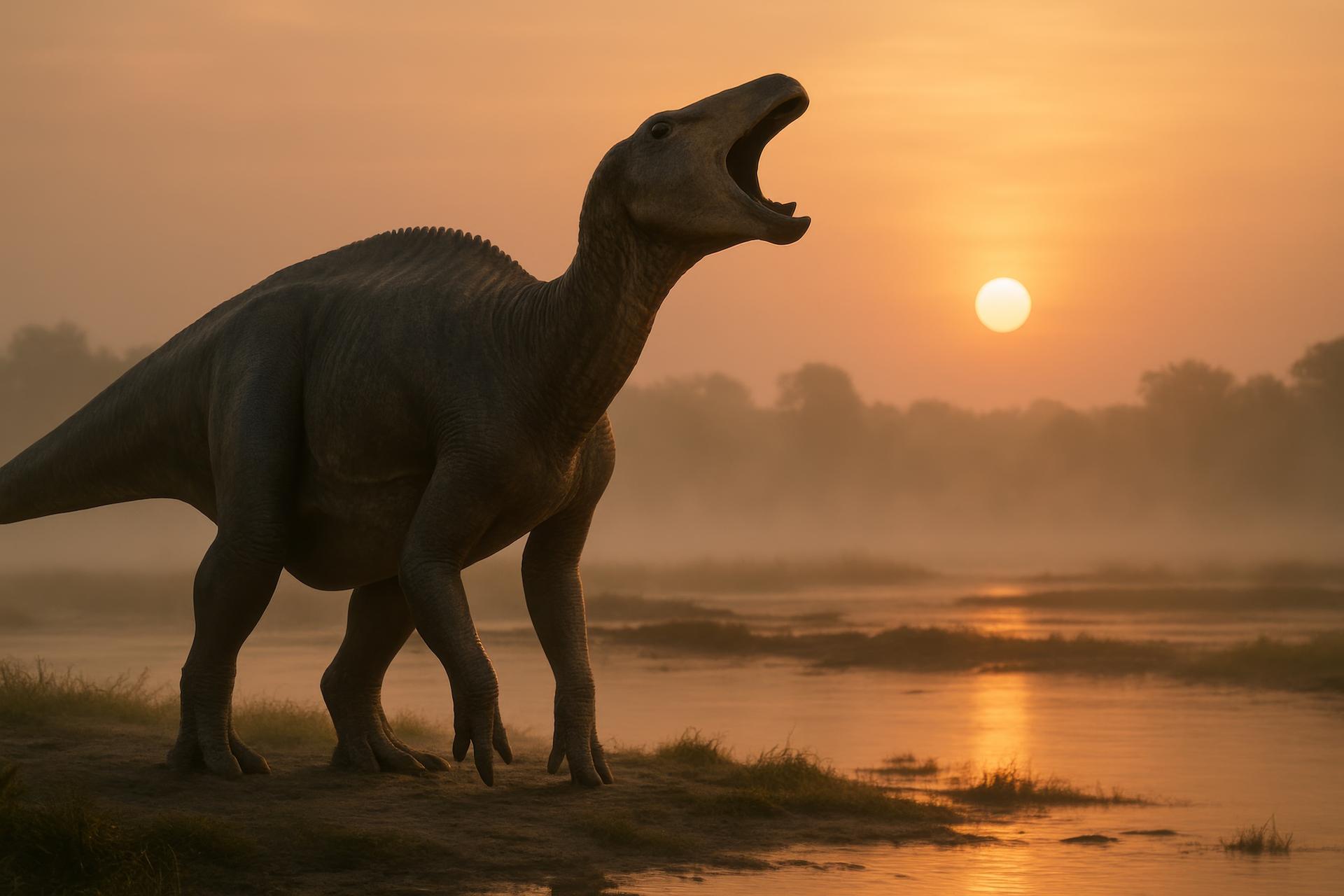
Paleontologists have uncovered compelling evidence of a predatory interaction between a Tyrannosaurus rex and an Edmontosaurus, a large herbivorous dinosaur often referred to as the “cow of the Cretaceous.” The discovery, detailed in a latest study, provides a rare glimpse into the hunting behavior of one of the most iconic predators to ever live.
Edmontosaurus, a duck-billed dinosaur that thrived approximately 73 to 66 million years ago, was a common sight in North America during the late Cretaceous period. These herbivores were abundant, likely moving in large herds, and played a significant role in their ecosystems by influencing vegetation and serving as a primary food source for large carnivores. The sheer number of fossils discovered – including numerous complete and partial skeletons – suggests a dominant and social species.
A Fossilized Tooth Confirms the Predator
Even as bite marks have previously been identified on Edmontosaurus bones, definitively linking them to a specific predator proved challenging. However, a remarkably well-preserved Edmontosaurus skull, currently displayed at the Museum of the Rockies in Bozeman, Montana, offered a crucial clue. Researchers discovered a fragment of a tooth embedded in the dinosaur’s skull.
Crâne de l’edmontosaure avec le fragment de dent fiché dans l’os. © Wyenberg-Henzler et Scannella, 2026, Paleontology and Evolutionary Science
Analysis of the tooth fragment conclusively identified the predator as an adult T. Rex. According to the research, published in Paleontology and Evolutionary Science, the bite was likely fatal to the Edmontosaurus. This finding offers a rare, direct link between predator and prey in the fossil record.
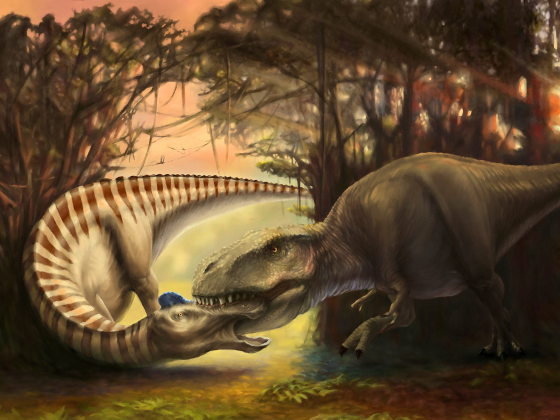 Tyrannosaure attaquant un edmontosaure en l’attrapant par le museau. © Jenn Hall, Montana State University, Museum of the Rockies
The location of the bite marks also provides insights into the T. Rex’s hunting strategy. Researchers compared the patterns to those observed in modern carnivores, suggesting the initial bite was aimed at controlling the prey. Additional marks located in the rear portion of the skull indicate the T. Rex subsequently scavenged the carcass, consuming the fleshier parts of the head.
The discovery underscores the importance of predator-prey relationships in maintaining ecosystem balance during the Cretaceous period. Edmontosaurus, reaching up to 12 meters (39 feet) in length and weighing between 3 and 4 metric tons, was one of the largest herbivores in North America at the time, and may have even exceeded Tyrannosaurus rex in size, according to The Canadian Encyclopedia. The abundance of these herbivores likely supported the entire food chain, culminating in apex predators like the T. Rex.
Lire l’article
Edmontosaurus fossils have been found in western North America, dating from the late Campanian age (73 million years ago) to the end of the Maastrichtian age (66 million years ago), as noted by Wikipedia. The first Edmontosaurus specimen was discovered in 1912 near Drumheller, Alberta, Canada, and became the first mounted dinosaur skeleton displayed in the country, according to The Canadian Encyclopedia.
