
Taiwan Braces for Sharp Temperature Drop as Weather Front Approaches April 14
Residents in northern Taiwan are encouraged to make the most of a brief window of stable weather before a combination of a new weather front and a strengthening northeast monsoon brings rain and a significant temperature dip starting April 14, 2026.

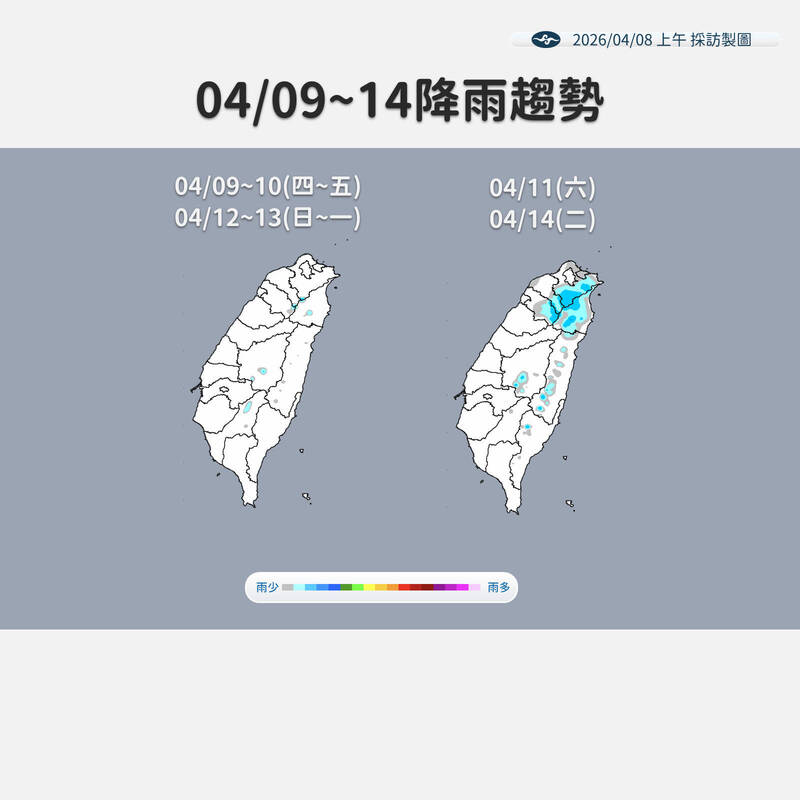
According to the latest forecasts, the region will experience a five-day window of fair weather beginning April 9. Between April 10 and April 13, conditions across the island are expected to remain mostly sunny to cloudy under stable pressure. During this period, clearer skies and higher temperatures will prevail, with highs generally exceeding 30°C. Central and southern regions could spot peaks of 34°C, whereas officials have warned of potential foehn winds in the Taitung area.
Despite the warmth, the weather bureau noted that significant day-to-night temperature swings will persist, with lows ranging between 21°C and 24°C. This period of stability will eventually give way to a upcoming front and northeast monsoon that will trigger a sharp cooling effect.
The transition begins on Tuesday, April 14, as a weather front approaches northern waters. This system is expected to bring local short-term showers to northern and northeastern Taiwan, with daytime highs dropping to approximately 27°C. This significant temperature reversal will be most pronounced by April 15, when the passing front and an intensified northeast monsoon cause northern temperatures to plunge from over 30°C to between 25°C and 26°C.
Central and southern Taiwan will be less affected by the cooling trend, maintaining humid conditions with highs around 30°C, although afternoon rain remains likely in mountain regions. The volatility is expected to continue into the latter half of the week; from April 16 to April 18, another front is projected to approach northern waters, bringing further short-term showers to the north and east.
As the region sees a gradual shift toward cloudy conditions and erratic rainfall, the rapid fluctuations in temperature underscore the typical instability of spring weather patterns in the region.
