Czech citizens are facing a surge in sophisticated phishing scams mimicking official tax communications, authorities warn. The fraudulent emails and SMS messages, which frequently enough include realistic logos and even QR codes, aim too steal personal banking information under the guise of processing tax refunds. While a Prague couple recently identified discrepancies in a suspicious email before falling victim, officials say these attacks are becoming increasingly convincing and pose a significant financial risk to residents.The Czech Financial Administration urges vigilance and direct verification of any such communications through official channels.
Individuals in the Czech Republic are being targeted by a sophisticated phishing scheme offering fraudulent tax refunds, authorities warn. The scam, which mimics official communications from the country’s tax administration, has already impacted a significant number of citizens, highlighting the growing threat of cybercrime targeting personal finances.
Kristýna Majerová of Prague, and her partner, recently received an email informing them that their annual tax returns had been processed and were ready for payout. “We were quite surprised,” Majerová told Novinky. “He is self-employed, but I haven’t been for several years.”
The message, designed to closely resemble official communications from Mojedane.cz, included a link and a QR code that prompted recipients to log into their online banking accounts. The pair nearly fell victim to the ruse, but noticed subtle discrepancies before providing any sensitive information. This incident underscores the increasing sophistication of phishing attacks and the potential for significant financial loss.
Despite being ineligible for a tax refund, the couple identified minor errors in the email as red flags. These included a misspelling in the salutation – “Dear Client” – and an unnecessary hyphen in the domain address. The email originated from the suspicious address [email protected], falsely claiming to be from the Portal MOJE Dane.
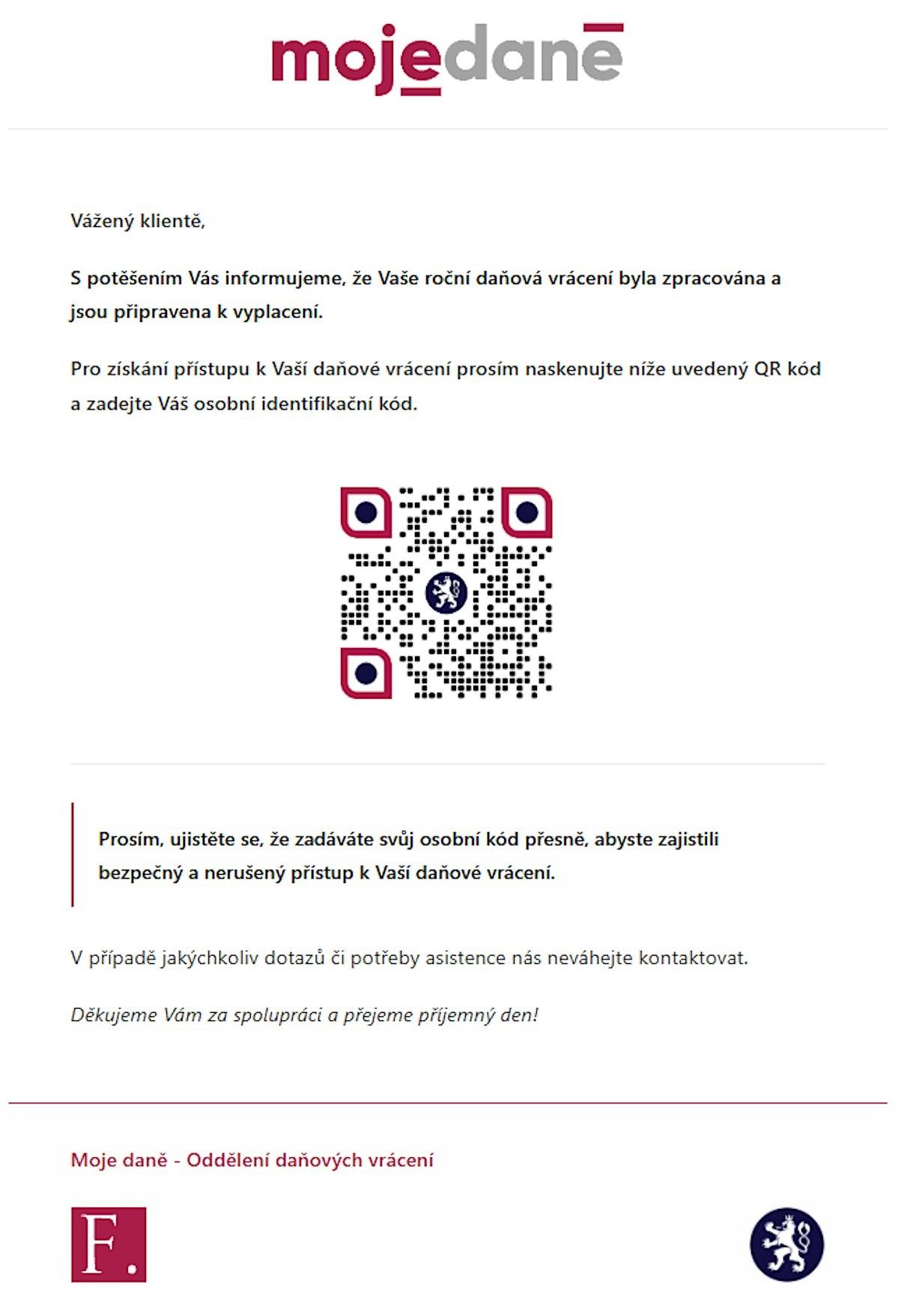
Foto: Novinky
The text of the fraudulent email.
Scammers Employ Increasingly Sophisticated Tactics
The Czech Financial Administration has repeatedly warned the public about these types of scams, most recently in late October. These fraudulent messages are delivered not only via email but also through SMS. The attacks leverage the trust associated with official government communications, often mimicking the logos of Mojedane.cz, the Citizen Portal, and other state institutions. The language used in these scams has also become more convincing in recent iterations.
“The messages even contain QR codes leading to fake websites and are very credible,” said Patrik Madle, a spokesperson for the Financial Administration. “Therefore, we urge citizens to always verify any suspicious email or SMS.” Simona Hornochová, Director General of the Financial Administration, recently emphasized that the administration does not use QR codes to issue tax refunds, noting that they are used for payment of arrears, such as property taxes.
A surge in similar scams occurred earlier in the year during tax return filing season. The Financial Administration advises anyone who receives a questionable message not to respond, click on links, or open attachments. Individuals should verify information directly with the tax authority through official channels listed on financnisprava.gov.cz.
Common Scams and How to Avoid Them
Recent police statistics reveal a growing number of individuals falling victim to online fraud. Cybercriminals consistently employ the same tactics to deceive and often defraud unsuspecting individuals. Learn how to protect yourself by reading a comprehensive overview of the most common online scams and how to defend against them.