
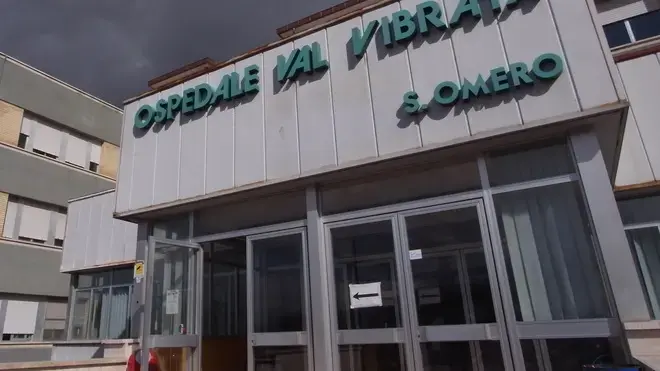
A resident of Bellante died shortly after arriving at the emergency room of the Sant’Omero hospital (photo). The Teramo health authority has activated its protocol for close contact cases.
TERAMO. A case of fulminant meningitis in a man from the province of Teramo resulted in his death on February 24, just after he arrived at the emergency room of the Sant’Omero hospital. The Teramo Local Health Authority (Asl) reports that it promptly initiated prophylaxis measures for those who had been in close contact with the man. Antibiotic treatment, the Asl explains, is only recommended for individuals who had prolonged and close contact with the patient before his death. Meningitis, the health authority further notes, is transmitted only through close and prolonged contact with a symptomatic person via respiratory secretions such as saliva, sneezes, or coughs. There is no risk of transmission after death, even in the mortuary or during final farewells, provided standard precautions are followed by staff. The health authority clarifies, there is no cause for alarm among the population.
A man from Bellante, in the province of Teramo, Italy, died on February 24 after developing fulminant meningitis and being admitted to the Sant’Omero hospital. The case highlights the importance of rapid response and preventative measures in controlling infectious diseases.
Health officials in Teramo confirmed the death occurred shortly after the patient arrived at the hospital’s emergency room. The Teramo Local Health Authority (Asl) immediately activated its protocol for managing close contact cases, initiating preventative treatment for those potentially exposed.
According to the Asl, antibiotic prophylaxis is being offered only to individuals who had prolonged and close contact with the patient before his death. Meningitis transmission requires close and sustained contact with an infected person, typically through respiratory droplets like saliva, sneezes, or coughs.
Health authorities emphasize there is no risk of transmission following the patient’s death, even in settings like the hospital mortuary or during a viewing, as long as standard safety precautions are observed by personnel. The Asl has stated there is currently no cause for public alarm.
