
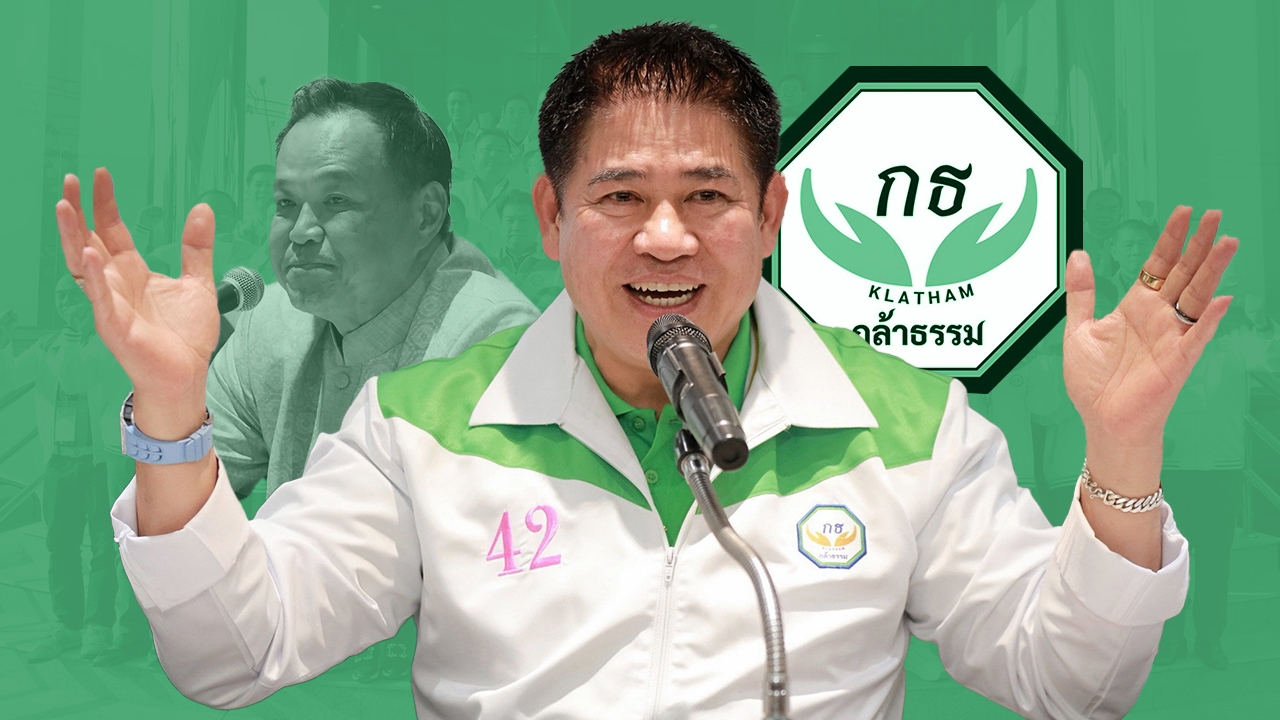
Political observers are watching to spot if a power struggle will unfold between key figures in Thailand’s recently elected government, as negotiations continue over the formation of a coalition. Following the 2029 elections, the Pheu Thai party, which secured 193 seats, is moving forward with establishing a governing coalition, but questions remain about the inclusion of the Kla Tharm party.
As of February 26, 2026, the composition of a potential “Anutin cabinet” is becoming clearer, and it appears the Kla Tharm party may not be included. Despite holding the fourth-largest number of seats in parliament – more than 58 – and reportedly agreeing to conditions that excluded control of the Ministry of Agriculture and a role for party leader Thammanat Prompao in the cabinet, the party’s future remains uncertain.
The potential exclusion of the Kla Tharm party has sparked speculation about a possible split within its ranks. Some observers believe that without a share of power, factions within the party may disband. On February 26, reports surfaced alleging attempts to entice approximately ten Kla Tharm MPs to support Anutin Charnvirakul, leader of the Pheu Thai party, and a potential coalition government. Though, Arthakorn Sirilatthayakorn, a Member of Parliament for Chachoengsao and the Minister of Tourism and Sports, denied these claims, stating that all members would remain united. Several MPs who were reportedly targeted have also issued denials.
To understand the Kla Tharm party’s next steps and its chances of joining the government, the Thai Rath Online news team spoke with Dr. Jarupol Ruangsuwan, Deputy Director of the Political Science and Governance Institute of the Princess of Narathiwat University.
“Colonel Thammanat” Still Holds Cards, Party Split Unlikely
Dr. Jarupol believes that even if relegated to the opposition, the Kla Tharm party is unlikely to fracture, asserting that Thammanat Prompao will likely maintain control over his faction. He suggests the party may have to accept being excluded from the government for now, but notes that Thai politics is fluid and opportunities for inclusion may arise. He stated that the situation will remain in flux until the final composition of Anutin’s government is announced.
Regarding rumors of approximately ten “green snakes” – a term for defecting MPs – from the Kla Tharm party potentially voting in favor of Anutin and the Pheu Thai party, Dr. Jarupol noted that such a move would require some form of compensation. He said it remains unclear what benefits these MPs would receive if they were to switch their support.
“If they were to vote and receive a position, something in return that would allow them to leave the Kla Tharm party and join the government, that is a possibility. But to suddenly come out and vote without getting anything in return seems unlikely,” he said.
Alternatively, Dr. Jarupol suggested that a vote in favor of Anutin could be a way for the Kla Tharm party to “build a bridge” to the governing coalition, potentially opening the door for future adjustments.

Dr. Jarupol believes the Kla Tharm party likely has several strategies for negotiating its way into the government, which is typical for a growing political party seeking power, budget, and the ability to deliver on its campaign promises. He added that without these elements, the party’s growth could be stunted in future elections.
If the Kla Tharm party concedes and joins the government, Dr. Jarupol believes it will still secure ministerial positions, though potentially fewer than originally desired, and may not receive a top-tier ministry. However, he emphasized that this depends on the party’s negotiating strategy and its ability to secure junior ministries that allow it to advance its policies and benefit voters in future elections.
“As for Colonel Thammanat, I believe he would be willing to step aside and allow others within the party to take on ministerial roles, as he can still maintain overall control of the party,” Dr. Jarupol said.
Is the Kla Tharm Party Being Deliberately Stifled?
Dr. Jarupol explained that the Pheu Thai party must allocate cabinet positions to various factions within its own ranks. Bringing in the Kla Tharm party and dividing up ministerial posts further could be seen as a less worthwhile proposition.
The perceived rivalry between Pheu Thai and Kla Tharm, both representing conservative, patronage-based political styles, may also be a factor. Not including the Kla Tharm party in the government could be a deliberate attempt to prevent it from growing into a formidable competitor in future elections.

Dr. Jarupol pointed out that political friendships are not permanent, but rather based on negotiation and mutual benefit. Whereas he doesn’t believe Pheu Thai and Kla Tharm will grow outright enemies, he acknowledged the possibility that deliberately stifling the Kla Tharm party’s growth could be a contributing factor in its exclusion from the government.
However, stifling a party can take two forms: pushing it into the opposition or bringing it into the government but assigning it less prestigious ministries or subjecting it to policies dictated by the prime minister.
Dr. Jarupol noted that the Kla Tharm party’s strength lies in its grassroots political organization, which is more sustainable than online-driven politics that can be easily damaged by negative publicity. The party’s strong showing in constituency elections, compared to its limited success in securing list seats, demonstrates its focus on local politics and its relatively stable base of support.
“I don’t think Colonel Thammanat believes he is facing a dead end. He likely believes he can continue, still has trump cards, and that the stability of having MPs directly connected to the people will be more enduring. I believe it’s a matter of time, strategy, opportunity, and whether they will be able to work as a government or not,” he said.
If the two parties do not end up in a coalition, the next election is likely to see a full-fledged competition between Pheu Thai and Kla Tharm. This raises the question for Pheu Thai of whether pushing the Kla Tharm party into opposition and facing a tough fight in the next election will be beneficial, or whether bringing the Kla Tharm party into the fold as an ally would be more advantageous.
“Everything is possible in politics. We will have to wait and see what happens during the vote for prime minister. Sometimes, what we analyze throughout can all change in a single day.”
