
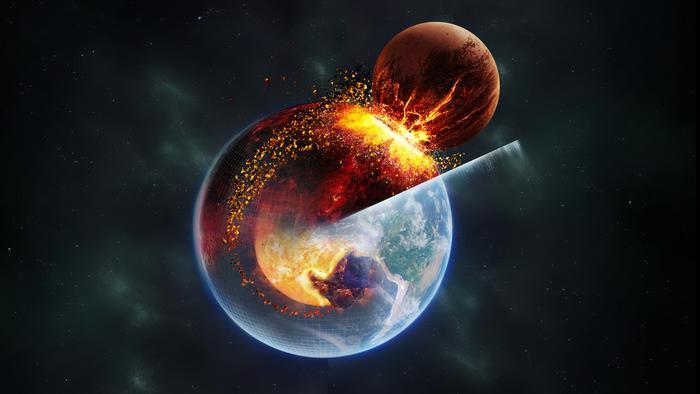
A new study published in *Science* offers compelling evidence regarding the origin of Theia,the Mars-sized protoplanet theorized too have collided with early Earth,forming our Moon [[2]]. For decades, scientists have debated were Theia came from, and this research narrows the possibilities by analyzing isotope ratios in lunar samples and terrestrial rocks. The findings suggest Theia formed in the inner solar system, relatively close to Earth, potentially reshaping our understanding of the solar system’s earliest days [[1]], [[3]].
A new study published in Science may finally unravel one of the biggest mysteries in planetary history: where Theia, the Mars-sized planet that collided with early Earth and formed the Moon, originated.
Researchers from the Max Planck Institute for Solar System Research and the University of Chicago compared the chemical signatures of lunar samples, Earth-like rocks, and meteorites. By examining isotope ratios with unprecedented precision, they reconstructed a possible “ingredient list” for Theia and early Earth before their collision approximately 4.5 billion years ago.
Theia and Earth Were Neighbors
The analysis reveals a distinct trend. The majority of Theia’s building blocks appear to have come from the inner solar system, and potentially even closer to the Sun than early Earth. The findings suggest that the two planets were neighbors before a cataclysmic impact reshaped the Earth-Moon system.
The research team, comprised of scientists from the Max Planck Institute for Solar System Research and the University of Chicago, reached this conclusion by running multiple geological scenarios and eliminating combinations that didn’t align with the existing isotope fingerprints found in rocks from both the Moon and Earth.
While Earth’s composition can largely be explained by known meteorite types, Theia’s appears to contain material not yet observed in meteorite collections, further hinting at its origin within the inner solar system. This research offers a more refined understanding of Theia’s birthplace, even as many details surrounding the giant impact remain uncertain. The ongoing investigation into the Moon’s origins is crucial for understanding the early evolution of our solar system.
