
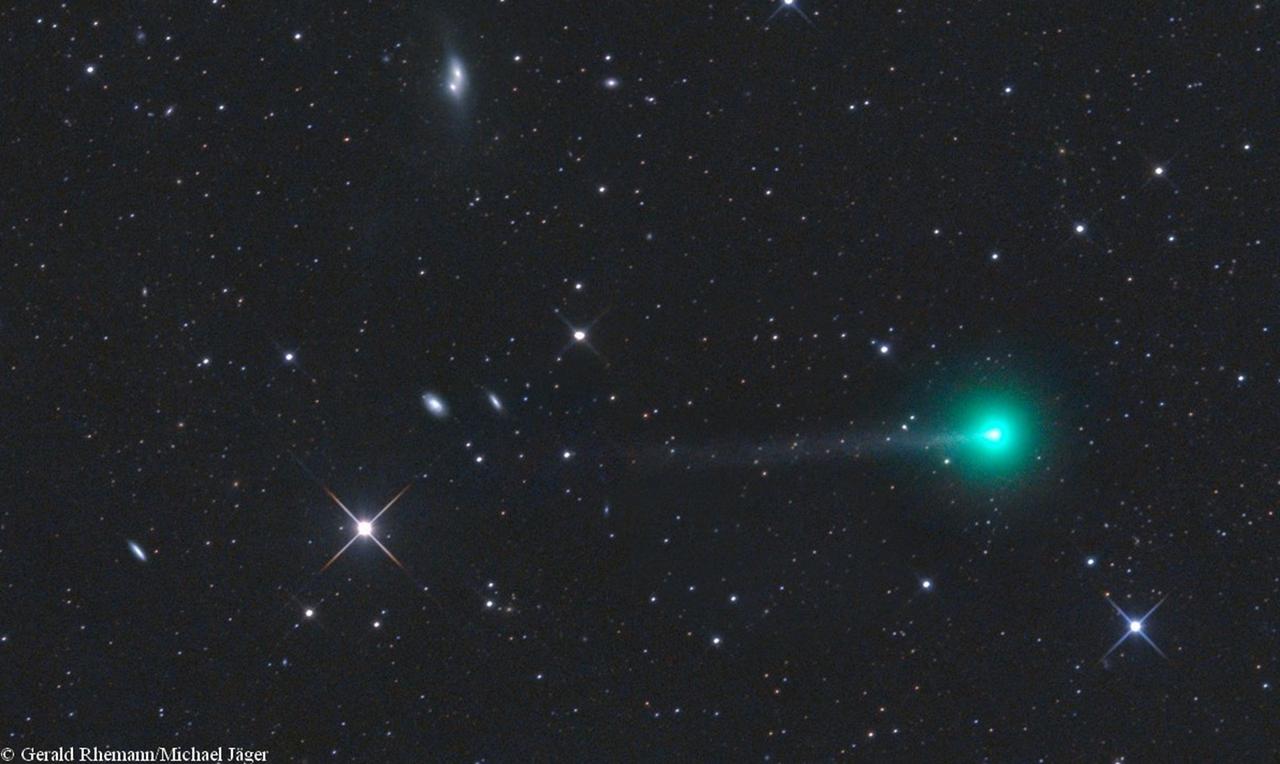
Celestial Watch: Comet MAPS’ Solar Flyby and the Arrival of the Lyrids
As of April 3, 2026, astronomy enthusiasts and space observers are preparing for a series of high-stakes celestial events. Among the most anticipated is the dramatic approach of Comet MAPS, which is currently executing what is described as a “suicide flyby” of the Sun. This “kamikaze” trajectory has led experts to suggest that the comet could potentially break apart as it nears the solar center, offering a rare opportunity to witness the fragmentation of a celestial body in real-time.
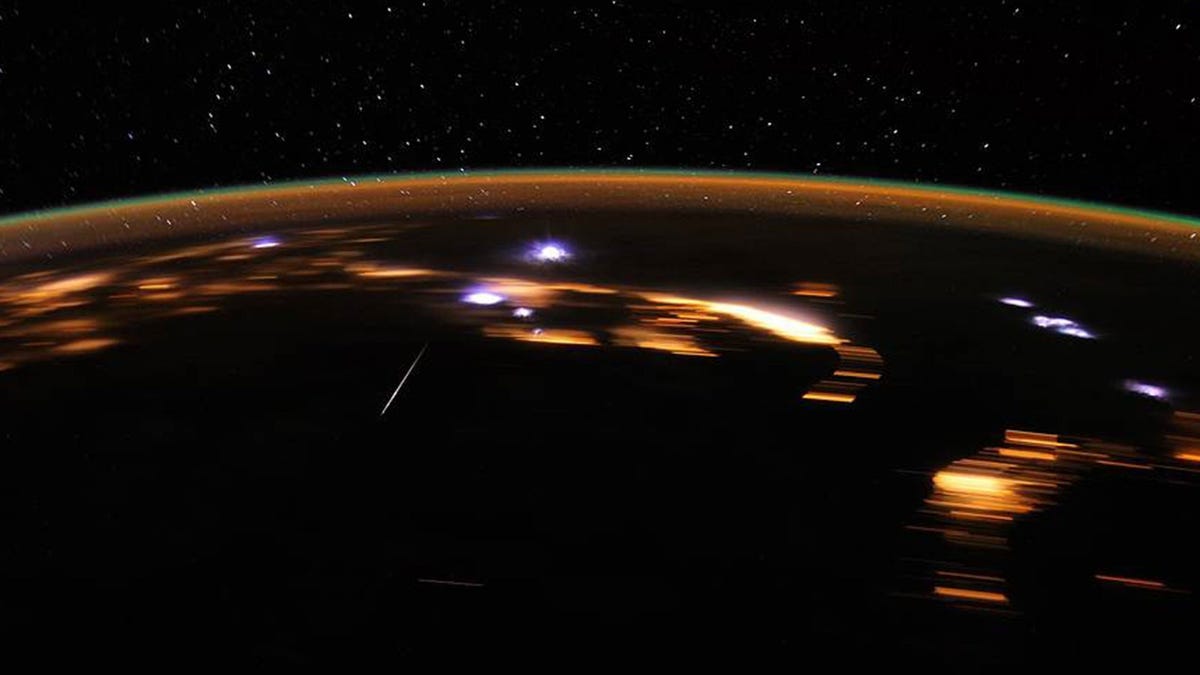
Beyond the solar flyby, April is shaping up to be a dense month for observers, with seven celestial events to track throughout the month.
Chief among these is the arrival of the year’s first major meteor shower. The Lyrids meteor shower is expected to peak between April 22 and April 23, 2026. This event is highlighted as one of the most promising displays of the year, promising a significant increase in the number of shooting stars visible in the night sky.
From a technical perspective, these “shooting stars” are actually meteors—small particles of dust or pebbles, often the size of a grain of sand, that enter Earth’s atmosphere. These particles travel at staggering speeds of approximately 30 kilometers per second. Upon entry, friction with air molecules heats the particles, creating a luminous gas known as plasma, which produces the visible streaks of light. While smaller grains vaporize around 80 km in altitude, larger fragments—some the size of a hazelnut—can survive the descent and reach the surface as meteorites. Particularly bright meteors, those that outshine the planet Venus, are referred to as “bolides.”
The phenomenon occurs when Earth passes through the orbital path of a comet, encountering a cloud of cometary dust. This interaction creates a “radiant,” a single point in the sky from which the meteors appear to originate, typically giving the shower its name based on the constellation where the radiant is located.
While the Lyrids grab center stage this month, the 2026 calendar features several other notable peaks for observers. Following the April events, the Eta Aquarids are expected on May 5–6. The latter half of the year will witness several high-performing showers, including the Perseids (August 12–13), the Orionids (October 20–21), the Leonids (November 17–18), and the Geminids (December 13–14). The year will conclude with the Ursids on December 21–22.
In addition to these scheduled events, there is ongoing interest in a new comet that has captured the attention of observers, particularly in Belgium, as people hope for another spectacular visual display in the night sky.
The intersection of these unpredictable cometary events and periodic meteor showers underscores the dynamic nature of our solar system, providing critical data for those studying celestial mechanics and atmospheric entry.
