
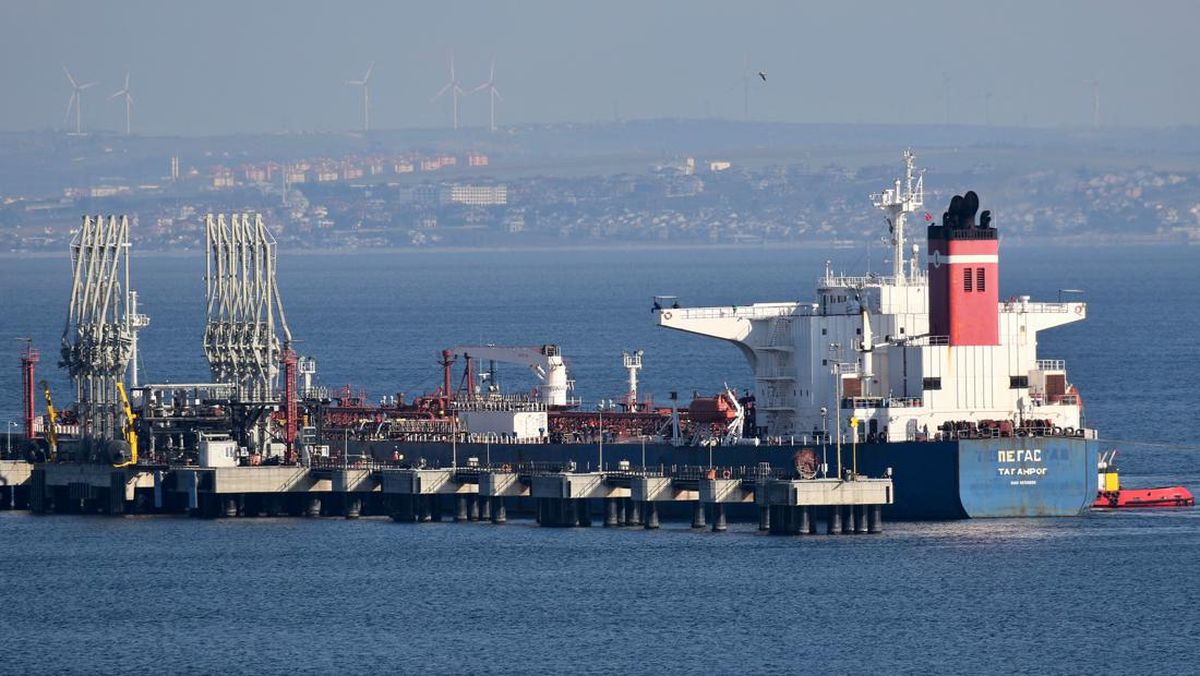
President Donald Trump is reportedly considering lifting sanctions on Russian oil following recent surges in global oil prices.
World oil prices climbed to their highest levels since July 2022, reaching $119 per barrel on Monday, March 9. This increase follows escalating tensions stemming from the conflict involving the U.S., Israel, and Iran in the Middle East.
ADVERTISEMENT
SCROLL TO CONTINUE WITH CONTENT
According to three sources, one option being considered by Trump is to allow certain countries to purchase Russian oil without facing U.S. Penalties.
This consideration reflects concerns within the White House that rising oil prices will negatively impact American businesses and consumers ahead of the midterm elections in November. The outcome of these elections will determine the fate of the Republican Party in Congress.
Speaking to reporters in Florida on Monday, March 9, Trump stated his administration would consider lifting sanctions on some countries in an effort to stabilize the oil market. However, Trump did not specify which countries would be affected.
“We have sanctions on some countries. We will be lifting those sanctions until the Strait [of Hormuz] is opened,” Trump said.
Easing sanctions on Russia could increase global oil supply amid significant disruptions to distribution in the Middle East. However, it could too complicate U.S. Efforts to reduce Russia’s revenue for its war in Ukraine.
During a press conference, Trump also mentioned having had a “incredibly solid conversation” with Russian President Vladimir Putin regarding the war in Ukraine.
Analysts and industry officials have warned that the White House has limited tools to address the surge in oil prices resulting from the conflict with Iran.
The situation could potentially be eased if the U.S. Were able to restore tanker traffic through the Strait of Hormuz. However, a previously announced White House plan to escort ships through the Strait has not significantly increased traffic flow.
The Strait of Hormuz, a narrow waterway between Iran and Oman, is responsible for approximately one-fifth of the world’s oil supply. Iran has effectively closed the strait since the U.S.-Israel launched attacks on February 28.
“The problem is that the options available range from marginal, symbolic, to deeply unwise,” said one source involved in the White House efforts.
Sources also indicated that other options under consideration by Trump include intervening in the oil futures market, eliminating some federal taxes, and lifting requirements of the Jones Act, a law mandating that domestic fuel transportation be carried only by U.S.-flagged vessels.
The U.S. Is also exploring the possibility of releasing crude oil from the G7 reserves. Washington officials have separately discussed this with G7 member countries.
U.S. Energy Secretary Chris Wright confirmed on Monday, March 9, that the U.S. Is considering coordinating a sale of oil from the G7 strategic reserves. However, no final decision has been made.
Last week, the White House requested federal agencies to develop proposals to help alleviate pressure on crude oil and gasoline prices. Discussions reportedly involved White House Chief of Staff Susie Wiles and senior advisor Stephen Miller.
(blq/bac)
