
U.S. President Donald Trump expressed “dissatisfaction” Monday with the selection of Mojtaba Khamenei as the latest Supreme Leader of Iran, following the death of his father, Ali Khamenei. Trump similarly stated he has not yet made a decision regarding the potential deployment of American forces to Iran to secure nuclear materials at a facility in Isfahan.
“We haven’t made any decision on that, and we’re nowhere near it,” Trump told The New York Post, referring to reports of discussions within the U.S. Administration about potentially deploying troops to an underground uranium enrichment facility near Isfahan.
When asked about his plans regarding Mojtaba Khamenei, 56, Trump simply stated, “I’m not going to inform you… I’m not going to tell you. I’m not happy with him.”
“Unconditional Surrender”
Iran announced Monday morning the selection of Mojtaba Khamenei as the country’s new Supreme Leader, succeeding his father, Ali Khamenei, who was reportedly killed in U.S. And Israeli attacks on the Iranian capital, Tehran. The succession comes amid heightened regional instability and ongoing conflict.
Trump previously indicated he does not accept Mojtaba Khamenei’s ascension to the position, demanding “unconditional surrender” from Tehran. The new Supreme Leader already wields significant influence within the Islamic Revolutionary Guard Corps and its extensive business network.
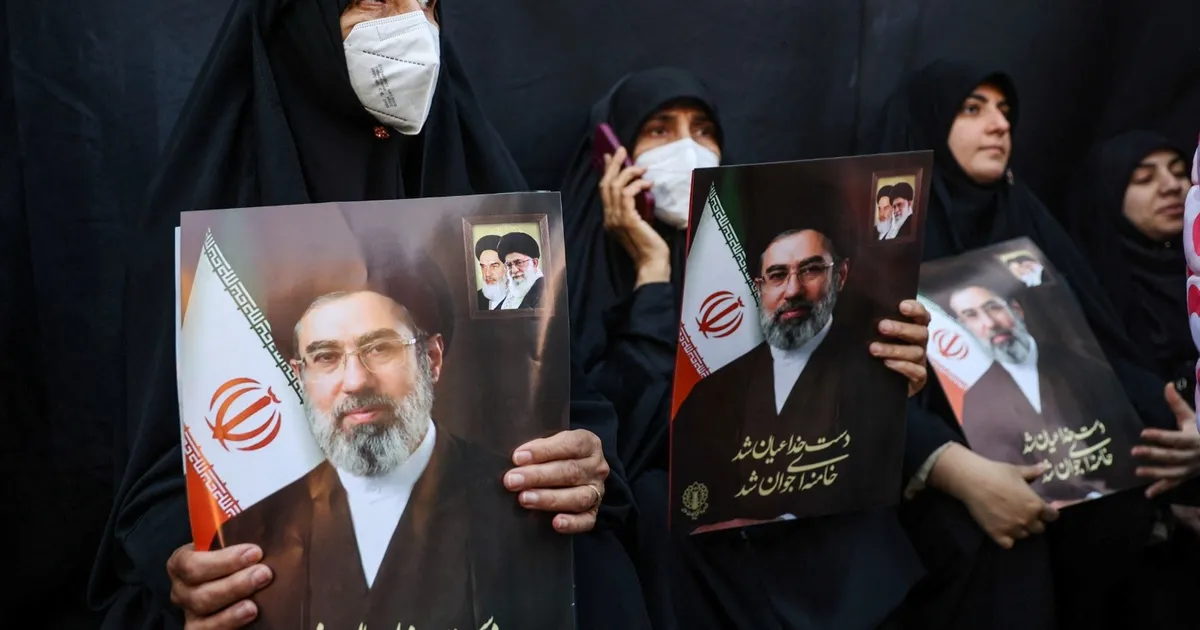
Iranian state media broadcast footage of large crowds gathering in several cities to demonstrate support for the new Supreme Leader, waving the country’s flag and portraits of him and his father.
In Isfahan, state television reported that sounds of explosions, apparently from airstrikes, were heard as supporters of the new Supreme Leader gathered in Imam Square and around a platform displaying images of Mojtaba and Ali Khamenei.
Political Support
Iranian institutions, politicians, and lawmakers have issued statements expressing their loyalty to the new Supreme Leader. The Iranian Defense Council stated in a release, “We will obey the Supreme Commander to the last drop of our blood.”
However, Iranians contacted by Reuters via telephone expressed differing opinions, with supporters praising the authorities’ choice as a sign of defiance and resilience during wartime, while opponents feared the decision would extinguish any hopes for change.
Some Iranians publicly celebrated the death of the former Supreme Leader following weeks of anti-government protests that resulted in thousands of deaths.
But there have been few visible signs of anti-government activity during the war, as activists say it is unsafe to take to the streets while the country is under attack.
Israel has claimed its goal in the war is “to topple the Iranian regime,” but Washington was initially cautious, stating its objective was to destroy Iran’s missile and nuclear capabilities. Trump subsequently escalated the objectives, demanding leadership “that we approve of.”
Israel had indicated it would “kill” anyone who assumes the position of Supreme Leader unless Iran halts what it described as “its hostile policies.” Trump reiterated this demand Sunday, stating that Washington must have a say in the selection of the Iranian Supreme Leader.
“If he doesn’t gain our approval, he won’t last long,” he told ABC News, adding that a decision to complete the war would be “joint” with Israeli Prime Minister Benjamin Netanyahu.
In an interview with the Times of Israel following the announcement of the new Supreme Leader, Trump declined to comment, saying, “We’ll see what happens.”
