
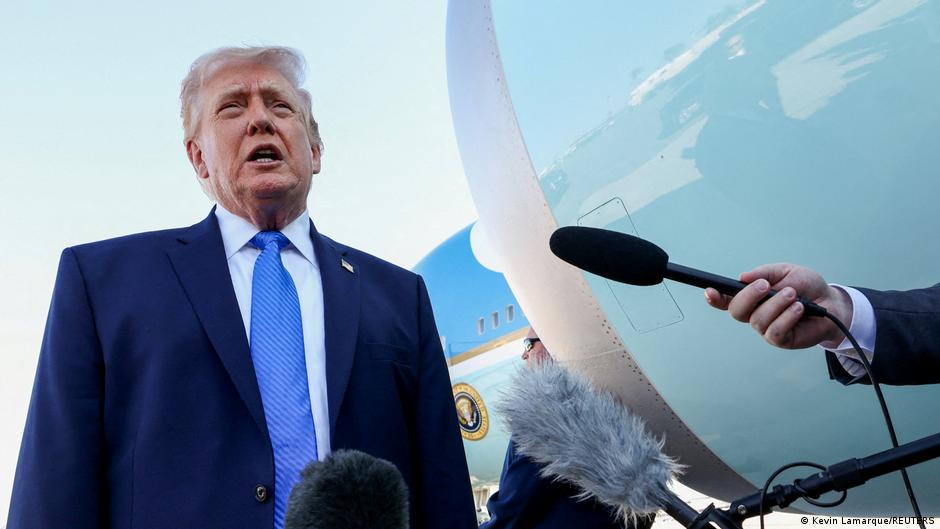
Donald Trump surprised the world on Monday, March 23, by stating his administration had engaged in “very good and productive” conversations with Iran aimed at de-escalating ongoing conflict. The announcement came as Trump also postponed threats of attacks against Iran’s energy sector, after issuing a 48-hour ultimatum to the country. The shifting stance from Washington signals a potential, though uncertain, opening for diplomatic solutions amid heightened regional instability.
Tehran swiftly denied any negotiations were underway. Still, later the same day, Trump indicated he would continue purported dialogue with Iranian negotiators via telephone, adding that his administration had already spoken with a “high-ranking” figure within Iran. Trump claimed both sides had reached “important points of agreement.”
Speaking to reporters in Florida, Trump identified the U.S. Interlocutor as “the most respected and the leader,” but clarified it was not the Supreme Leader, Mojtaba Jamenei.
Trump declined to name the Iranian negotiators, stating he did not “want them to get killed.” These statements raise questions about the impetus behind Trump’s change in direction – a move toward negotiations and a pause on attacks, just days after issuing a two-day ultimatum to destroy Iranian energy infrastructure.
The Role of Intermediaries
Analysts and sources suggest that back-channel diplomacy conducted by Egypt, Turkey, and Pakistan has played a crucial role in efforts to reduce tensions, despite denials from Tehran.
Citing a Turkish source, Middle East Eye reports that Turkey “is trying to build a unified front in the negotiations to counter Israeli influence, collaborating with European, Gulf and other regional actors to help end the conflict.”
Turkey’s Foreign Ministry has declined to comment on whether it transmitted messages between Iran and the United States over the weekend.
Egypt’s Foreign Ministry stated it is undertaking “constant efforts and communications” with all parties.
Pakistan as a Potential Negotiation Site
A senior Pakistani official, speaking to DW on condition of anonymity, said, “Islamabad has been actively collaborating with both sides since the start of the war.”
“Pakistan’s Army Chief, Asim Munir, and Prime Minister Shehbaz Sharif have been in contact with senior U.S. And Iranian officials to mediate and help end the war. Islamabad could be a possible location for high-level talks,” the official said by phone.
A diplomatic source revealed that Pakistani Foreign Minister Ishaq Dar is in direct contact with Iranian officials and is also consulting with Gulf leaders to garner support for mediation initiatives.
Michael Kugelman, a South Asia expert based in Washington, confirmed to DW that “Pakistan is leveraging its close ties with both the U.S. And Iran – a position few countries can claim – and is talking to both capitals to try to pull them back from the brink.”
Possible Iranian Interlocutors
The Pakistani official identified Iranian Foreign Minister Abbas Araghchi and Parliament Speaker Mohammad Bagher Qalibaf as potential contacts in any dialogue with the Trump administration.
Analysts suggest Qalibaf is now the de facto leader of Iran during wartime following the death of Ali Larijani, the former secretary of the country’s Supreme National Security Council. Reports indicate the novel Supreme Leader, Mojtaba Jamenei, has not made any public appearances and may have been killed or seriously injured.
Parliament Speaker Qalibaf is considered a politically “very ambitious” figure, having unsuccessfully run for president three times. Citing two U.S. Officials, Politico reports that the 64-year-old “could lead Iran and negotiate with the Trump administration in the next phase of the war.” He has denied any contact with the United States.
Qalibaf, along with President Masoud Pezeshkian and Hasan Rouhani, a former Iranian president who served from 2013 to 2021, are viewed as moderates within the Iranian regime. These figures may be interested in reaching a negotiated settlement between Iran and the U.S.
(gg/ms)
