
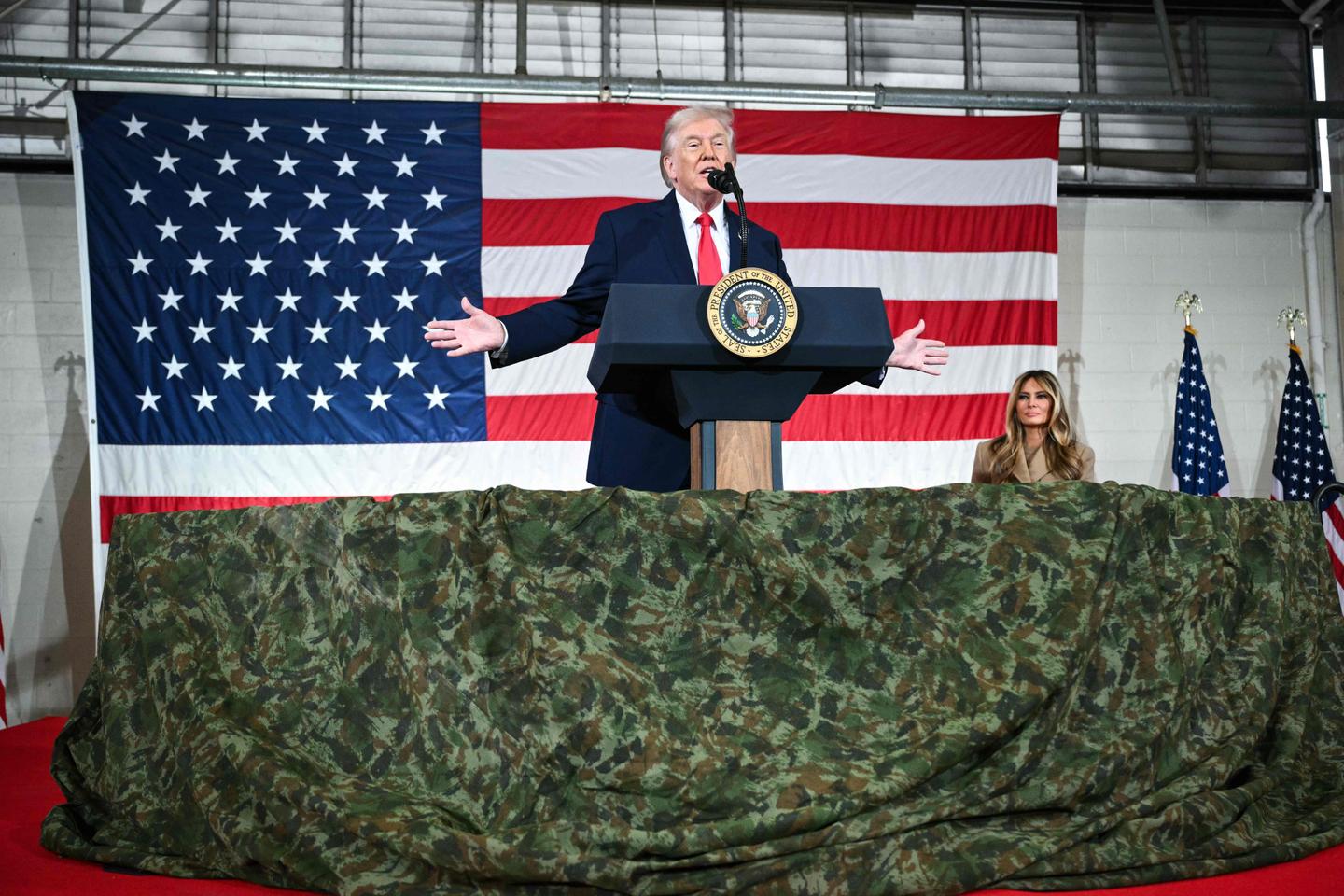
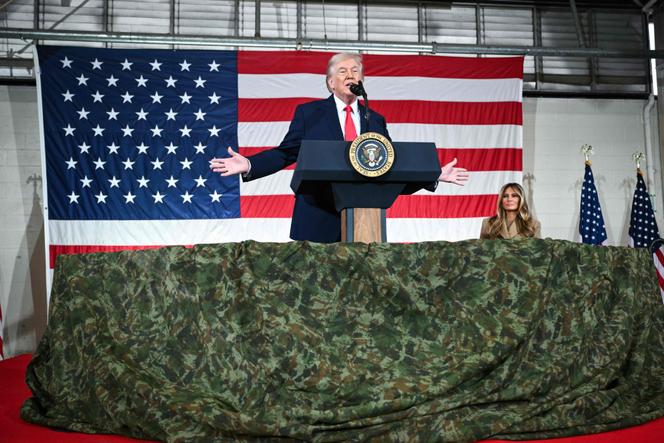
President Donald Trump, during a visit to Fort Bragg, North Carolina, on Friday, February 13, 2026, suggested that regime change in Iran would be “the best thing that could happen,” amid difficult negotiations between Washington and Tehran over Iran’s nuclear and ballistic capabilities. The statement comes as tensions remain high in the region and diplomatic efforts to curb Iran’s nuclear program face significant hurdles.
Trump, speaking to troops and their families, stated, “They’ve been talking and talking and talking for forty-seven years. And during that time we’ve lost a lot of lives.” He further indicated that a failure to reach an agreement would be “particularly traumatic” for Iran.
The President’s remarks follow threats of military intervention in Iran following the suppression of protests in January, which non-governmental organizations say resulted in thousands of deaths. He has continued to issue warnings to Tehran, pressing for a deal, particularly regarding its nuclear program.
Negotiations between the two countries resumed last week in Oman, but their continuation remains uncertain. Trump warned on Thursday that without a deal, there would be a “phase two” that would be “very hard” for Iranians, recalling U.S. Bombing of Iranian nuclear sites during the “twelve-day war” initiated by Israel in June 2025.
In addition to dispatching the aircraft carrier Abraham Lincoln and escort ships to the Gulf in January, Trump announced Friday that a second carrier, the Gerald Ford, would be deployed to the Middle East “very soon.” The specific targets Washington might pursue in the event of intervention, and the U.S.’s intentions toward Iranian leadership, remain unclear.
Israeli Prime Minister Benjamin Netanyahu, following a visit to the White House on Thursday, stated he shared his “skepticism about the quality of any agreement with Iran” with Trump. He reiterated the need to address Israel’s “security needs,” arguing that any U.S.-Iran negotiation must include Iranian ballistic missiles and Tehran’s support for regional militant groups hostile to Israel.
Call from the son of the deposed Shah
Meanwhile, Rafael Grossi, Director General of the International Atomic Energy Agency (IAEA), indicated Friday that an agreement between the IAEA and Iran regarding inspections of the nuclear program was “possible,” but “terribly difficult.” Iran had refused IAEA inspection of its sites that were bombed in June 2025.
Reza Pahlavi, the exiled son of Iran’s last Shah, who resides in the United States and has not returned to Iran since the 1979 Islamic Revolution, called for demonstrations Saturday in Munich, Toronto, and Los Angeles, urging international action against Iran. In a message posted on X, he also called on Iranians within the country to participate by chanting slogans from their windows and rooftops on Saturday and Sunday.
