
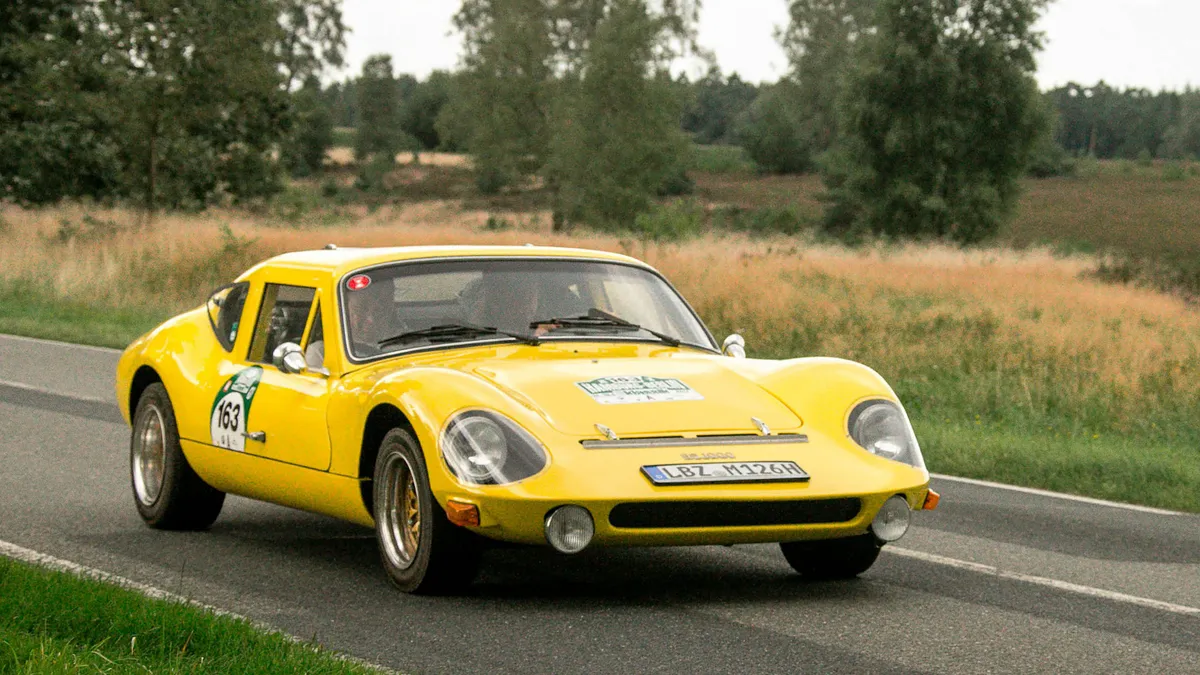
For those who experienced the era of two-stroke engines in the 1960s, 70s, and 80s, automobiles weren’t simply modes of transportation—they were cultural phenomena. These vehicles, now sought after by collectors, evoke a specific sound, smell, and spirit that is increasingly rare on today’s roads.
Photo: Shutterstock
The two-stroke engine wasn’t limited to brands like Trabant and Wartburg; several sports cars likewise utilized this engine type, delivering a unique driving experience alongside the characteristic engine noise. According to a report by Bild, these vehicles offered more than just a distinctive sound.
Two-Stroke Supercar?
The Melkus RS1000, a gem of East German automotive engineering, is a prime example. Produced in Dresden in the late 1960s, this sports coupe’s mid-mounted two-stroke engine generated 70 horsepower from 993 cubic centimeters. Weighing just 680 kg, the vehicle captivated tens of thousands of enthusiasts. The two-stroke powered East German supercar featured gull-wing doors and remains a legend to this day.
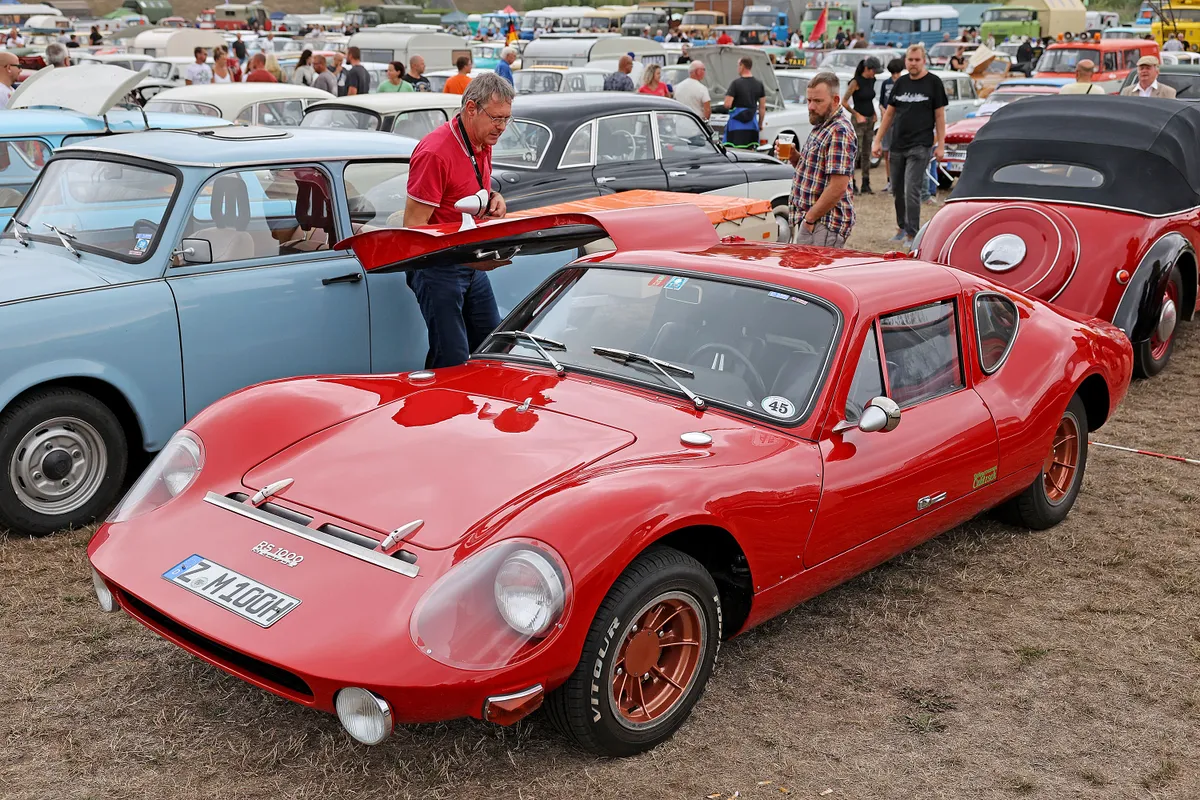
Photo: Peter Gercke/picture alliance/Getty Images
The Auto Union 1000 Sp Roadster offered comparable performance, appearing as if it were an American dream car but powered by a three-cylinder, two-stroke engine. Although its 55 horsepower may seem modest by today’s standards, its lightweight construction and nimble handling provided a pleasant surprise on both the track and the open road.
Beyond these models, the story continues with vehicles like the Swedish Saab Sonett I prototype, the DKW 3=6 Monza, the Brazilian DKW-Vemag GT Malzoni, and the Wartburg Sportwagen 313/1—all demonstrating that the two-stroke engine wasn’t merely a technical specification, but a defining characteristic of the driving experience.
Today, as the automotive industry shifts towards quiet electric motors, these smoky, chiming classics serve as a reminder that driving was once a multi-sensory adventure. The smell of gasoline, the distinctive engine sound, and the raw mechanics combined to create a unique character—something that cannot be replicated through software. The two-stroke engine may have disappeared from everyday use, but its legacy endures as a passionate chapter in automotive history.
