
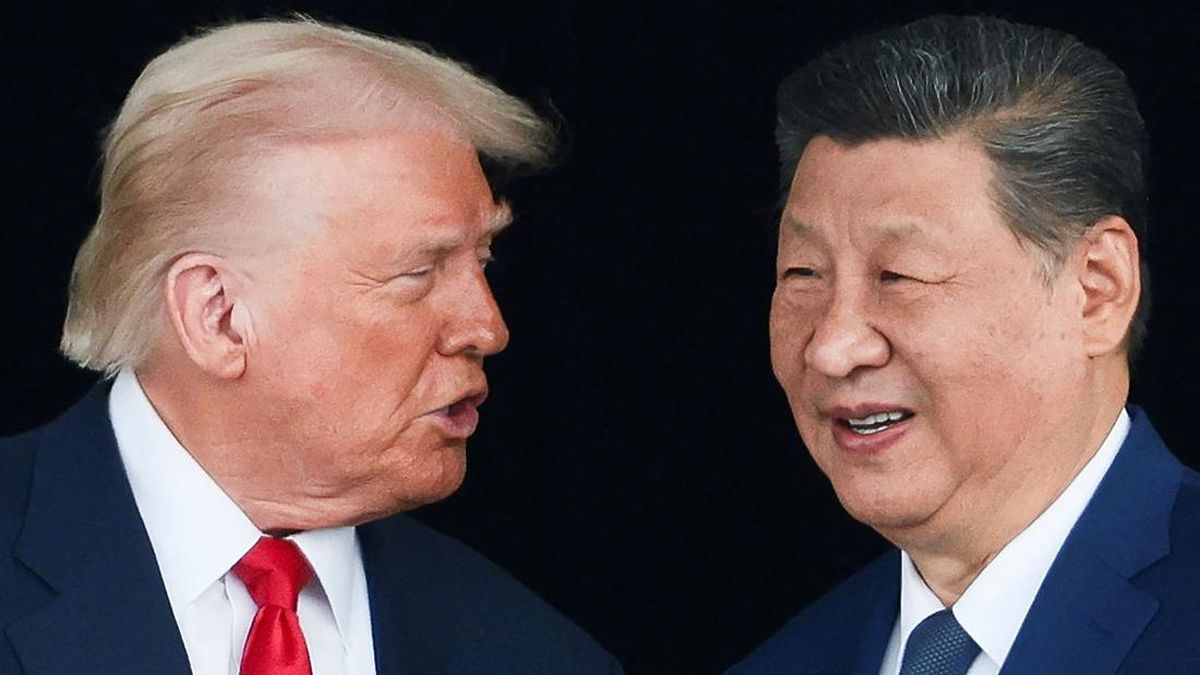
High-level economic officials from the United States and China are scheduled to begin a new round of negotiations in Paris, France, on Sunday, March 15.
The meetings aim to resolve obstacles in the existing trade truce and pave the way for a planned visit by U.S. President Donald Trump to Beijing to meet with Chinese President Xi Jinping later in March.
Discussions, led by U.S. Treasury Secretary Scott Bessent and Chinese Vice Premier He Lifeng, will focus on sensitive issues including trade tariffs, the flow of rare earth minerals, controls on high-tech exports, and Chinese purchases of U.S. Agricultural products.
ADVERTISEMENT
SCROLL TO CONTINUE WITH CONTENT
The talks are taking place at the OECD headquarters as Washington’s attention is also focused on the U.S.-Israel conflict with Iran. Analysts suggest the prospects for a major breakthrough in trade remain limited.
“At a minimum, both sides want to maintain communication to avoid a breakdown and renewed escalation of tensions,” said Scott Kennedy, a China economics expert at CSIS in Washington, according to Reuters.
Key points for discussion include a request from Trump for substantial commitments from China to order Boeing aircraft, liquefied natural gas (LNG), and soybeans.
In return, China is likely to seek a loosening of U.S. Export controls on semiconductor technology.
The U.S. Is also pressing for greater access to rare earth minerals, particularly yttrium, which is crucial for the aerospace industry but currently facing severe shortages.
Impact of the Iran War and Oil Prices
The conflict in the Middle East is expected to loom large over the negotiations. China has a significant stake in the situation, as 45 percent of its oil needs are dependent on the Strait of Hormuz, which is currently under threat of closure.
Treasury Secretary Bessent has announced a 30-day suspension of sanctions to allow the sale of Russian oil held on tankers, in an effort to maintain global supply stability.
Meanwhile, Trump has urged other nations to aid protect shipping lanes through the Strait of Hormuz following U.S. Strikes on oil facilities on Iran’s Kharg Island.
China’s state media outlet, China Daily, described the U.S.-China dialogue as an “anchor of stability” amid the uncertainty of the Middle East crisis. “The last thing the world needs right now is a trade war between the two largest economies,” the editorial stated.
Both sides will review progress on the trade truce declared in Busan, South Korea, in October 2025. So far, China is considered to be meeting its initial commitments by purchasing millions of tons of U.S. Soybeans.
However, new tensions have emerged with the U.S. Launching a “Section 301” investigation into alleged overcapacity and forced labor practices, which could lead to new tariffs in the coming months. This move represents an effort by Trump to rebuild tariff pressure after the U.S. Supreme Court invalidated some of his earlier emergency tariffs.
High-level trade talks between the United States and China are set to resume in Paris on Sunday, March 15, as both nations work to solidify a path toward a potential summit between Presidents Donald Trump and Xi Jinping later this month. The meetings come at a critical juncture in U.S.-China relations, with ongoing global economic uncertainty and escalating geopolitical tensions. U.S. Treasury Secretary Scott Bessent and Chinese Vice Premier He Lifeng will lead the discussions, focusing on a range of sensitive trade issues. These include existing tariffs, access to rare earth minerals, restrictions on the export of advanced technologies, and potential commitments from China to increase purchases of American agricultural products. According to reports, the U.S. Is seeking firm commitments from China regarding orders for Boeing aircraft, liquefied natural gas, and soybeans. In exchange, China is expected to press for a relaxation of U.S. Export controls on semiconductor technology. Access to critical minerals, such as yttrium—essential for the aerospace industry—is also a key priority for the U.S., as current supplies are limited. The negotiations are taking place against the backdrop of the U.S.-Israel conflict with Iran, which is adding complexity to the situation. China has a significant economic interest in the stability of the Middle East, relying on the Strait of Hormuz for 45 percent of its oil supply. Analysts suggest that a major breakthrough in trade negotiations is unlikely, but maintaining open communication channels is a primary goal for both sides. “At a minimum, both sides want to maintain communication to avoid a breakdown and renewed escalation of tensions,” said Scott Kennedy, a China economics expert at the Center for Strategic and International Studies (CSIS) in Washington. The talks will also serve as a review of the trade truce initially agreed upon in Busan, South Korea, in October 2025, where China pledged to increase its purchases of U.S. Soybeans. However, new challenges have emerged, including a U.S. Investigation into alleged overcapacity and forced labor practices in China, which could lead to the imposition of new tariffs.
