
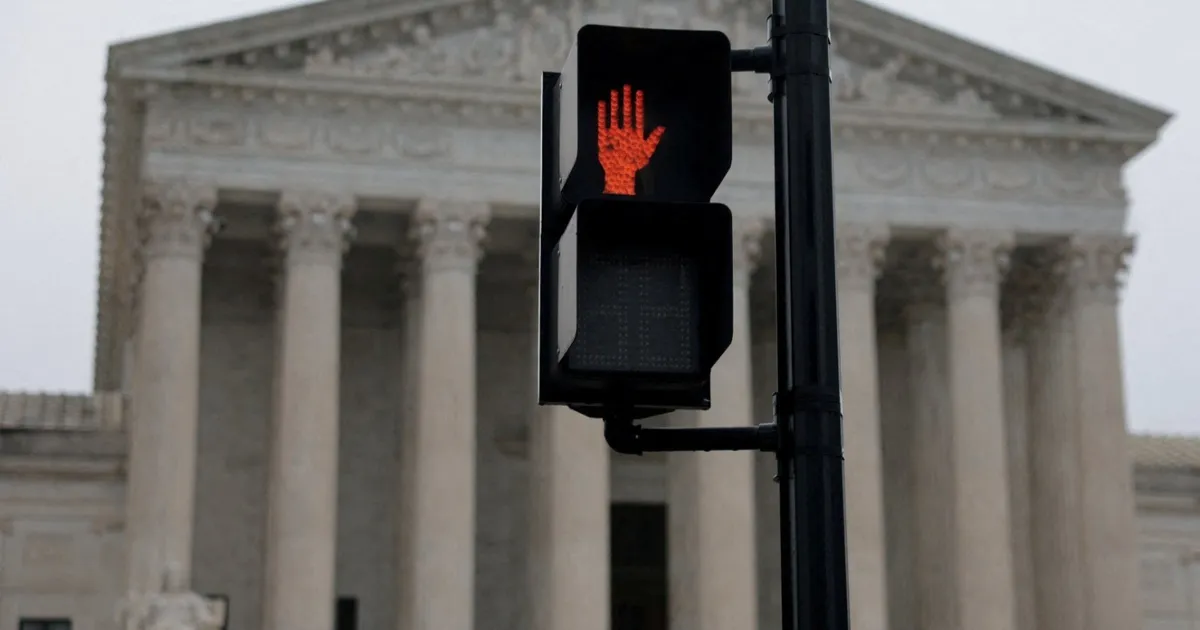
The U.S. Supreme Court’s decision to invalidate a significant portion of tariffs imposed by President Donald Trump has weakened his ability to threaten and enact fresh trade measures, though it hasn’t eliminated the uncertainty facing trading partners and businesses. The ruling, delivered on February 21, 2026, marks a notable moment in the ongoing tension between the executive branch and the judiciary.
Within hours of the Friday ruling, Trump responded by announcing new tariffs of 10% on all imports and ordering fresh trade investigations that could lead to additional levies in the coming months. He subsequently raised those new tariffs to 15%, the maximum allowed under law, less than 24 hours later.
Despite the new tariffs, Trump affirmed that existing trade and investment agreements with nearly 20 countries – many of which include higher tariffs – would remain in place. The move underscores the administration’s continued willingness to leverage trade policy as a tool for broader geopolitical objectives.
Wendy Cutler, a former U.S. Trade official and vice president at the Asia Society Policy Institute, suggested the rapid shift signaled Trump’s desire to keep trading partners on edge. “In his view, that ambiguity gives him enormous additional leverage beyond just looking at the tariffs themselves, because people are worried about what he will do,” she said.
Yet, Cutler and other trade experts agree that the Supreme Court’s decision has curtailed Trump’s power. The alternative 10% tariffs are only set to last 150 days, and new tariffs imposed under other laws will take longer to implement, depriving the President of the ability to impose tariffs “at any time, in any place, for any reason” after the court rejected his use of the International Emergency Economic Powers Act.
“He’s lost his favorite tool… particularly when it comes to matters of foreign policy and things that bother him in other countries that have nothing to do with trade, he’s lost the ability to credibly make threats,” Cutler stated.
Limiting the Threat of Tariffs
William Reinsch, a former U.S. Government official now at the Center for Strategic and International Studies, echoed that sentiment, noting the 6-3 Supreme Court ruling diminished Trump’s capacity to intimidate other nations. “This takes away from his ability to wave the big stick,” he said, although the economic impact is expected to be limited as the 10% tariffs and other levies in the coming months are likely to replace those now deemed unlawful.
Michael Froman, president of the Council on Foreign Relations, said the ruling and the administration’s response left many questions unanswered, including how importers can recover illegally collected tariffs and what additional tariffs may still be coming.
Froman, who served as the chief trade negotiator for former President Barack Obama from 2013 to 2017, added, “Perhaps the most important effect of the Supreme Court decision is that it should limit the threat of tariffs or make them less of a preferred means of coercion or punishment by the President outside the realm of trade.”
This development may offer some relief to countries that have struggled with the unpredictability of Trump’s decisions and his frequent threats to impose tariffs to punish them over non-trade issues and secure concessions and foreign investment.
Trump had relied on the International Emergency Economic Powers Act to impose tariffs on a range of non-trade issues, leaving countries feeling vulnerable and increasing uncertainty for businesses worldwide.
The President also threatened tariffs on European nations over their opposition to his claims regarding Greenland, on Canada for allowing the import of electric cars from China, and on Brazil over its treatment of his former far-right ally, President Jair Bolsonaro.
“Like Someone Without a Sword”
Josh Lipsky, director of the Atlantic Council’s international economics program, cautioned that it’s too early to predict the impact of the Supreme Court ruling on Trump’s leverage, given the ambiguity surrounding the new tariffs and the President’s willingness to use a variety of tools.
“It’s a big blow to his economic and international trade agenda, and it’s not necessarily a knockout blow, because of other authorities, but we require to notice how things actually play out… the (tariff fleet) seems to have come to the rescue despite the International Emergency Economic Powers Act, but how that affects leverage is another question that will become clear in the coming months,” he said.
The fate of roughly 20 framework agreements or more formal trade deals reached by the Trump administration with countries in recent months, based on tariff threats under the International Emergency Economic Powers Act, also remains unclear.
Trump, U.S. Trade Representative Jameson Greer, and Treasury Secretary Scott Pleasant insisted on Friday that the agreements should remain in effect even if those rates are higher than the overall provisional tariff.
Analysts expressed skepticism that countries would seek to cancel or renegotiate the agreements for fear of provoking Trump’s ire.
Miriam Sapiro, a former U.S. Trade official and a lecturer in international and public affairs at Columbia University, suggested Trump has perhaps become “like someone without a sword,” but doesn’t expect the existing agreements to unravel.
However, she believes the ruling may give countries greater leverage in new or ongoing negotiations with the Trump administration. “There will still be an interest in making deals because of the uncertainty and the desire to keep the United States an ally and a strong partner, but countries have a little more bargaining power than they felt before.”
Sapiro noted that using the International Emergency Economic Powers Act was a “risk” Trump was willing to take because it helped him quickly conclude some trade deals, although the details still need to be worked out in some cases and implementation may be difficult.
Jameson Greer told “Special Report” on Fox News that the law was the appropriate tool at the time given Trump’s desire to move quickly and flexibly, and that it helped open access to markets for American companies. “We don’t regret that… we’ll just use a different tool,” he said.
Initial reactions from abroad were cautious, with countries taking time to assess the Supreme Court ruling.
South Korea said it would review the ruling and the U.S. Response, and plans to continue “friendly” discussions regarding the implementation of a tariff agreement finalized in November with investment pledges worth $350 billion.
Tom Ramage, a policy analyst at the Korea Economic Institute of America, said the administration’s continued ability to resort to other tariff measures is likely to convince South Korea and its companies to maintain their commitments.
“Anything less could increase the likelihood that the President will impose further countermeasures, especially if the administration seeks to make countries that seek to back away from negotiated agreements an example,” he wrote on the institute’s website.
