
Despite escalating tensions between the United States and Iran in recent weeks, and a significant U.S. Military deployment to the region, diplomatic talks continued regarding limitations on Iran’s nuclear program. However, developments over the past 48 hours suggest a shift toward confrontation.
Just two days after a meeting where both sides expressed optimism about the progress of negotiations, reports emerged Saturday morning of strikes against targets in Iran. The shift underscores the volatile nature of the situation and the potential for rapid escalation in the Middle East.
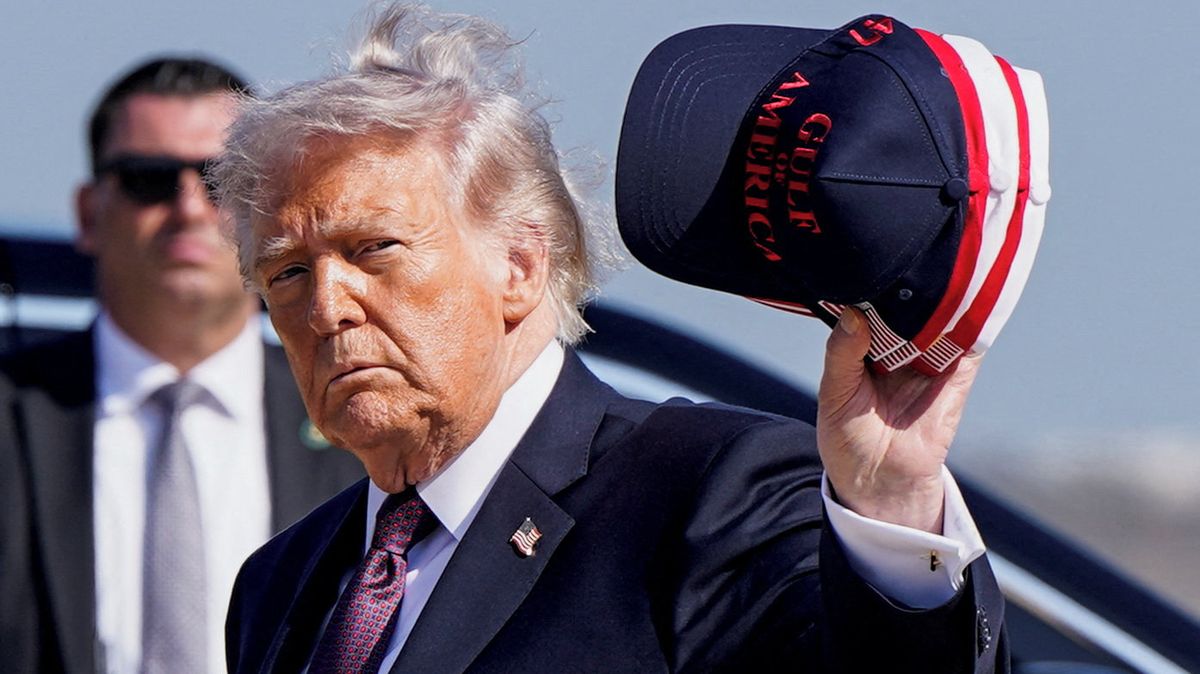
Prior to the strikes, President Trump indicated he was “not thrilled” with the state of the discussions, but maintained he had not yet made a decision regarding military action.
The apparent turnaround came after what officials described as the most intensive round of talks to date, held Thursday in Geneva. Both Washington and Tehran initially reported positive developments. Oman’s Foreign Minister, acting as a mediator, even suggested “significant progress” had been made.
However, according to a source within the U.S. Administration, President Trump was already expressing reservations. Reuters reported that advisors presented him with a scenario assessing a potential attack as “high risk, high reward,” acknowledging the possibility of substantial losses for the U.S. But similarly suggesting a potential shift in the regional balance of power.
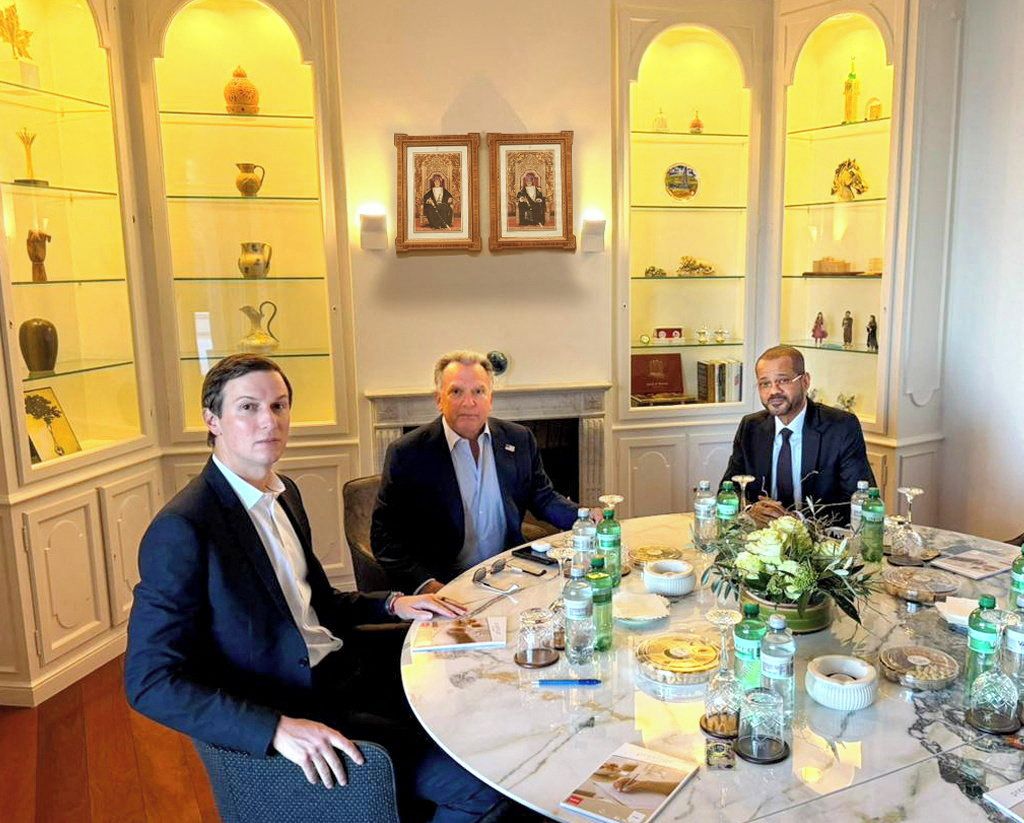
Photo: Reuters
Jared Kushner, Steve Witkoff and Badr Albusaidi during negotiations on Iran’s nuclear program in Geneva on February 26.
The initial optimism followed a meeting between representatives from both countries on Thursday. Iranian Foreign Minister Abbas Araghchi stated there was “mutual understanding” that both sides would continue discussions in more detail.
While no agreement was reached, diplomats from both sides described the talks as the most intensive to date. Omani Foreign Minister Badr Busaydi, who mediated the discussions, indicated that U.S. And Iranian officials had achieved “significant progress.” He added that further technical discussions were scheduled for next week in Vienna.
President Trump, represented by his special envoy for the Middle East Steve Witkoff and his son-in-law Jared Kushner, agreed to further talks Friday, though he reiterated his dissatisfaction with the lack of a deal. “I’m not thrilled with them, we’ll see what happens,” he told reporters before departing the White House for Texas.

The U.S. State Department stated February 25 that “the Iranian regime continues to mismanage its economy, with devastating consequences for its people, and prioritizes funding foreign proxies and missiles over the basic needs of ordinary Iranians.” The statement announced expanded sanctions targeting entities linked to Iran and its shadow fleet.
Tehran reportedly made lifting sanctions, which have crippled the Iranian economy, a key demand in the negotiations. Iranian officials stated that Iran has the right to peacefully utilize nuclear energy and rejected U.S. Demands to halt uranium enrichment and transfer 400 kg of enriched uranium out of the country.
Iran continues to deny seeking a nuclear weapon, maintaining its program is for peaceful purposes only. However, it remains the only non-nuclear weapon state that is enriching uranium to a level approaching that needed for weapons development.
According to the BBC, Iranian negotiators reportedly offered certain concessions, though this has not been officially confirmed by Tehran. One possibility discussed was allowing Iran to enrich uranium at a minimal level – sufficient for power generation – under international supervision after a period of three to five years.
Patience Wears Thin
With the deadline approaching, President Trump appeared to lose patience. The move follows a pattern of unexpected decisions he has made in the past.
Some experts believed a deal was still possible. Rafael Grossi, Director General of the International Atomic Energy Agency, previously stated to the BBC that a new agreement was both possible and urgently needed, though he cautioned that the diplomatic window might not remain open for long.
Trump had been increasing pressure on Iran, ordering the largest U.S. Military buildup in the Middle East since the 2003 invasion of Iraq and employing economic sanctions.
The Attack on Iran in Pictures:

Photo: Profimedia.cz
The Republican president, who has at times sought peaceful resolutions, appeared to have abandoned that approach, at least temporarily. This mirrors a pattern seen after a similar strike against a Middle Eastern power in June of last year, which halted negotiations. Tehran used that opportunity to suspend cooperation with the International Atomic Energy Agency and expel its inspectors.
Trump had previously claimed that the earlier strike completely dismantled Iran’s nuclear program, though experts disputed that assessment. According to the IAEA, Iran was not imminently developing a nuclear weapon.
Negotiations resumed afterward, with Iran using its program as leverage to seek the removal of international sanctions impacting its economy.
According to Josef Kraus, a political scientist and Iran expert at Masaryk University, Tehran was prepared to significantly limit its nuclear program in accordance with international conditions and agreements.
Interview:

According to Iranian state media, negotiators from the Islamic Republic insisted that Iran has the right to peacefully utilize nuclear energy and rejected U.S. Demands for a complete halt to uranium enrichment on Iranian soil and the transfer of 400 kg of enriched uranium abroad.
Tehran repeatedly denies seeking a nuclear weapon and maintains its program is for peaceful purposes only. However, it remains the only non-nuclear weapon state that is enriching uranium to a level approaching that needed for weapons development.
According to the British Broadcasting Corporation, Iranian negotiators reportedly offered certain concessions, though this has not been officially confirmed by Tehran. One possibility discussed was allowing Iran to enrich uranium at a minimal level – sufficient for power generation – under international supervision after a period of three to five years.
