
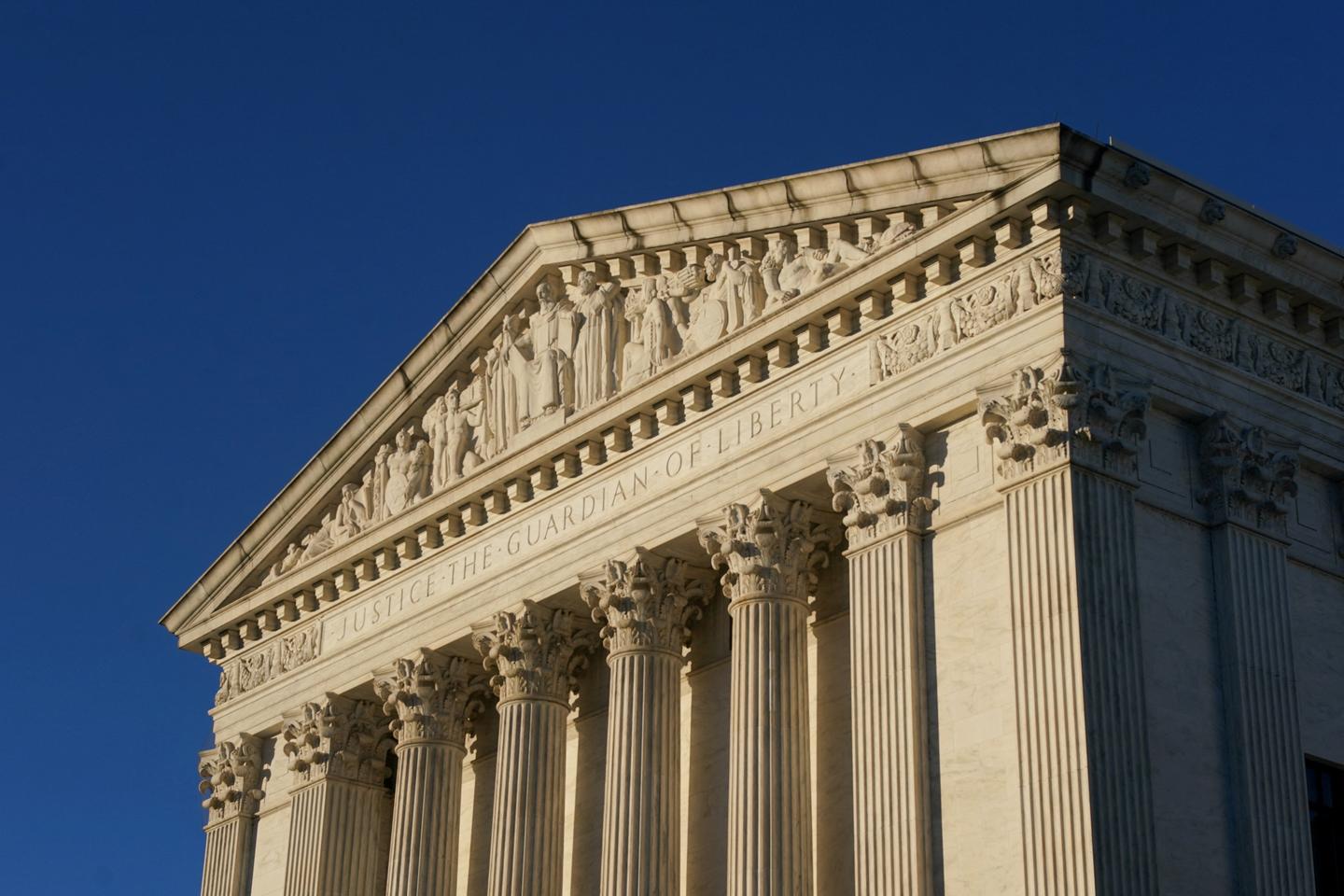

A little over a year into his second term, President Donald Trump is facing a significant setback to a cornerstone of his economic policy. On Friday, February 20, the U.S. Supreme Court ruled that tariffs imposed by the President without Congressional approval – citing national emergency – are unlawful. Since Mr. Trump’s return to office, these import taxes have been the subject of intense scrutiny from the business community and international trading partners.
The nine justices – with a 6-3 decision – addressed a central constitutional question: a president cannot unilaterally impose tariffs in the name of national emergency. The ruling is expected to have significant implications for international trade and U.S. Economic policy.
What Did the Supreme Court Rule On?
Early in his second term, Donald Trump imposed modern tariffs on imports from numerous countries, famously calling tariffs the “most beautiful word in the dictionary.” After initially targeting Canada, Mexico, and China, he broadened tariffs to most countries globally over the summer, with levels varying based on negotiated agreements.
This move sparked outrage abroad and within the U.S., where businesses and states challenged the policy in court. The Supreme Court ultimately consolidated two cases brought by tiny businesses and a dozen Democratic states, arguing the administration had overstepped its authority.
The President justified these measures by invoking the International Emergency Economic Powers Act (IEEPA) of 1977, which allows the executive branch to capture exceptional economic measures without Congressional approval in cases of national emergency – here, the country’s trade deficit, which Mr. Trump deemed a threat to national security.
However, the IEEPA has never previously been used as the basis for broad-based tariffs, while the U.S. Constitution explicitly grants Congress the power to levy taxes and set trade policy. In its ruling on February 20, the Supreme Court found that the IEEPA does not provide explicit authorization for unilaterally imposing import taxes. By a vote of 6-3, the Court determined that Donald Trump had usurped a power belonging to the legislative branch, effectively invalidating most of the tariffs imposed under that authority.
Why is This Decision Significant?
The Supreme Court’s decision goes beyond the issue of tariffs. By striking down the use of the IEEPA for imposing import duties, it sets limits on how a president can conduct economic policy.
This invalidation sends a strong signal to the executive branch, clarifying that emergency powers cannot serve as a general basis for structural economic policy choices, and reinforcing the role of Congress.
Conversely, upholding the interpretation defended by Donald Trump would have opened the door to a much wider use of emergency laws. Future presidents would have been able to invoke the “national emergency” to quickly impose large-scale economic measures, potentially normalizing a tool intended for exceptional circumstances.
What are the Implications of Invalidating the Tariffs?
With the Supreme Court’s ruling declaring the tariffs unlawful, the economic consequences could be significant. In theory, such a decision would open the door to refund requests from businesses and importers who paid these levies between February and mid-December 2025. More than $133 billion (113 billion euros) in taxes could now be subject to challenge, according to the U.S. Customs and Border Protection agency.
However, these refunds are not automatic: businesses must initiate individual legal proceedings, which are likely to be lengthy and complex.
this invalidation does not necessarily mean the end of these tariffs. Sources close to the President have already suggested the possibility of quickly reinstating new tariffs of 10% on other legal grounds, in order to maintain this lever of pressure.
Why the Stakes are Political, Diplomatic, and Institutional for Trump
The Supreme Court’s decision also has implications for U.S. Diplomatic relations with foreign partners. Since returning to power, Donald Trump has used tariffs as his primary tool to negotiate with or exert pressure on international counterparts who do not align with his positions.
The current situation with Greenland – a Danish territory that the U.S. President wishes to acquire – illustrates the U.S. Government’s stance in its relationship with trading partners. Donald Trump announced plans to apply additional punitive tariffs (10% from February 1, then 25% in June) against eight European countries opposing his annexation bid, directly targeting France by threatening tariffs of up to 200% on wines and champagnes after President Emmanuel Macron refused to join his peace council.
The loss of this pressure tactic on trading partners, now confirmed by the court, could weaken his ability to use tariffs as an immediate diplomatic tool and require him to work with Congress for any comparable measures.
