
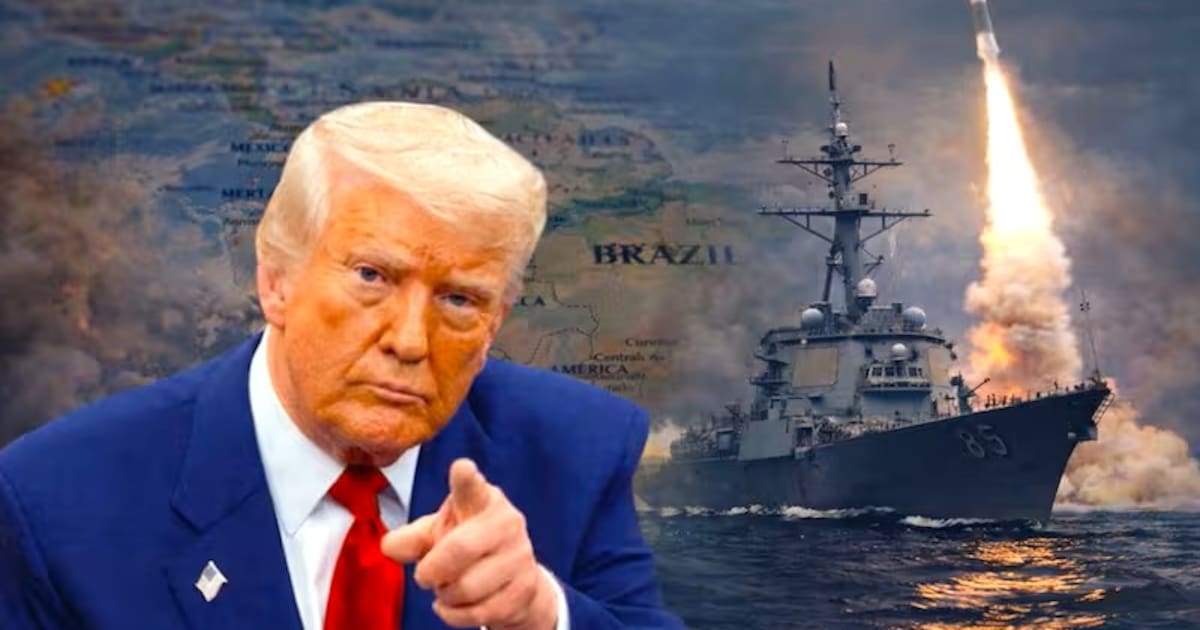
The United States is set to establish a new naval and military base in Latin America, marking a significant escalation in its efforts to counter Chinese influence in the region. According to reports, the U.S. Will invest over $1 billion in the project, which serves as a strategic counterweight to Beijing’s expanding footprint in South America.
In a move that underscores the growing geopolitical tension, Peru has approved a debt of $1.225 billion for the construction of this new naval base
with U.S. Support. The facility is strategically positioned approximately 80 kilometers from the megaport of Chancay, a massive infrastructure project funded by Chinese capital that has become a focal point of the rivalry between Washington and Beijing.
The dispute over these strategic ports in Peru highlights a broader struggle for maritime and commercial supremacy. The Chancay port, which opened in 2024, is designed to be a primary hub connecting Asia and South America. However, the U.S. Government has raised alarms over the loss of Peruvian sovereignty, particularly following a court ruling that limited the supervision and regulatory power of the Peruvian agency Ositran over the terminal, which is 60% controlled by the Chinese company Cosco Shipping.
Washington has warned that “cheap Chinese money” could jeopardize Peru’s control over critical infrastructure. This push to reclaim influence is part of President Donald Trump’s broader “Doctrina Donroe,” aimed at expanding U.S. Security and economic interests while containing Chinese investment in the Western Hemisphere. These efforts were further emphasized as the U.S. Confirmed the investment of more than $1 billion
to solidify its military presence in the region.
Despite the military alignment, diplomatic relations remain complex. Peru will not be represented at the high-level summit hosted by President Trump in Miami this Saturday, April 11, 2026. While the Peruvian government was invited during the tenure of former president José Jerí, the current president, José Balcázar, is reportedly unable to attend due to a national emergency caused by severe rains affecting the country.
The geopolitical tug-of-war comes at a time of significant political volatility in Peru. The country recently saw the fall of former president José Jerí, who served just over four months before being removed following the “Chifagate” scandal, involving clandestine meetings with Chinese businessmen. This scandal brought the deep-rooted influence of Beijing to the forefront, as China has already displaced the United States as Peru’s primary trading partner, driven largely by Peru’s export of raw materials.
As the U.S. Moves forward with the construction of a new naval base
, Peru finds itself in a delicate balancing act between its traditional security ally in Washington and its dominant economic partner in Beijing.
