
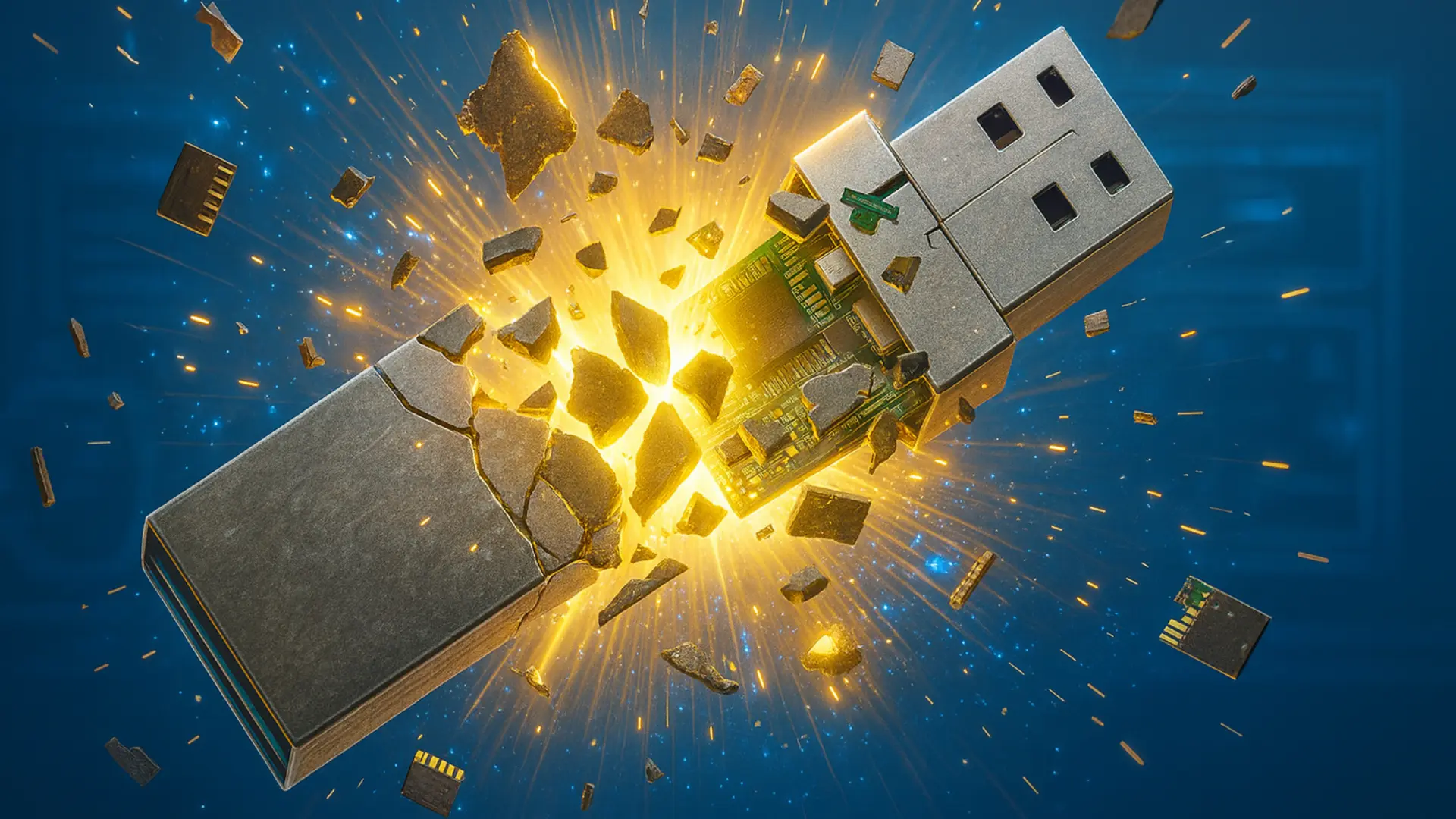
USB drives are rapidly becoming a secondary consideration for data storage and transfer as faster, higher-capacity, and more integrated options emerge. Once a staple in backpacks and tech kits, the traditional USB drive is losing ground as a daily-use tool.
The shift reflects a broader trend in how people manage and move data. Over the past few years, reliance on USB drives for tasks like transferring files between computers, remote function, and creating backups has diminished. Users are increasingly turning to external SSDs, hard drives, SD cards, and cloud storage for these purposes.
This isn’t simply a change in habits. USB drives are facing limitations in capacity, speed, and compatibility with modern ports, particularly USB-C, while the older USB-A standard is being phased out. This transition is impacting the broader tech landscape as manufacturers prioritize newer connectivity standards.
The need for adapters to use older USB drives with newer devices undermines the format’s inherent immediacy and portability. But how do USB drives stack up against the alternatives?
Why USB Drives Are Falling Behind
Originally designed for quick and simple file transfers, USB drives are now struggling to meet current demands. For professionals working with high-resolution photos, 4K video, virtual machines, or full system backups, capacities of 64 or 128 GB often prove insufficient.
Speed is another critical differentiator. While some drives advertise USB 3.0 or USB 3.2 compatibility, many still utilize modest memory and controllers, resulting in real-world write speeds significantly slower than those of external SSDs. This bottleneck is particularly noticeable when copying large folders or heavy project files.
The physical connector also presents a challenge. Most modern laptops, tablets, and even monitors rely on USB‑C, while a large portion of USB drives remain tethered to the older USB‑A standard. While dual-connector models exist, they often compromise performance to maintain a lower price point.
USB drives are becoming more useful as a specialized tool rather than a primary storage solution.
Modern Alternatives to the USB Drive
External SSDs: Connected via USB‑C or Thunderbolt, external SSDs offer significantly faster read and write speeds than USB drives, with capacities ranging from 500 GB to several terabytes. They are particularly well-suited for video editing, large photo libraries, and complete system backups.
HDDs: If capacity is a priority and cost is a concern, external hard drives remain a viable option. Models with multiple terabytes are available at competitive prices, making them ideal for archiving, periodic backups, multimedia storage, and long-term data preservation.
SD and microSD Cards: These cards offer increasing capacities, good speeds in mid-to-high-end models, and a competitive cost per gigabyte. Their tiny size makes them convenient for carrying multiple cards, but also increases the risk of loss or damage. They function well as interchangeable storage between devices, reducing reliance on traditional USB drives.
Cloud Storage: These services allow access to files from various devices, folder sharing with other users, and document synchronization without physical transfer. They are especially useful for remote work and collaboration. However, they require a reliable internet connection and, for large storage needs, a paid subscription.
The Remaining Role of USB Drives
Despite the competition, USB drives aren’t disappearing entirely. They remain useful for creating bootable drives, installing operating systems, updating firmware on routers, televisions, or consoles, and transferring files in environments without internet access or cloud connectivity.
Their simplicity is a key advantage: plug in, copy, and go, without relying on accounts or additional applications. However, beyond these specific uses, their appeal is waning.
For your daily workflow, when reliability, capacity, and speed are essential, an external SSD, a combination of HDD and cloud storage, or SD cards—depending on your devices—are more logical choices.
The USB drive is transitioning from a universal standard to a niche tool. It makes sense in specific technical scenarios, but no longer fits as well within an ecosystem dominated by USB‑C, massive storage, and services like Google Drive or iCloud.
If you consider how you work and the types of data you move, you’ll find it more efficient to choose the alternative based on the task: SSD for projects and backups, HDD for archiving, SD cards for photography and video, and the cloud for collaboration and access from anywhere.
More than an abrupt end, the evolution of the USB drive is a logical transition. They’ll still be around when you need them, but they’ve yielded prominence to options that better meet current demands for capacity, speed, and flexibility.
