
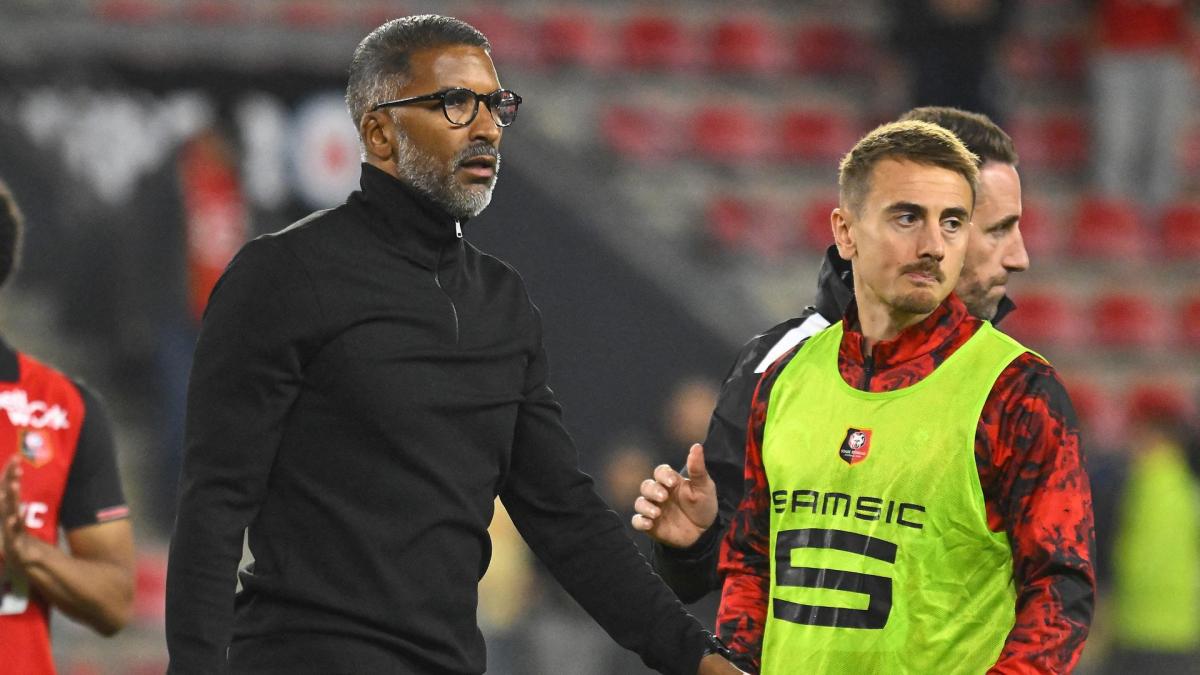
Valentin Rongier is quickly adjusting to life at Rennes, even as his former coach embarks on a new chapter. Habib Beye, recently departed from Rennes, has joined Olympique de Marseille and is set to make his debut with the club Friday evening against Stade Brestois. Before that, midfielder Rongier, who previously played for Nantes, reflected on Beye’s exit.
“I now have a bit of experience in football, I’ve been in this bubble for a long time, and I’m used to it,” Rongier told reporters. “In today’s football, there’s a lot of movement, whether it’s players or coaches. It’s not that we don’t become attached to people, but we know it’s part of the job and it can happen at any time. We had probably reached the end of something, and the management made that decision. As players, we have nothing to say about that, only to gain to perform and take responsibility, because if it didn’t work, it’s not just the coach’s fault, but everyone’s. There’s a lot of self-reflection within the group.”
When asked specifically about Beye’s time at Rennes, Rongier was quick to defend his former manager. “I’m only going to speak for myself. I continued to communicate with him, and I don’t feel like the group abandoned him. Perhaps the results during that period didn’t support the team maintain morale, or find the positive energy to put into training and matches. It’s sometimes difficult to explain. But if that’s the case for some, I think it’s a shame because we are ‘just’ players and we need to retain all our energy for the field. The truth of football is on the field.”
Rongier also highlighted Beye’s willingness to listen to the players. “The feeling I had when working with coach Beye was that he was attentive. When we went to him to say we needed to work on something, he tried to implement it with his assistants in training. When we strung together good results, we stopped talking about these issues. That’s the nature of sport, of football – it’s not always linear. It’s up to us, the players, to take responsibility for our status. We are largely responsible for what happened.”
Pub. Le – MAJ le
