
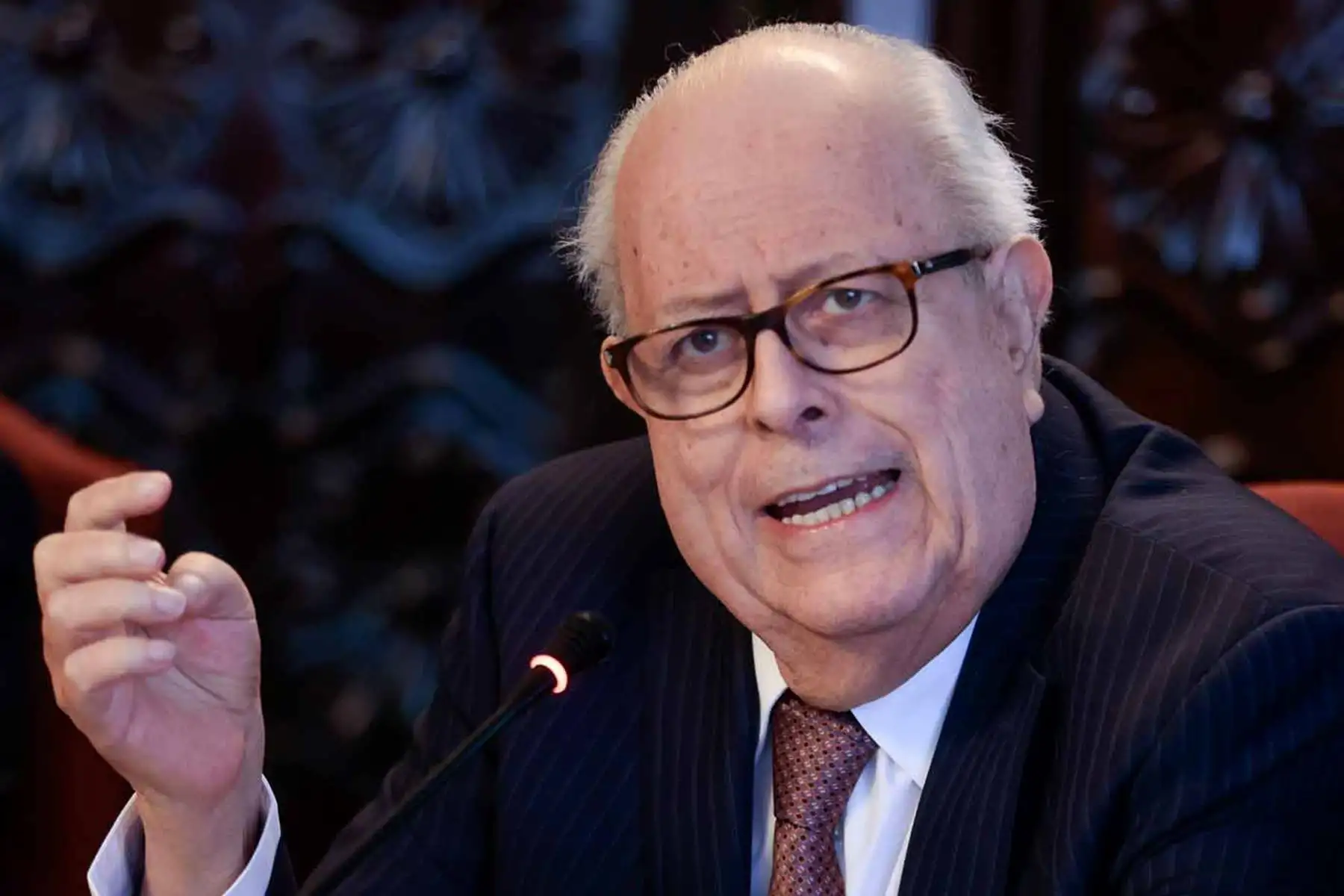
Peru’s central bank chief, Julio Velarde, indicated on March 20, 2026, that the ongoing conflict in the Middle East could potentially be resolved before the end of the first half of the year. The statement comes as global markets remain sensitive to geopolitical risks and their potential impact on economic stability.
“The scenario we are contemplating is still benign, and a large part of the problem could be resolved before the end of this first semester,” Velarde said during the presentation of the latest Inflation Report. This assessment offers a cautiously optimistic outlook amid heightened global uncertainty.
Velarde added, “This opinion is more or less shared by a large part of the economic policy advisors, and the basic scenario for everyone is benign, probably because we have the vision of economists and believe that people are rational.”
“The idea of everyone now is that the level-headed people will grab charge and seek agreements that can be achieved. But so far, the basic scenario is benign, which allows the growth we are projecting to still be relatively solid, even a little higher growth than was in the December report,” he continued.
Global Growth Outlook
Velarde too noted a slight upward revision in projections for global economic growth, increasing from 3% to 3.1% for this year and from 2.9% to 3% for 2027. This improvement is attributed to a stronger performance from developed economies. However, he cautioned that global risks have increased due to the Middle East conflict.
Drawing a parallel to the COVID-19 pandemic in 2020, Velarde stated, “When there was Covid (year 2020), despite having the Reporte de Inflación ready, we did not present it because the uncertainty was too great. We are not at that level, but probably many of the projections we present now will not be correct.” This acknowledgement underscores the inherent challenges in forecasting during periods of geopolitical instability.
