
Nearly three months after the capture of Nicolás Maduro by U.S. Forces, Venezuela is at a critical juncture, prompting a reassessment of potential paths forward. The current situation, led by Delcy Rodríguez, is being weighed against alternative scenarios that were previously considered, including a transition under María Corina Machado and recommendations outlined by analyst Benjamín Tripier. This comes as the country grapples with political and economic uncertainty following Maduro’s removal from power.
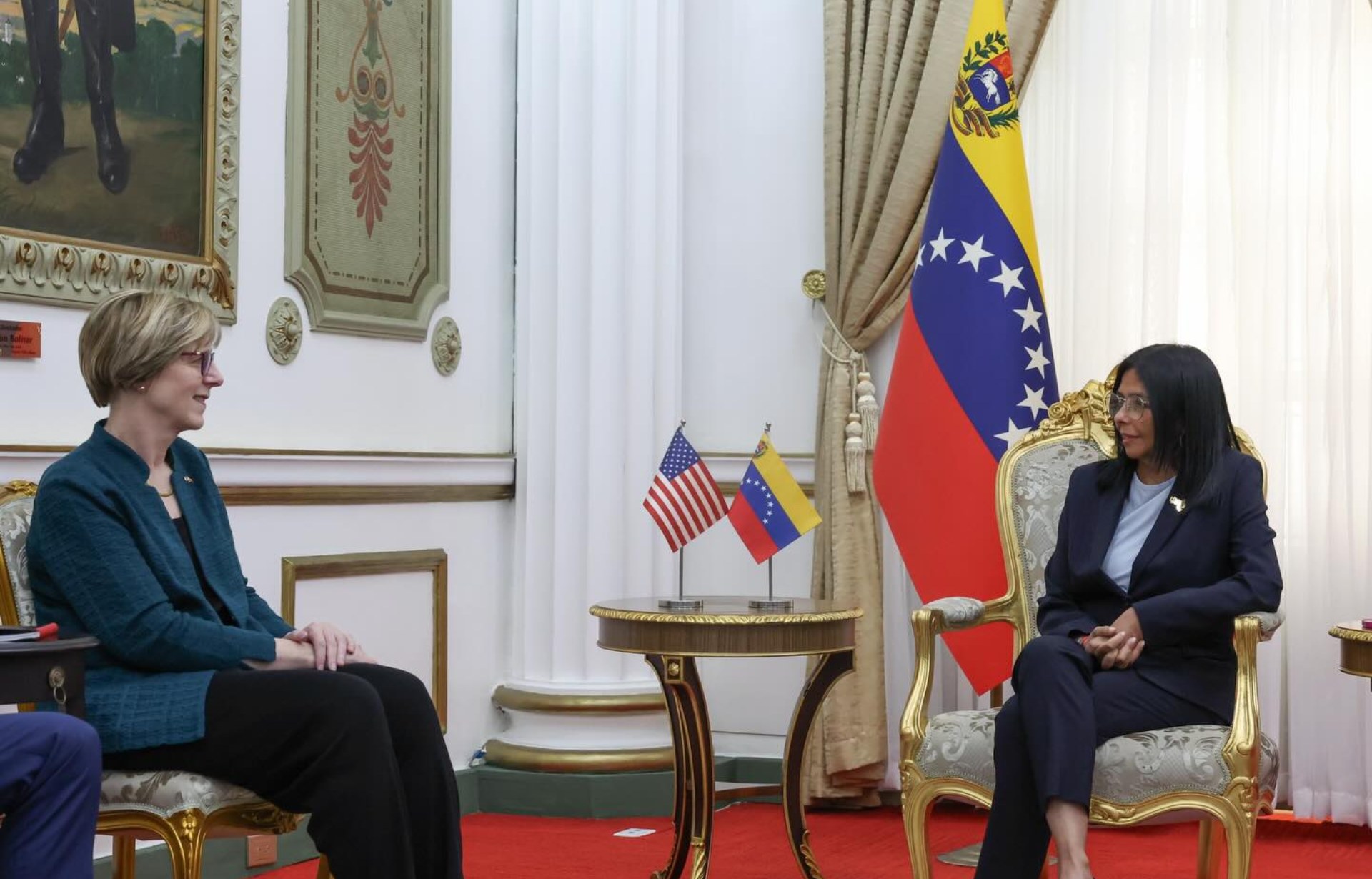
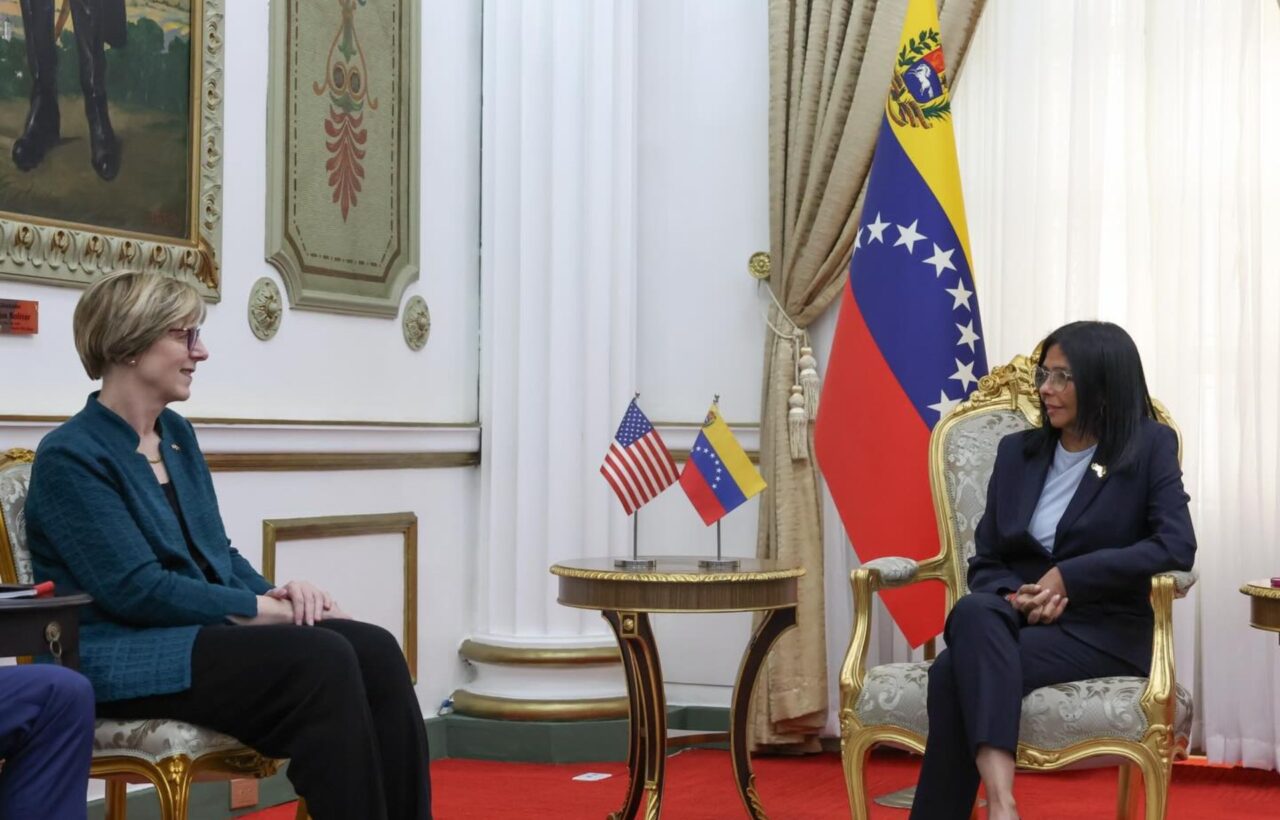
The meeting between Rodríguez and U.S. Chargé d’Affaires Laura Dogu at the Miraflores presidential palace on February 2, 2026, underscores the complex negotiations underway as Washington seeks to stabilize the nation and guide it toward a democratic future. Dogu, who arrived in Caracas the previous day with a U.S. Delegation, reiterated the three phases outlined by Secretary of State Marco Rubio: stabilization, economic recovery, and a transition to democratic rule.
According to recent polling data, public opinion is overwhelmingly against Rodríguez’s leadership. A February 2026 survey by Meganálisis found that 90.1% of Venezuelans do not want Rodríguez leading the transition, with 68.4% dismissing the recent amnesty as a sham. The same poll showed Machado with 82.4% support compared to 4.8% for Rodríguez in a head-to-head matchup. The case highlights the deep divisions within Venezuelan society and the widespread desire for change.
Another survey, conducted by V Encuesta in March 2026, revealed that 38.9% of Venezuelans perceive a “transition toward a change of power,” while 33.1% believe it’s simply a continuation of the Chavista regime under a new guise. A majority, 68.2%, anticipate economic improvement in the next six months, though this remains largely an expectation rather than a current reality. The poll also indicated that 56.8% evaluate Rodríguez’s performance as “good/very good,” but nearly 30% did not respond, potentially indicating fear or distrust.
The ISEE poll, also from March 2026, showed an overall optimistic index of 71.2, with positive outlooks on the country’s economy, household income, and employment. However, it also revealed a critical pessimism regarding basic goods prices. This suggests that while people anticipate improvements, they are wary of rising costs eroding any gains.
A report by Gold Glove/Atlantic Council (February 2026) indicated a pragmatic minority overestimating acceptance of Rodríguez, with most desiring political change but prioritizing economic recovery. The report noted that Washington may be overestimating this pragmatism.
International Analysis: Economic Opening Without Political Credibility
Publications like The Economist and World Politics Review have described the current situation as an “economic opening without political credibility,” noting that inflation remains above 600% annually as of March 2026. The narrative of a “revival” is seen as serving U.S. Domestic policy more than the actual Venezuelan reality.
A comparative analysis reveals key differences between the current path under Rodríguez, a potential transition led by Machado, and the recommendations put forth by Tripier. The table below details these distinctions across dimensions of power, the military, oil policy, amnesty, and relations with the U.S.
| Dimensión | Delcy–Chavismo 3.0 | MCM | BT |
| Poder | Cabello maintains control (PSUV, National Assembly, apparatus); Delcy executes within limits authorized by him. | MCM in executive position; PSUV sidelined; clear timeline for elections. | Maximum pressure: sanctions, legal action; no reliance on Delcy. Cabello, Delcy, Jorge, Padrino: imprisonment and extradition. |
| FANB | Delcy places a known torturer in charge; apparatus intact, no purges. | Restructuring: purging criminals, opening to patriots, subordination to civilian power, international observation. | Total dissolution and reconstruction: professional, republican, non-criminalized apparatus. |
| Petróleo | Reform to rebuild Chavista coffers; Chevron operates, but regime maintains veto power and opaque prior agreements and illicit revenues (gold, drugs). | Same framework, but subordinated to transparency; each production increase conditioned on clear rules. | “Tie oil to democracy”: new contracts ONLY based on verifiable milestones (real amnesty, timeline, free media). |
| Amnistía | Disciplining: selective releases, revolving door, threat of re-arrest. | Bridge to reorganize society: ex-prisoner committees, human rights networks; amnesty does not replace justice for serious crimes. | Safeguarding: joint observation, monitoring of re-criminalization; amnesty with memory, not impunity. |
| Relación EEUU | Sebin–FBI–CIA cooperate on specific cases; Delcy guarantees “stability”; Washington accepts “limited democracy.” Chevron/Sargeant lobby via CIA blocks ExxonMobil. | U.S. Supports transition with MCM central; government, clear calendar, dismantling of fear apparatus; opening for ExxonMobil. | Not held hostage by Delcy; direct relationship with MCM and civil society; sanctions against Chavistas who boycott; avoid past mistakes. |
A key distinction is that neither Machado nor Tripier would accept coexisting with Delcy and the Chavista leadership. Their position is imprisonment and extradition for Cabello, Delcy, Jorge Rodríguez, and Padrino López, with no deal for impunity. The difference lies in how to achieve this: Machado and Tripier with executive power from the start, with strict conditions forcing their removal.
| Dimensión | Delcy–Cabello (Current Reality) | With MCM Governing | With BT Recommendations |
| Poder y Control | Intact Core: Criminal structure maintained under the “interim” Chavismo 3.0. | Leverage for Change: Oil reform as engine for transition. PSUV sidelined and clear electoral timeline. | Strict Conditionality: Oil and amnesty tied to verifiable milestones. U.S. Maintains judicial pressure against boycotts. |
| FANB / Seguridad | Continuism: Criminalized structure maintained under the “interim” of Chavismo 3.0. | Restructuring: Purging of criminals, subordination to civilian control and disarmament of collectives/FAES. | Total Dissolution: Reconstruction from scratch; non-criminalized professional apparatus. |
| Economía | Oxygen to the Regime: Marginal improvement in bubbles; 80.3% see no relief. Inflation 600%+. Illicit revenues finance rearmament. | Transparency: Opening to transnational corporations (ExxonMobil) with clear rules. Realistic view of speculation. | Tie Oil to Democracy: Total protection against illicit revenues. Every dollar depends on steps toward political freedoms. |
| Justicia y Percepción | Massive Rejection: 90.1% reject Delcy. Amnesty perceived as a sham (68.4%). Distrust in the role of the U.S. | Recomposition: Republican amnesty without impunity. Networks of human rights organizations and committees of ex-prisoners integrated. | Joint Observation: Legal security; no re-incarceration for past acts unless new crimes are proven. |
| Strategic Conclusion | Authoritarian Recycling: Cosmetic economic opening without political credibility. The “sting” remains active. | Social Harmony: Initial uncertainty for elites, but clear leadership channeling the will of the people. | Informed Realism: No room to sell recycling as a transition. Synchronized economic and political steps. |
The lobbying efforts of Chevron and Sargeant, through the CIA, have influenced the U.S. To support Delcy and block ExxonMobil’s entry, reflecting a prioritization of security and energy over democratization. The move underscores the competing interests at play in Venezuela’s future.
- Top-down vs. bottom-up: Should the U.S. Revise its strategy?
Current U.S. Approach (top-down with Delcy):
- Relies on an interlocutor with de facto power (weapons, territory, apparatus).
- Prioritizes “managed stability” and oil flows.
- Assumes the Chavista “sting” is no longer a threat because the apparatus is “under control.”
- Fundamental flaw: Underestimates the Chavista’s capacity to rearm with illicit revenues and control of the FANB; overestimates the pragmatism of a minority that accepts Delcy as a temporary measure.
Machado/Tripier approach (bottom-up with popular legitimacy):
- Starts with someone who has massive social support (82.4% vs. 4.8%).
- Ties every economic concession to a verifiable political milestone.
- Does not give a blank check to “convenient” interlocutors who lack legitimacy.
- Fundamental strength: Aligns internal and external legitimacy; reduces the risk that the same destroyers monopolize the rebound revenue.
Should the U.S. Integrate top-down with bottom-up?
Yes, urgently. The optimal path is not Delcy vs. Machado as an exclusive binary, but:
- Maintain top-down pressure on Cabello/Delcy (sanctions, legal action, strict conditionality).
- Build a direct bottom-up relationship with Machado, civil society, free media, and patriotic sectors of the FANB.
- Tie every top-down concession (sanctions relief, oil contracts) to verifiable bottom-up progress (real releases, electoral timeline, transparency, disarmament of collectives).
- Don’t be held hostage by Delcy: if she/Cabello boycott the transition, have a Plan B with Machado ready to assume government.
This integrated approach is essentially the Tripier proposal: use top-down levers to create space for the bottom-up, not to consolidate actors without legitimacy.
- Conclusion: Did Washington get it right?
With Chavismo 3.0: Recycled power, economy with a little more oxygen, society overwhelmingly rejecting Delcy and desiring Machado. Chavismo is rearming “one day at a time” with illicit revenues; torturers in charge of the FANB.
With Machado: Turbulent start but a healthy correlation between power and the people; the “sting” beginning to be dismantled; restructuring of the FANB; clear timeline toward elections.
With the BT approach: Informed realism; every barrel tied to democracy; less room for recycling; dismantling of criminal structures.
The question is not only whether the decision was “right,” but what kind of order the U.S. Supports: one comfortable for the Chevron/Sargeant lobby via the CIA, or one consistent with the will of the country and an escape from the crisis. The Chavistas have deceived successive U.S. Administrations promising reforms they never delivered. They are doing exactly the same now. It is up to democratic actors—both inside and outside the country—to decide whether the scorpion will cross the river without using its sting, or whether it will finally be disarmed before it strikes again.
It is impossible to build a first-world economy on a third-world control architecture.
Contacto:
