
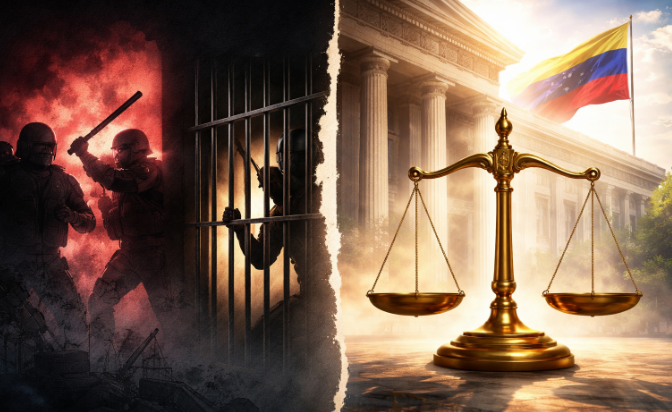
Venezuela faces a complex path forward following the capture of President Nicolás Maduro by U.S. Forces, raising questions about the country’s transition and the restoration of democratic institutions. While Maduro’s removal has sparked cautious optimism among opposition leaders, significant hurdles remain before a true political opening can occur.
A key concern centers on the need to establish conditions that allow for the full and unrestricted exercise of journalism and freedom of expression. Currently, several laws restrict media activity, including the 2017 Constitutional Law Against Hate, Peaceful Coexistence and Tolerance, and the 2004 Law of Social Responsibility in Radio, Television and Electronic Media, as well as reforms to the Special Law Against Computer Crimes and the Penal Code. These laws have been used, critics say, to stifle dissent and prosecute journalists. Restrictions like “security zones” likewise prevent reporters from accessing government buildings and military installations.
Beyond media freedoms, a comprehensive overhaul of the judicial system is considered essential. This task is seen as equally complex as restructuring the armed forces, though a change in the defense minister and high military command could potentially set a novel direction for the military. The judicial reform presents three initial challenges: avoiding a sweeping purge of judges who have maintained professional standards despite systemic issues, defining the scope of the judicial system’s responsibility for past injustices, and navigating the contentious debate between justice and impunity in addressing human rights violations committed under the Chávez and Maduro regimes.
Experts are divided on how to address past abuses. While there’s strong support for holding judges and prosecutors accountable for legal violations, questions arise about the feasibility of prosecuting thousands of officials potentially involved in wrongdoing. Concerns exist that such a process could devolve into retribution rather than a pursuit of justice. The debate also involves considering strategies of forgiveness, as seen in Argentina and Chile, to foster reconciliation and dialogue.
Finally, a fundamental reform of the National Electoral Council is deemed absolutely necessary for any future elections to be credible. Current members of the council, along with regional authorities and technical staff, who were involved in alleged electoral fraud, particularly during the July 28, 2024 elections, must be removed and replaced with qualified and impartial professionals. Many such individuals, according to reports, have been waiting for an opportunity to return to their operate and ensure fair electoral processes.
