
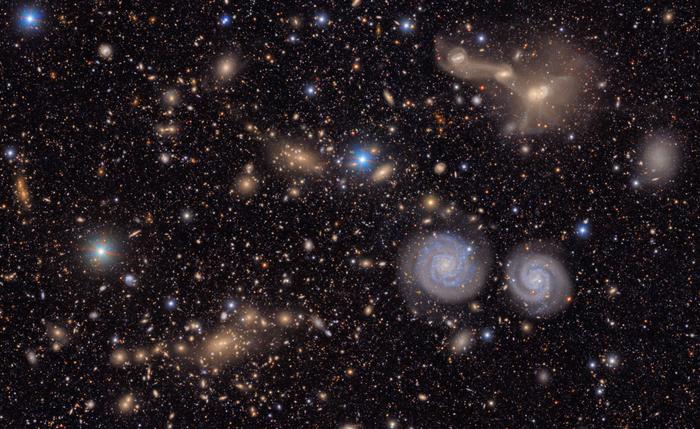
Big Data Revolution: Vera C. Rubin Observatory Detects 11,000 New Asteroids
The Vera C. Rubin Observatory has achieved a massive leap in astronomical observation, identifying more than 11,000 new asteroids within our solar system. This discovery, completed in just six weeks, represents a significant shift in the scale of space surveillance.
This surge in detections highlights how big data is transforming our understanding of the universe, allowing researchers to process information at an unprecedented volume and speed. The observatory’s ability to spot 11,000 new asteroids in a month and a half marks a fundamental change in scale for astronomy.
The capacity of the Vera C. Rubin Observatory to uncover such a vast number of objects in our solar system confirms that the facility is providing the technological revolution the scientific community has expected.
By leveraging these advanced data capabilities, the observatory is effectively redefining the parameters of astronomical discovery. This advancement underscores the critical role of high-capacity data analysis in modern science, enabling a more comprehensive map of our celestial neighborhood and accelerating the pace of cosmic exploration.
