
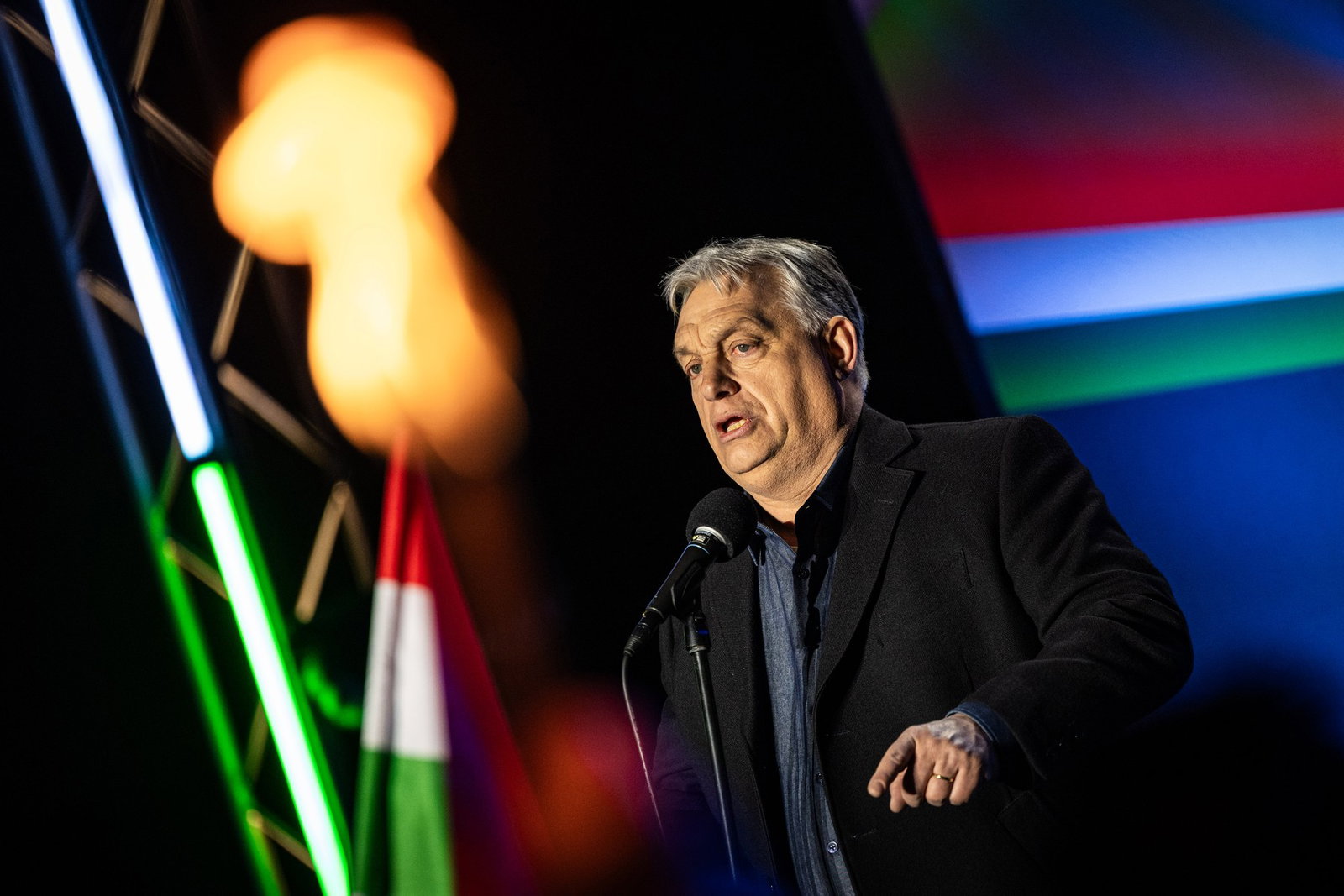
Hungarian Election Showdown: Orbán and Magyar Clash as Vote Approaches
With the April 12, 2026, general election just days away, the political rivalry between Prime Minister Viktor Orbán and Péter Magyar has reached a fever pitch, characterized by sharp exchanges and high-stakes polling.
The tension escalated recently when Péter Magyar, leader of the Tisza Party, demanded a seat at the Defense Council meeting. Prime Minister Orbán responded to the request during a press interaction, a moment captured in a video shared on social media by Deák Dániel. The exchange underscores the deepening divide between the long-standing administration and the rising opposition.
This confrontation comes as the Tisza Party gains significant momentum. Following a strong performance in the 2024 European elections, where the party secured 30% of the vote, current projections suggest a potential shift in power. According to estimates from Medián, the Tisza Party could potentially achieve a two-thirds majority in the upcoming vote. Despite these optimistic figures, Magyar has remained cautious, describing himself as a “perpetual pessimist” regarding the final outcome.
While the opposition surges, Orbán continues to project an image of active governance. On April 9, 2026, the Prime Minister traveled to the Serbian-Hungarian border to inspect the entry point of the Turkish Stream pipeline. The visit occurs as Orbán seeks to maintain his grip on power after 16 years of leadership, during which his Fidesz party has faced criticism over its influence on the judiciary and media.
The upcoming election, called by President Tamás Sulyok, will see 7.8 million Hungarians elect 199 members of the National Assembly. The result is viewed as a critical juncture not only for Hungary but for the European Union, as it will determine whether the country continues its path as an “illiberal” democracy or pivots toward the center-right vision proposed by Magyar’s Tisza Party.
The shift in dynamics highlights a pivotal moment in Hungarian politics, where a former Fidesz member has emerged as the primary challenger to one of Europe’s most enduring leaders.
