
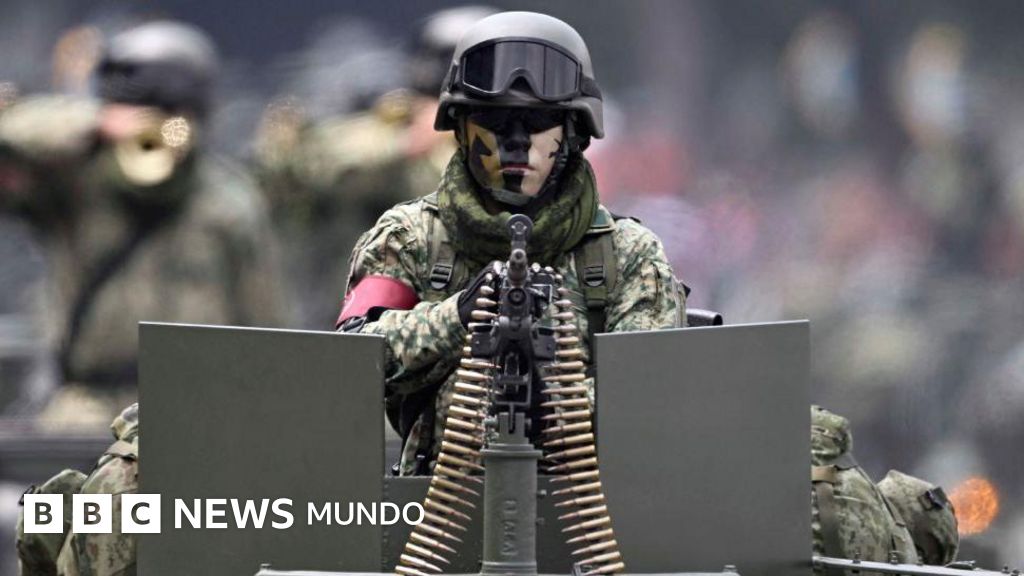
Mexico’s Military Mismatch: Why a Conventional Army Struggles Against Drug Cartels
Mexico’s ongoing battle against organized crime has exposed a fundamental structural flaw in its security strategy: the national army is designed for territorial defense, not the complex, asymmetric warfare required to dismantle drug trafficking networks. This misalignment between the military’s training and its current operational reality has created a security vacuum that continues to fuel violence across the country.
The development underscores a broader global challenge where sovereign states struggle to adapt traditional military forces to combat non-state actors within their own urban centers, a struggle that directly impacts regional stability and international security in North America.
A Force Built for Traditional War
The Mexican Army, primarily managed by the Secretariat of National Defense (SEDENA), was historically conceived to protect the nation’s borders and maintain internal stability against conventional threats. Its training emphasizes large-scale maneuvers, territorial control, and a rigid hierarchical command structure. Yet, the fight against drug cartels is not a conventional war; it is a fragmented, asymmetric conflict fought in crowded cities and remote rural villages.

Because the military is not trained in intelligence-led policing or community-based security, its approach often relies on overwhelming force rather than surgical precision. This institutional inertia means that while the army can seize territory or capture high-value targets, it lacks the tools to dismantle the deep-rooted social and economic structures that allow cartels to thrive.
The Consequences of Militarized Policing
Since the escalation of the “War on Drugs” initiated in 2006, the military has increasingly filled the void left by weak or corrupted local and state police forces. This shift has pushed soldiers into roles they were never trained for, such as conducting arrests, managing evidence, and interacting with civilian populations in a policing capacity.
The result has been a systemic rise in human rights violations. Without the specialized training in civil law and human rights that professional police forces typically undergo, military operations have frequently led to reports of abuse and extrajudicial actions. This approach often alienates the local populations whose cooperation is essential for gathering the intelligence needed to defeat criminal organizations.
The National Guard Experiment
In an attempt to bridge the gap between military force and civilian policing, Mexico established the National Guard. On paper, the Guard was intended to be a more flexible, civilian-led security force capable of handling internal security without the heavy-handedness of the army.
However, the reality has seen the National Guard remain heavily militarized. Much of its personnel and leadership are drawn directly from the army, meaning the same conventional military mindset continues to dominate the strategy. The transition to a truly civilian security model remains stalled, leaving the state dependent on a force that is fundamentally unsuited for the specific demands of the fight against narcotics trafficking.
The persistence of this military-centric model suggests a reluctance to invest in the long-term, challenging work of rebuilding civilian police institutions. This failure to adapt not only prolongs the internal conflict but also complicates Mexico’s diplomatic efforts to secure its borders and curb the flow of illicit substances into the international market.
