

Why the Moon Looks Different Depending on Where You Are on Earth
While the Moon is the most accessible celestial object for observation from Earth, it does not actually appear the same to everyone. According to astronomical data, the visual appearance of the Moon varies based on the observer’s specific location, with these differences occurring not only between different regions but also throughout the course of a single night.
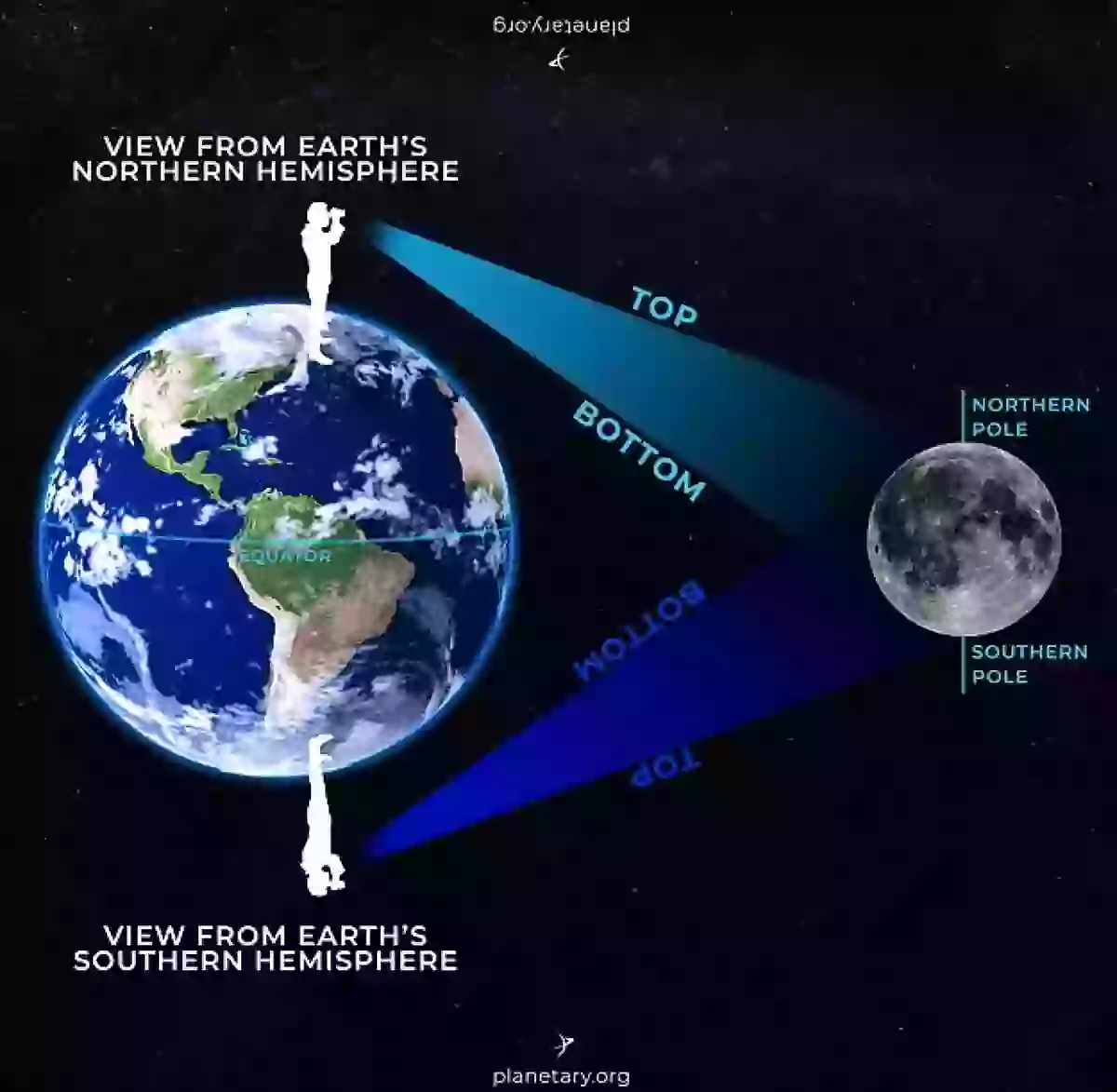
This phenomenon is primarily a matter of perspective. As Pamela Gay, a senior scientist at the Planetary Science Institute, explains, “The way we see the moon and stars basically depends on perspective.” Essentially, the Moon itself remains unchanged; rather, it is the way the human eye captures the object from various positions on the planet that creates the visual shift.
The most dramatic differences in appearance are observed when comparing the Northern and Southern Hemispheres. Because observers in these two regions view the Moon from opposite angles relative to the Earth, the orientation of the lunar surface appears inverted. For example, an observer at the North Pole would see the iconic Tycho crater located at the bottom of the Moon’s face, whereas someone at the South Pole would see it in a different orientation.
Variations also occur in mid-latitude regions. Differences in latitude between two locations can result in viewing angles that vary by tens of degrees, meaning the visual patterns on the lunar surface may appear different even though the physical Moon has not changed. This interaction between the Earth, Moon, and Sun also dictates how light is reflected and received by the observer, contributing to the overall visual variation.
Despite these changes in orientation and phase, every person on Earth continues to see the same side of the Moon. This is due to a phenomenon known as synchronous rotation, where the Moon’s orbital period around the Earth matches its own rotation period.
Understanding these basic principles of perspective in astronomy helps illustrate how our physical position in the universe shapes our perception of the natural world. Such observations underscore the importance of spatial orientation in scientific study.
