
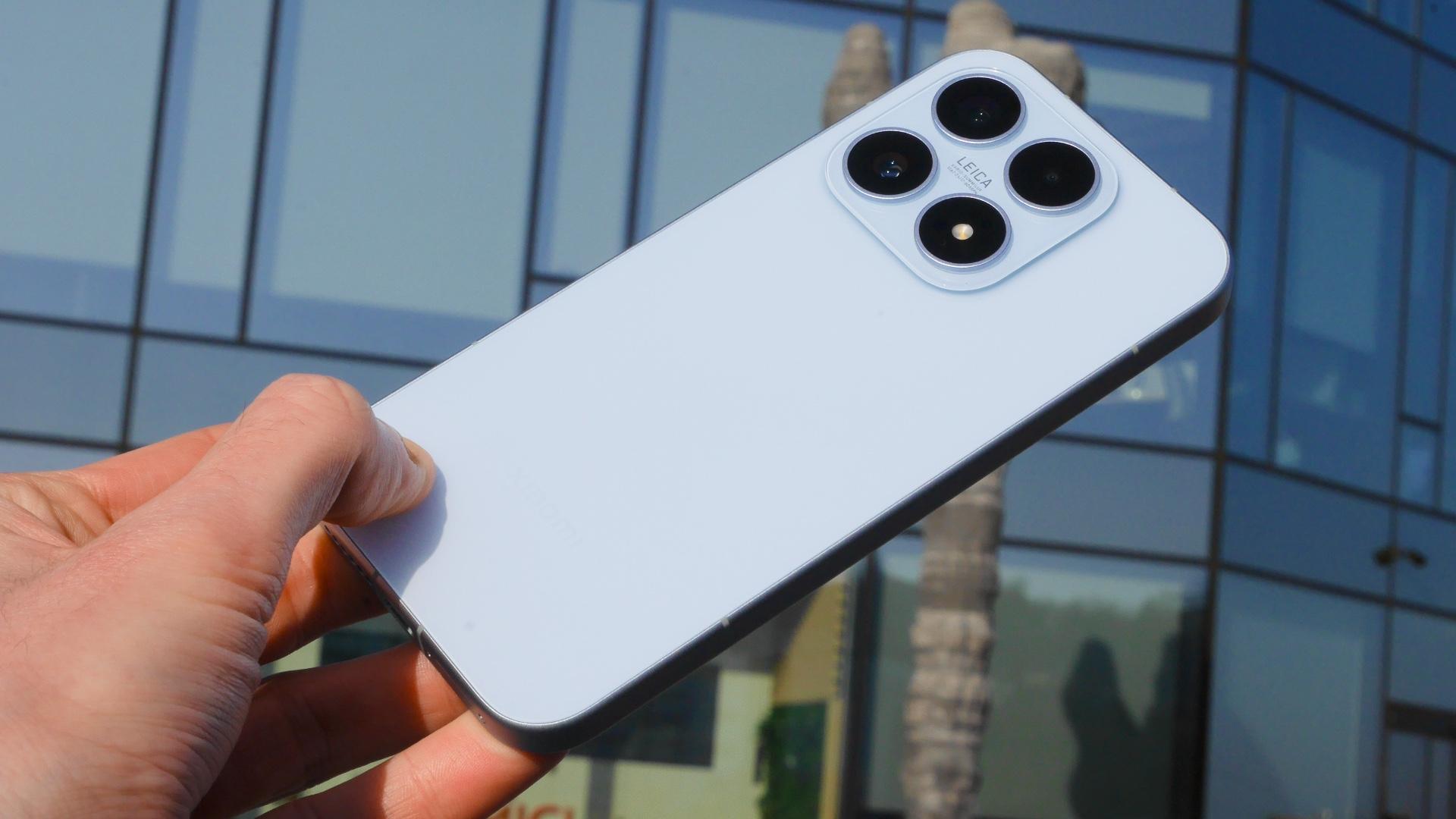
- Xiaomi 17 will be one of the hottest compact phones of the year
- It again offers very high performance, a larger battery, and a slightly better camera
- It is sold for 22,999 crowns, but can be purchased for up to 7,000 crowns cheaper in promotions
Even in 2026, there will be no shortage of minor phones. However, the adjective “small” is a bit of an exaggeration in this regard – the really small phones are a thing of the past, and in recent years, somewhat scaled-down versions of flagship devices have been gaining ground. The selection is more than rich in the first quarter of the fresh year, with Vivo, Samsung, and Pixels expected to enter the fray. And then there’s the hot new Xiaomi 17, which, like its predecessor, takes what works and packages it in a fresh, eye-catching design. Will it work again?
The Xiaomi 17 is launching in the Czech market today in two memory configurations – 256 GB and 512 GB – both paired with 12 GB of RAM. The base model is available for 22,999 crowns, while the 512 GB version costs 25,499 crowns. The introductory price represents an increase of 500 crowns compared to last year’s models. For a limited time, the Xiaomi 17 can be purchased with a discount of up to 2,500 crowns, a bonus of up to 4,500 crowns, and additional gifts worth up to 7,400 crowns.
 Why you can trust SMARTmania? Every product or service we test is thoroughly evaluated in real-world conditions for at least one to two weeks. We devote maximum attention to preparing the review and strive to objectively assess all the pros and cons of the product.
 Package Contents
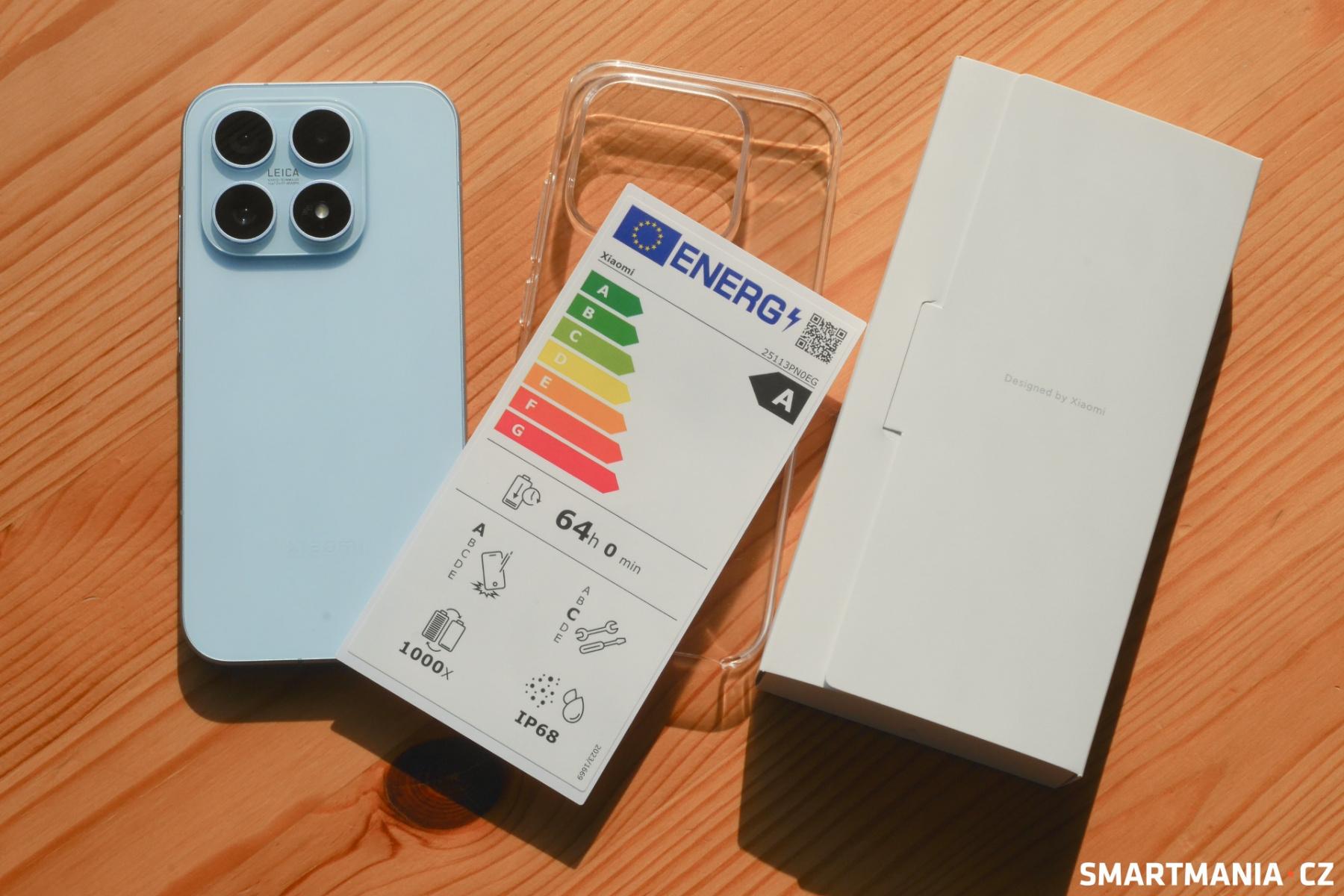
The retail packaging of the Xiaomi 17 doesn’t offer any surprises. Inside you’ll locate only the phone itself, a SIM ejector tool, a 1-meter white USB-A/USB-C cable, and a transparent hard polycarbonate case. The obligatory energy label is also included, indicating that the phone has an energy class A, durability class A, repairability class C, and a battery life of 64 hours.
Design and Display
Xiaomi phones have always had a very elegant look in recent years – whether opulent Ultra models or basic flagships. It’s no secret that the manufacturer draws inspiration from Cupertino, which is evident in the overall design of the latest Xiaomi 17 model. A perfectly rigid and ideally flush aluminum body, a back made of frosted glass, and a classic “quad-camera” module with a symmetrically rounded design in the upper left corner.
I’ll admit it’s a design that would look right at home on an iPhone. Dramatic thinness isn’t to be expected here; this is a full-featured phone with minimal compromises, so the construction offers 8.1 millimeters at the waist and a weight of 191 grams. The durability is also pleasing, enhanced by IP68 certification against water and dust, as well as Dragon Crystal Glass on the back and display. A soft film is also pre-applied to the screen.
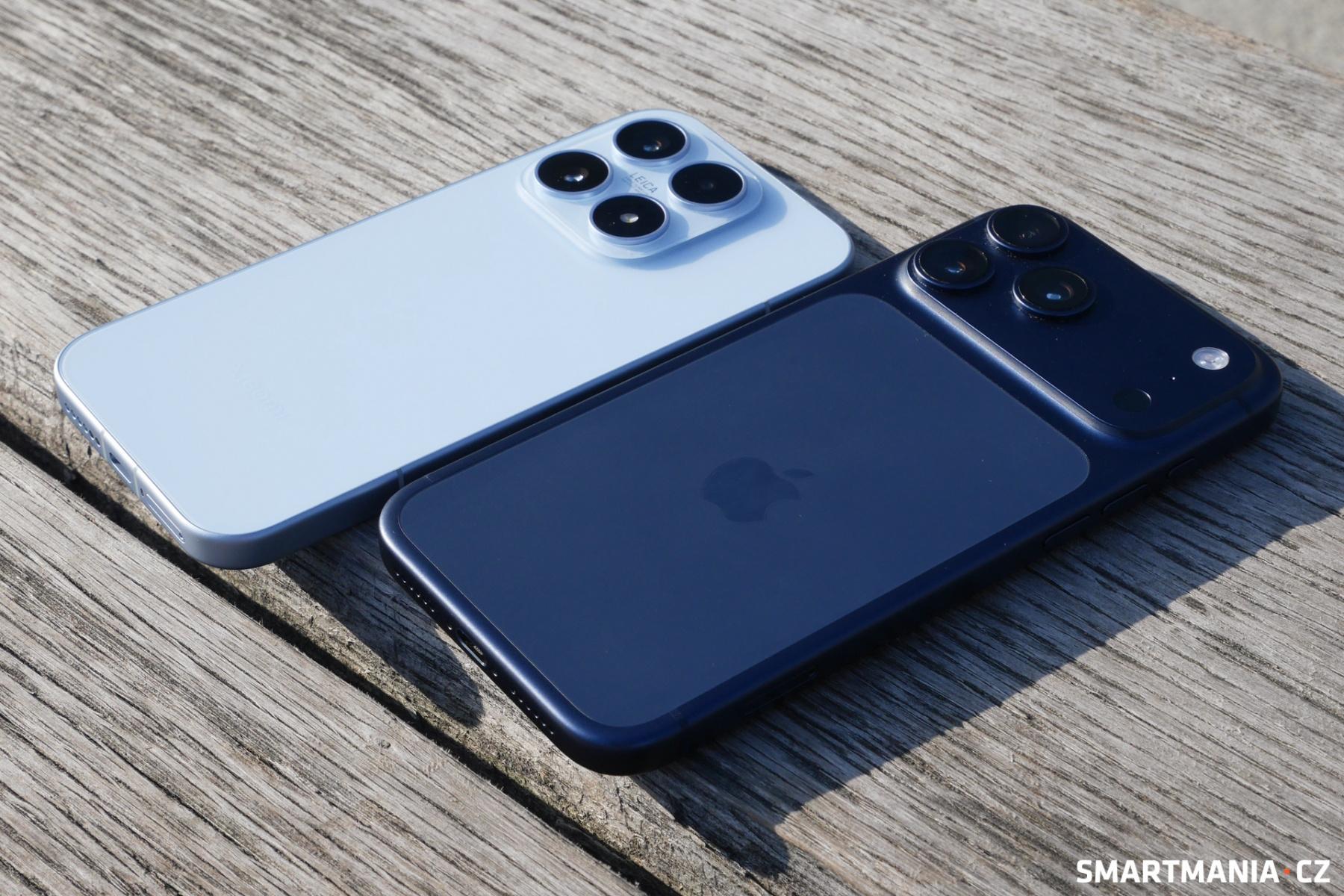
Nothing special around the edges. The combination of metal and glass is confirmed by antenna lines, with the power button and volume rocker on the right side. The bottom features a speaker (creating a credible stereo effect with the earpiece), a USB-C port, and a slot for two nanoSIM cards.
The front is dominated by a 6.3” LTPO OLED display without rounded corners. It’s a panel with a high resolution of 1,220 × 2,656 pixels and a dynamic refresh rate of 1–120 Hz, with a brightness of around 1,500 nits, or up to 3,500 nits when displaying HDR content. Xiaomi’s display is once again excellent, with true blacks, vibrant colors, and maximum smoothness depending on the content. The increasing focus on display quality across the industry is driving a more immersive mobile experience.
Equipment, Performance, and Battery
In terms of performance, the Xiaomi 17 is a true flagship, as mentioned a few paragraphs above, simply without compromise. It offers arguably the most powerful chipset currently available, the Snapdragon 8 Elite 5th generation, built on a 3nm architecture with an 8-core processor featuring two more powerful Oryon V3 Phoenix L cores and six more efficient cores. Graphics operations are handled by the Adreno 840 chip.
The high performance is confirmed by benchmarks (see the table below) and the phone’s actual performance in system tasks or operations you throw at it. It runs absolutely smoothly when playing games, editing photos or videos, or multitasking, with nothing freezing or stuttering. As with any proper flagship model, you can enjoy extremely smooth benchmarks, especially 3DMark.
Xiaomi 17 Hardware Specifications
System, Chipset, and Construction
Dimensions: 151.1 × 71.8 × 8.6 mm, Weight: 191 g, Increased Resistance: IP68
Display, Connectivity, and Battery
6.3″, OLED, Resolution: Full HD+, 1220 × 2656 px
5G: , NFC: , Bluetooth: 5.4, Wi-Fi: 802.11 a/b/g/n/ac/6e/7, GPS: , Connector: USB-C
Battery: 6330 mAh, Fast Charging: , Wireless Charging:
Cameras
Main: 50 Mpx, f/1.67, 23mm, 1/1.31″, 1.2µm, dual pixel PDAF, OIS, Second: 50 Mpx, telephoto lens, f/2.0, 60mm, 1/2.76″, 0.64µm, PDAF (10cm – ∞), OIS, 2.6× optical zoom, Third: 50 Mpx, ultra-wide, f/2.4, 17mm, 102˚, 1/2.76″, 0.64µm, Selfie Camera: 50 Mpx, f/2.2, 21mm, PDAF, HDR10+, 4K video
The manufacturer doesn’t specify the cooling system, but it’s highly likely that the Xiaomi 17 features a classic vapor chamber, which effectively dissipates heat in most cases. The Snapdragon 8 Elite Gen 5 is very thermally active which was confirmed in practice – the phone heats up to 42°C after about 10 minutes of a demanding 3DMark Wild Life Extreme Stress test, and can even reach 49°C. At that temperature, you won’t want to hold the phone in your hand, but fortunately, we didn’t reach that temperature in normal use.
| Benchmark | Xiaomi 17 | Vivo X300 | Google Pixel 10 Pro | Samsung Galaxy S26 |
|---|---|---|---|---|
| Geekbench 6 – Single Core | 3,334 points | 3,372 points | 2,181 points | 3,222 points |
| Geekbench 6 – Multi Core | 9,764 points | 9,511 points | 5,639 points | 11,027 points |
| 3DMark Wild Life Extreme | 5,425 points | 7,156 points | 3,400 points | 6,488 points |
| AnTuTu v11 | 3,468,578 points | 3,330,304 points | 1,470,445 points | 3,186,873 points |
The equipment also includes 12 GB of RAM (with an additional 6 GB of virtual RAM applied by default), Wi-Fi 7, 5G, Bluetooth 5.4, GPS, NFC for payments, and a stereo speaker that delivers very clear sound even at higher volumes. A very accurate and reliable optical fingerprint reader is located under the display. For your data, there is 256 or 512 GB of storage available, with the system taking up almost 40 GB of that space.
Regarding the battery, last year we praised Xiaomi for managing to guarantee a really high capacity despite the compact dimensions. This year, the Xiaomi 17 is even better. Under the hood is a 6330mAh Xiaomi Surge battery, which is simply a fancy name for a newer type of battery with a silicon-carbon anode. Combined with the efficient Snapdragon 8 Elite Gen 5 chipset, it’s a recipe for excellent endurance.
| Measured charging speed with a 100W adapter | ||||
| Level | 30% | 50% | 80% | 100% |
| Time | 8 minutes | 17 minutes | 35 minutes | 49 minutes |
Just how excellent? You can confidently rely on a 2-day battery life, even when using the phone heavily throughout the afternoon, taking photos, recording videos, listening to music with headphones, and spending time on social media. Add to that 100W fast charging and 50W wireless charging. However, you’ll need the appropriate adapter for both – the original 120W adapter is sufficient, available for 650 crowns.
HyperOS and Truly Meaningful Artificial Intelligence
The Xiaomi 17 runs on Android 16 (with the December security patch) with the HyperOS 3.0 graphical overlay, and also includes the obligatory HyperAI artificial intelligence features. The list of features is as follows: AI Notes with generative functions, AI Gallery with handy features for editing photos and videos, AI Recorder with a practical speech-to-text function, AI Translator with a simultaneous translation function, and AI Subtitles for native subtitles anywhere in the system.
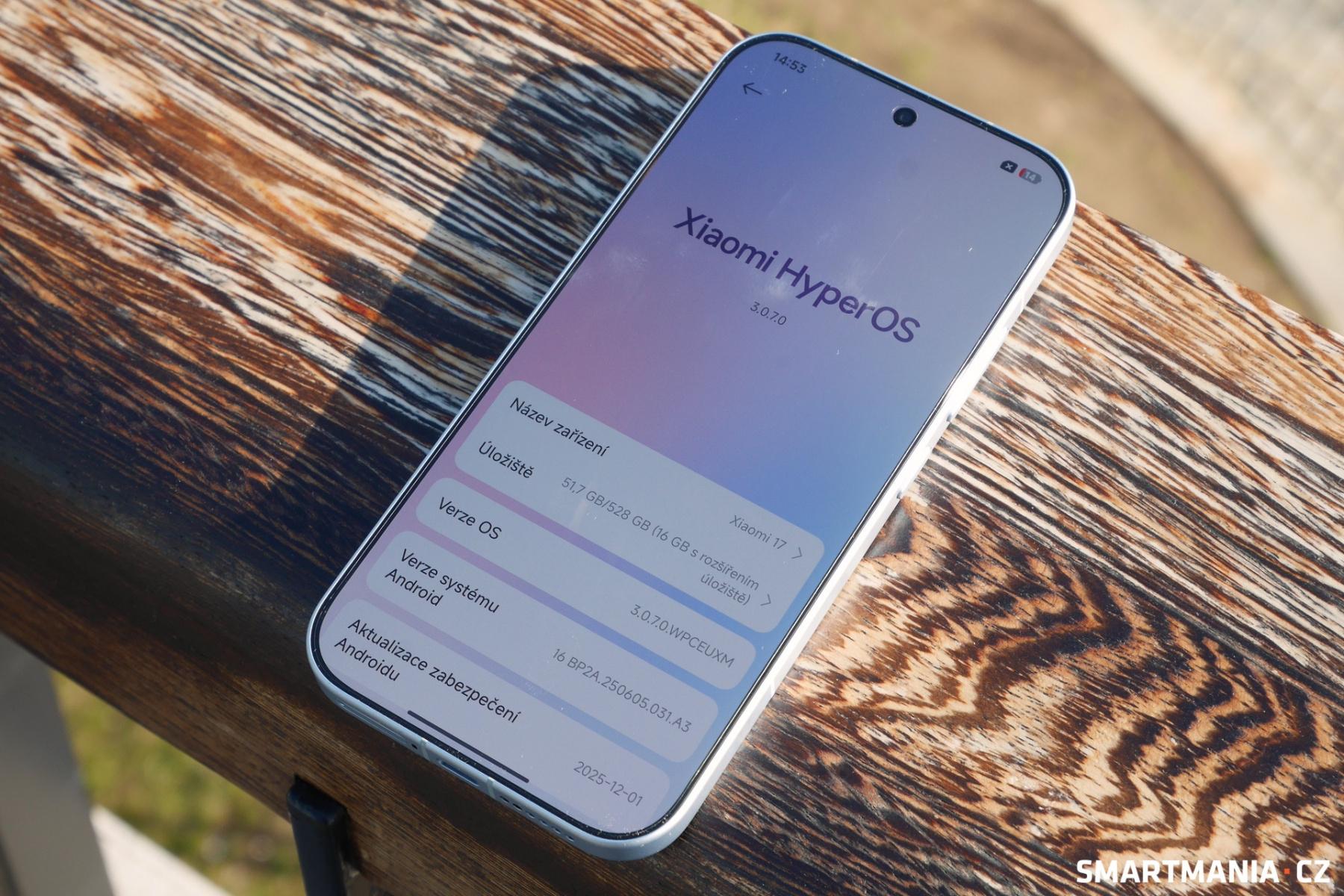
We reported on these features in an article dedicated to Xiaomi’s artificial intelligence. Most of them are genuinely practical, can be used in the real world, and work convincingly, especially with Czech language support. However, the list of features is largely the same as a few years ago when HyperOS first launched.
While the competition is moving forward at a slow pace, it *is* moving forward. The increasing integration of AI into mobile devices is reshaping how users interact with their technology.
We find also features like HyperConnect. This feature essentially mirrors your phone’s screen on your computer, not only on Windows, where you’d expect such a feature long ago, but also on a Mac. AI features are also provided by Google itself.
Gemini has established itself as a new voice assistant and is a major step up from its predecessor. And with complex multitasking, Circle to Search can help. What does it actually do? Long-pressing the home button activates search mode, after which you simply trace, highlight, or scribble any object on the screen, which launches a reverse search on Google. Generally, you can expect to use this AI feature most often.
Camera: Is There Nothing to Change?
Xiaomi has made things relatively effortless for us this year. The two main sensors – the primary and telephoto – are essentially the same. It’s not that there’s nothing to improve, but they are very high-quality chips, and their recycling for this year’s model is understandable. The ultra-wide sensor and front camera are new, however, moving to higher resolutions. All four cameras on the Xiaomi 17 now have a resolution of 50 Mpx. Here’s a breakdown:
- Main – OmniVision OVX900 “Light Fusion/Hunter 900”, Leica covering, 50.3 Mpx (12.5 Mpx) resolution, 1/1.31″ chip size, f/1.62 aperture, 23mm focal length, optical image stabilization (OIS), laser autofocus (Laser AF).
- Telephoto – Isocell JN5, Leica covering, 50.3 Mpx (12.5 Mpx) resolution, f/2.0 aperture, 60mm focal length, 1/2.76″ size, 0.64µm, PDAF (10cm – ∞),
