
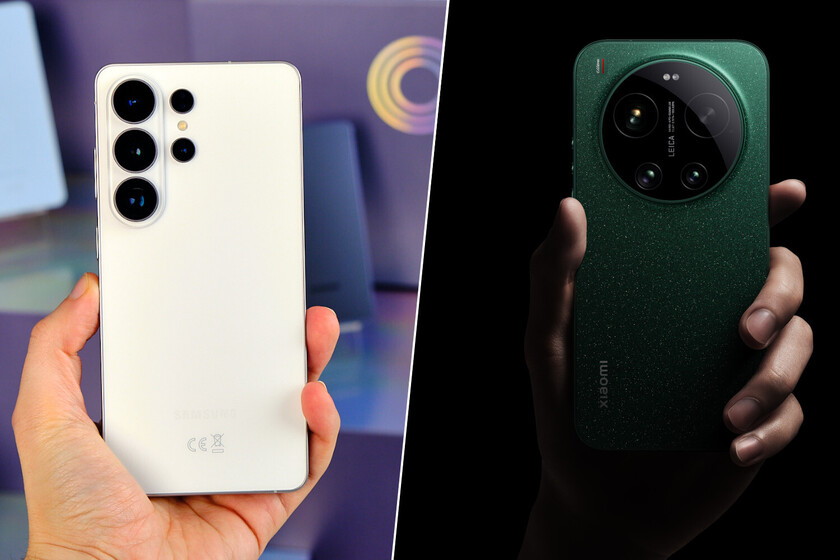
February proved to be a busy month, particularly towards the complete with announcements of new mobile generations from Samsung and Xiaomi. There’s significant anticipation surrounding these five devices, but what are the key differences between them? Let’s review the highlights of the Xiaomi 17 and Samsung Galaxy S26 families.
Differences Between the Samsung Galaxy S26 and Galaxy S25 Families
The Thinnest Ultras Yet
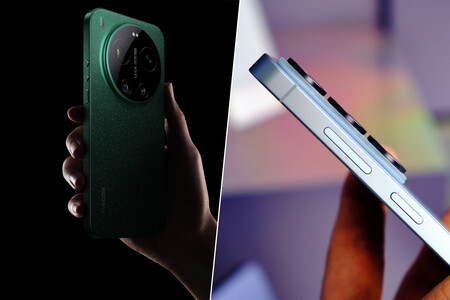 Xiaomi 17 Ultra (left) and Samsung Galaxy S26 Ultra (right).
 Both Xiaomi and Samsung appear to have reached an agreement with this generation, as both the Xiaomi 17 Ultra and the Samsung Galaxy S26 Ultra are the thinnest to date in their “Ultra” range. The difference between them isn’t substantial: the Xiaomi measures 8.29 mm thick, while the Samsung is 7.9 mm.
Although the difference is only 0.4 mm on paper, the Samsung Galaxy S26 Ultra manages to dip below the 8 mm mark. In hand, that slight reduction in size makes a noticeable difference, making the Samsung much more comfortable to carry in your pocket—maintain in mind the camera module adds to these measurements.
A Different Display
When comparing the phones, one feature stands out on the Samsung Galaxy S26 Ultra: its privacy screen. Utilizing artificial intelligence, this phone can turn off pixels on the screen to prevent onlookers from viewing its contents. It’s similar to privacy filters, but integrated directly into the display. The idea is that you can see the screen clearly when facing it, but the view is obscured at an angle.
The Latest Qualcomm Processors, With a Caveat
It’s common for brands to incorporate the best Android processor, the Snapdragon 8 Elite Gen 5, in high-end phones—unless they have their own. This represents where one of the major differences between the Xiaomi and Samsung phones emerges.
Both the Xiaomi 17 and Xiaomi 17 Ultra come with the Qualcomm processor, but the Samsung Galaxy S26 Ultra includes the Snapdragon 8 Elite Gen 5, while the Galaxy S26 and Galaxy S26+ feature the Exynos 2600. Previous generations have shown the Exynos processors can lead to reduced battery life and increased heating, so performance of the Galaxy S26 and S26+ will be closely watched.
The Age of Artificial Intelligence: Who’s More Prepared?
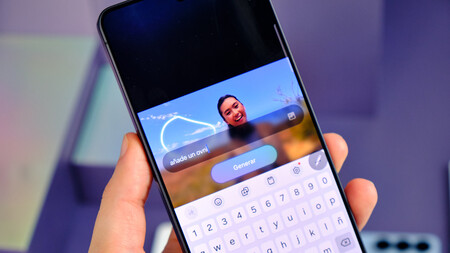
We are now in an era where many brands are heavily investing in artificial intelligence, and this is becoming apparent in mobile devices with the implementation of numerous features. Though, beyond having more or less features, it’s important to note that the more AI processing a phone does locally, the more RAM it will need to avoid performance issues.
Fortunately, both the Samsung Galaxy S26 Ultra and the Xiaomi 17 Ultra have maximum RAM configurations of 16 GB. However, while the Xiaomi includes this memory in all its storage configurations, the Samsung only offers it in the 1 TB version, meaning lower RAM configurations are available for the 256 GB and 512 GB models.
For the other Samsung and Xiaomi phones, the RAM is 12 GB across all storage configurations.
Here’s a breakdown:
16 GB of RAM:
- Xiaomi 17 Ultra (512 GB, 1 TB)
- Samsung Galaxy S26 Ultra (1 TB).
12 GB of RAM:
- Xiaomi 17 (256, 512 GB).
- Samsung Galaxy S26 (256, 512 GB)
- Samsung Galaxy S26+ (256, 512 GB)
- Samsung Galaxy S26 Ultra (256, 512 GB)
if you plan to process artificial intelligence locally, it’s best to choose a configuration with 16 GB of RAM, and Xiaomi offers a wider variety of configurations (and prices) to choose from.
Software and Years of Updates
Each brand favors a different customization layer. While Samsung’s One UI is attractive for its many features, Xiaomi’s Hyper OS has been updated to offer a more comprehensive experience.
In any case, Samsung has refined One UI for years and has created a stable system, while Xiaomi launched Hyper OS relatively recently and continues to polish it through updates.
And… if we talk about updates, the new Samsung Galaxy phones will receive up to seven years of support, while the situation with Xiaomi is less clear: they are expected to receive at least five years of major updates, but this is something we don’t grasp for sure yet.
Cameras, Face to Face
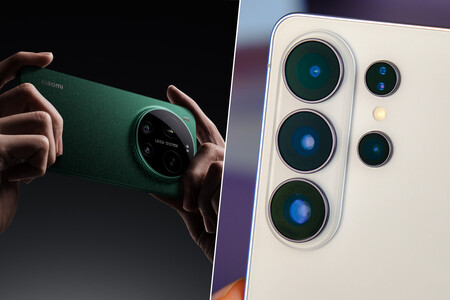
When talking about the Xiaomi 17 and Samsung Galaxy S26 families, we are talking about phones that will be capable of delivering very good photographic results. Once we analyze each of the models, we can clarify what the differences are in practice, but in the meantime, we can draw some conclusions by looking at their specifications.
All Xiaomi and Samsung phones come with three sensors: main, ultra-wide angle, and telephoto. Except for the Samsung Galaxy S26 Ultra, which incorporates two telephoto lenses.

The Xiaomi 17 is the most balanced with 50 MP sensors, also offering a wider aperture (f/1.6) on its main sensor. The Xiaomi 17 Ultra stands out with its 200 MP telephoto lens, which is attractive for offering a higher level of detail.
In contrast, the Samsung Galaxy S26 Ultra has the best camera configuration in its family. It’s also more versatile than the Xiaomi phones because the rear camera module includes two x3 and x5 telephoto lenses to cover a wider range.
there are two important details: historically, Xiaomi’s sensors have also stood out for collaborating with Leica, offering good results. Also, as we saw in the previous generation, the brand will have two photographic kits available that will significantly impact the quality of photos.
Let’s Talk Batteries
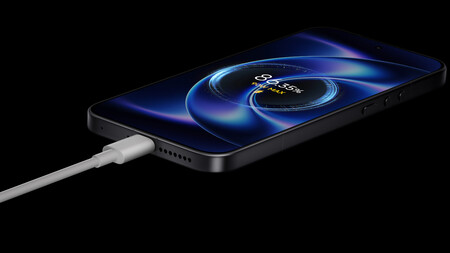
Having a higher milliampere battery doesn’t necessarily mean it will have greater autonomy. Samsung is a perfect example of this: its phones usually have low figures compared to other Androids, but the software is so well optimized that they often stand out for offering good battery life.
In contrast, other brands like Xiaomi are taking steps towards higher figures. We will need to analyze this in the coming weeks, but here are the details:
- Xiaomi 17 (6,330 mAh).
- Xiaomi 17 Ultra (6,000 mAh).
- Samsung Galaxy S26 (4,300 mAh).
- Samsung Galaxy S26+ (4,900 mAh).
- Samsung Galaxy S26 Ultra (5,000 mAh).
The difference is that while Samsung’s battery capacity is lower, its software optimization often results in comparable battery life. The charging power is where a significant difference emerges. Samsung is falling behind in this aspect, with its new generation not standing out with good figures, except for the most expensive phone. The Samsung Galaxy S26 and Galaxy S26+ have a power of 25W and 45W respectively, which are low figures (especially the first) compared to the competition. The Samsung Galaxy S26 Ultra has a power of 60W.
In contrast, Xiaomi continues to maintain fairly high figures on its phones, and this generation is no exception. Therefore:
The Xiaomi 17 offers a charging power of 100W and the Xiaomi 17 Ultra lowers that figure to 90W.
The difference is that while the Xiaomi can be charged in just over 20 minutes with 100W, the 60W of the Galaxy S26 Ultra will take almost an hour. If we look at the 25W of the basic S26, we are talking about an hour and 20 minutes to fully charge. The difference is significant, and if charging time is important to you, you need to consider it.
In Summary: Which Samsung Phones to Choose Based on Your Tastes and Needs
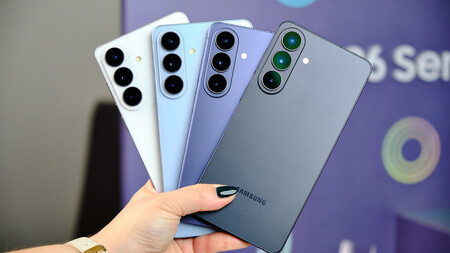
When are the Xiaomi 17s Worth It?
The new generation of Xiaomi has taken a step forward in power, RAM and storage configurations, and battery life.
- If you want more RAM, the Xiaomi 17 Ultra offers a wider variety of storage configurations than the Samsung Galaxy S26 Ultra. This also translates to how much you will spend.
- Both phones in the Xiaomi 17 family incorporate the best Qualcomm processor, while the Samsung Galaxy S26 and Galaxy S26+ come with an Exynos.
- Both the Xiaomi 17 and Xiaomi 17 Ultra have a better fast charge than the Samsung models, which translates to faster battery charging.
- The Xiaomi 17 Ultra will include the photographic kit, a complement that we liked very much in the previous generation.
When are the Samsung Galaxy S26s Worth It?
Samsung has made a statement with its new generation of phones, especially the Galaxy S26 Ultra.
- The privacy screen on the Samsung Galaxy S26 Ultra is a very compelling addition to maintain privacy when traveling by train or subway.
- The Samsung Galaxy S26 Ultra is available in three storage configurations, while the other phones (Samsung and Xiaomi) are only available in two.
- The cameras on the Samsung Galaxy S26 Ultra offer greater versatility because the rear camera module incorporates two x3 and x5 telephoto lenses.
👉 In summary:
- If you want to spend 1,000 euros and value fast charging and power in a phone: Xiaomi 17.
- If you are looking for a greater variety of RAM configurations: Xiaomi 17 Ultra.
- If you are looking for the best features in a phone: Samsung Galaxy S26 Ultra.
- If you are looking for a greater variety of internal storage configurations: Samsung Galaxy S26 Ultra.
Technical Specifications and Main Differences Between the Xiaomi and Samsung Families
|
Xiaomi 17 |
Xiaomi 17 ultra |
Samsung galaxy s26 |
Samsung galaxy s26+ |
Samsung galaxy s26 ultra |
|
|---|---|---|---|---|---|
|
display |
OLED 6.3 inches 2,656 x 1,220 pixels Refresh rate up to 120 Hz (LTPO) |
OLED 6.9 inches 2,608 x 1,200 pixels Refresh rate up to 120 Hz (LTPO) |
AMOLED 2X 6.3 inches FHD+ Resolution Refresh rate up to 120 Hz |
AMOLED 2X 6.7 inches QHD+ Resolution Refresh rate up to 120 Hz |
AMOLED 2X 6.9 inches QHD+ Resolution Refresh rate up to 120 Hz |
|
dimensions and weight |
151.1 x 71.8 x 8.06 mm 191 grams |
162.9 x 77.6 x 8.29 mm 218.4 grams |
149.6 x 71.7 x 7.2 mm 167 grams |
158.4 x 75.8 x 7.3 mm 190 grams |
163.6 x 78.1 x 7.9 mm 214 grams |
|
processor |
Snapdragon 8 Elite Gen 5 |
Snapdragon 8 Elite Gen 5 |
Exynos 2600 |
Exynos 2600 |
Snapdragon 8 Elite Gen 5 for Galaxy |
|
ram |
12 GB |
16 GB |
12 GB |
12 GB |
12 / 16 GB |
|
storage |
256 / 512 GB |
512 GB / 1 TB |
256 / 512 GB |
256 / 512 GB |
256 GB / 512 GB / 1 TB |
|
front camera |
50 MP, f/2.2 |
50 MP, f/2.2 |
12 MP, f/2.2 |
12 MP, f/2.2 |
12 MP, f/2.2 |
|
rear camera |
Main: 50 MP, f/1.67 Ultra wide angle: 50 MP, f/2.4 Telephoto: 50 MP, 2.0 Leica |
Main: 50 MP, f/1.67 Ultra wide angle: 50 MP, f/2.2 Telephoto: 200 MP, f/2.39 Leica |
Main: 50 MP, f/1.8 Ultra wide angle: 12 MP, f/2.2 Telephoto: 10 MP, f/2.4, 3X |
Main: 50 MP, f/1.8 Ultra wide angle: 12 MP, f/2.2 Telephoto: 10 MP, f/2.4, 3X |
Main: 200 MP, f/1.7 Ultra wide angle: 50 MP, f/1.9 Telephoto 1: 50 MP, f/3.4, X5 Telephoto 2: 10 MP, f/2.4, X3 |
|
battery |
6,330 mAh 100W fast charging

previous post
Retro Day & Treasure Hunting at Okazi Thrift StoresThis website uses cookies to improve your experience. We'll assume you're ok with this, but you can opt-out if you wish. Accept Read More |