
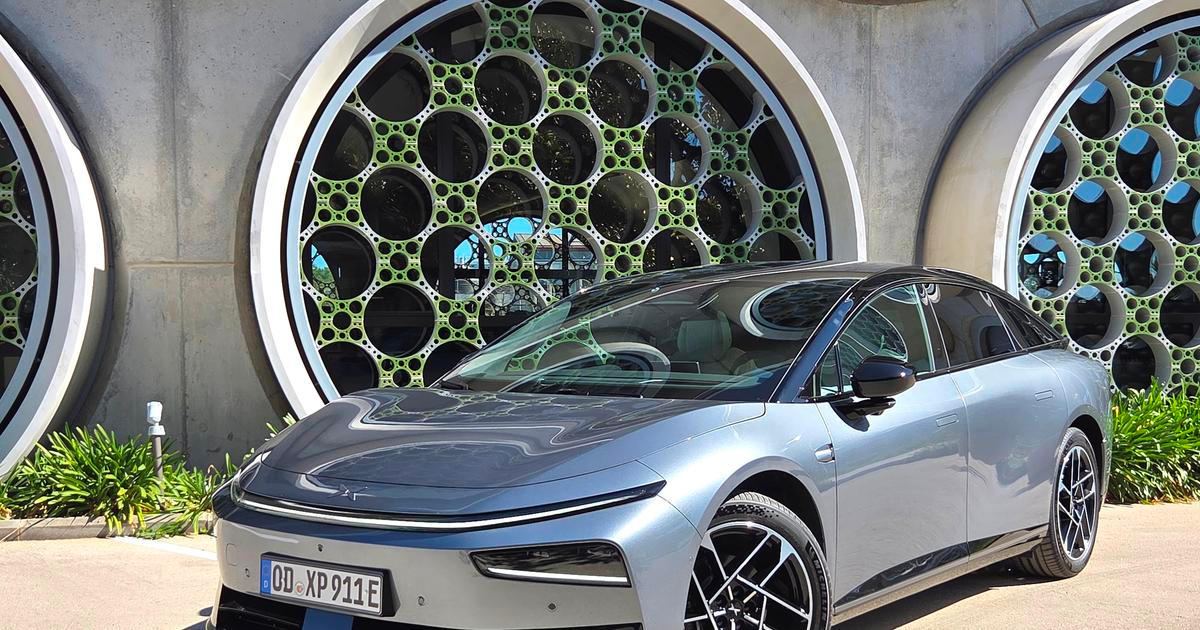
Xpeng P7+: The AI-Driven Liftback Redefining the ‘Smartphone on Wheels’ Concept
Xpeng is challenging traditional automotive norms with the introduction of the P7+, an electric liftback that positions itself as a piece of high-finish consumer electronics as much as a vehicle. While many manufacturers entering the European market focus on the SUV segment, Xpeng is pivoting toward a tech-first approach, blurring the line between automotive engineering and advanced computing.
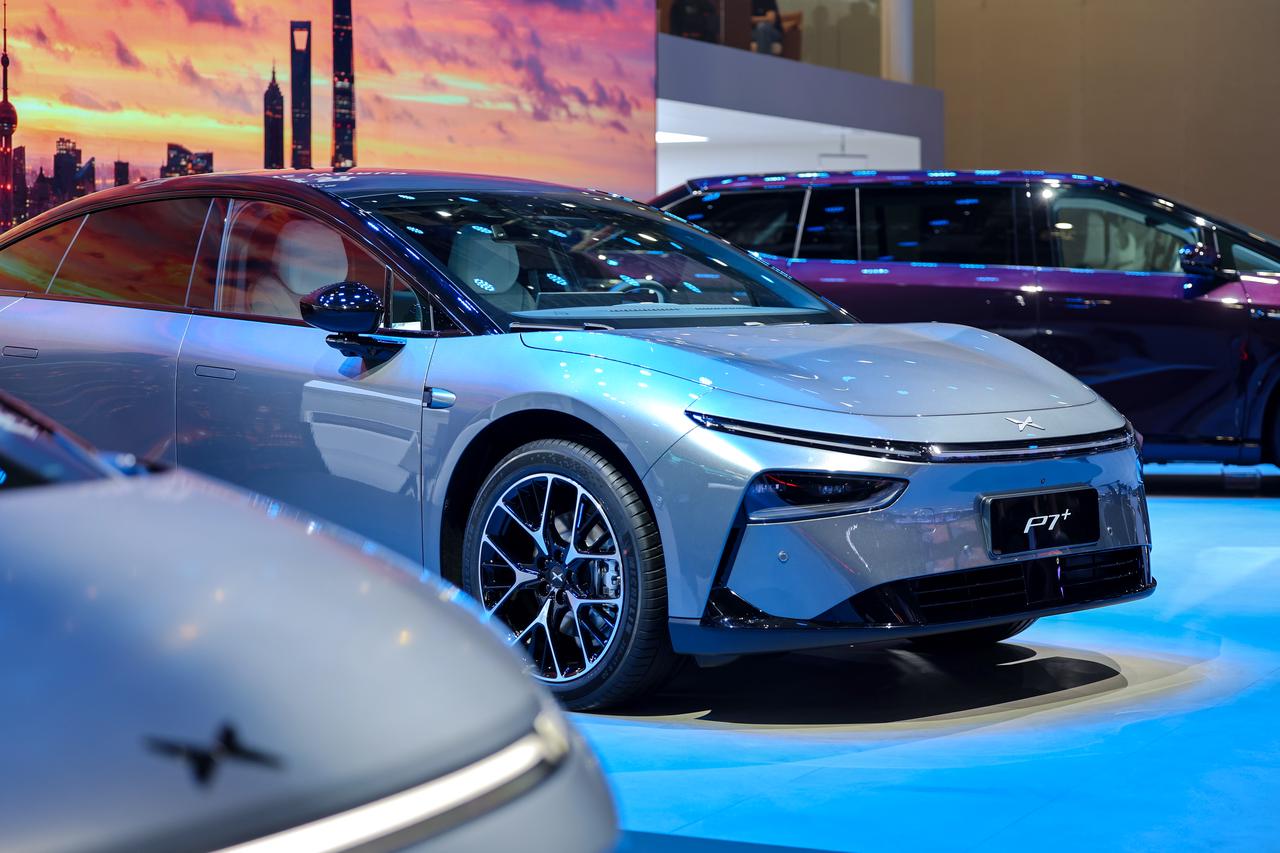
The philosophy behind the P7+ is best summarized by Sven De Smet, Xpeng’s head of European marketing, who asserts that Xpeng is a technology company that happens to manufacture cars, rather than a traditional car company. This distinction is evident in the vehicle’s integration of artificial intelligence and software ecosystems, transforming the driving experience into something akin to using a smartphone.
At the core of the P7+ is the Turing AI chip architecture, which delivers a staggering 750 tera operations per second (TOPS). This represents a significant leap in processing power; when the model first debuted in China in autumn 2024, its computational capacity was nearly half of what is found in the current version. This AI horsepower is utilized not only to run the vehicle’s software but to continuously refine safety assistants by learning from real-world driving scenarios, which in turn informs the development of future Xpeng generations.
The interior experience reinforces this “driving computer” identity. The cabin is centered around a large tablet and a high-value material finish, complemented by a sophisticated transparent display capable of projecting various camera feeds, including the rearview camera. Beyond navigation and vehicle control, the P7+ features a robust app ecosystem with nearly 100 downloadable applications, including major streaming platforms like YouTube, Disney+, and Prime Video.
Under the hood, the P7+ utilizes an 800V electrical architecture, enabling industry-leading charging speeds. According to company data, the vehicle can charge from 10% to 80% in just 12 minutes. Maximum charging speeds vary by battery size, with the smaller unit supporting up to 350 kW and the larger unit reaching 446 kW. The inclusion of V2L (Vehicle-to-Load) bidirectional charging allows the liftback to function as a mobile power bank.
The P7+ measures 5,071 mm in length, 1,937 mm in width, and 1,512 mm in height, with a wheelbase of 3,000 mm. It will be available in three distinct configurations on the Czech market:
- Standard Rear-Wheel Drive: Priced at 1,079,900 CZK, featuring a 180 kW motor, a 61.7 kWh battery, and a range of 455 km.
- Long-Range Rear-Wheel Drive: Priced at 1,199,900 CZK, featuring a 230 kW motor, a 74.9 kWh battery, and a range of 530 km.
- All-Wheel Drive: Priced at 1,309,900 CZK, delivering 370 kW and 660 Nm of torque, with a range of 500 km.
Rounding out the specifications, the vehicle comes with standard LED headlights and a choice of 19-inch or 20-inch wheels. This move toward high-compute, AI-integrated vehicles signals a broader shift in the EV sector, where software capability is becoming as critical a selling point as battery range or horsepower.
For more information on the latest in electric mobility and AI integration, follow the updates at Aktuálně.cz.
