
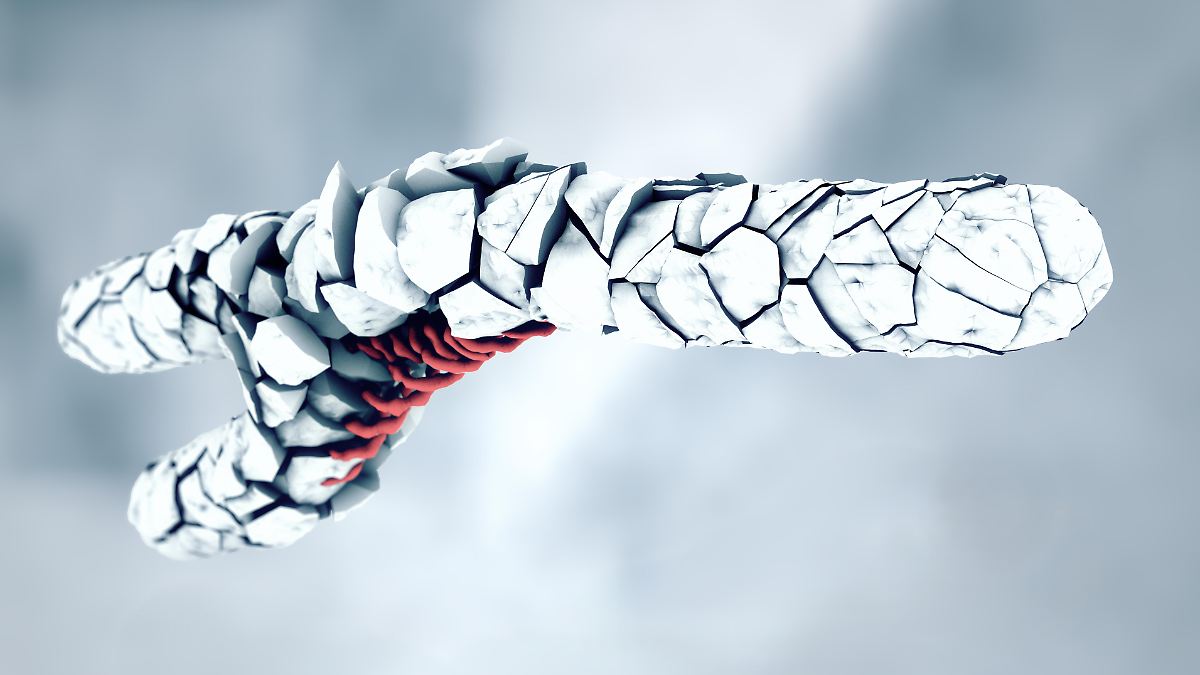
Underestimated Health RiskAs Men Age, Loss of Y Chromosome Linked to Serious Illness


For years, the Y chromosome has been considered expendable. But new research links its loss with age to serious diseases and a shorter lifespan. The proportion of men affected is surprisingly high, even in middle age.
As men age, many experience a loss of the Y chromosome in some of their body’s cells. Researchers previously considered this a biological quirk with few consequences. The Y chromosome carries relatively few genes compared to others – primarily those responsible for male sex development and sperm production. However, evidence is mounting that losing the Y chromosome can have significant health implications, including “diseases throughout the body and a shortened lifespan,” according to geneticist Jenny Graves of La Trobe University, in a contribution to the science portal “The Conversation.” This finding is particularly critical as it highlights previously unknown factors influencing men’s health as they age.
New detection methods reveal that the Y chromosome is surprisingly often missing in the tissues of older men – but not in all cells, rather in a mosaic pattern in only some. The proportion of these Y-lacking cells increases with age: around 40 percent of 60-year-old men show a loss of the Y chromosome in certain tissues and this rises to 57 percent in 90-year-olds, as a “Science” study found four years ago. Environmental factors also play a role; smoking and exposure to carcinogenic substances further increase the likelihood of Y chromosome loss.
A Seemingly Dispensable Chromosome
The human Y chromosome appears expendable at first glance. It contains only 51 protein-coding genes – those containing instructions for making proteins – compared to thousands on other chromosomes. The SRY gene, which controls male development, and several genes necessary for sperm production are well known.
According to expert Graves, however, the Y chromosome also contains several regulatory genes. “In laboratory cell cultures, the Y is most often lost – and it is the only chromosome whose loss does not immediately cause the cell to die.” She adds, “This suggests that no specific functions encoded by Y genes are necessary for cell growth and cell function.” It even appears so unimportant that it has been completely lost or replaced by other chromosomes in some rodent species.
If the Y chromosome is lost in a cell, it does not return. These cells continue to divide, but without the Y chromosome. In cell cultures, such cells even grow faster than normal cells, suggesting they may have a growth advantage within the body – including in tumors. Several studies have linked Y chromosome loss to various cancers, with a loss of the Y chromosome in cancer cells often correlating with a poorer prognosis.
Y chromosome loss is frequently associated with severe kidney disease in kidney cells. Several investigations also point to a connection with cardiovascular disease. A large German study conducted last year found that men over 60 with a high proportion of Y-lacking cells had an increased risk of heart attacks. The Y chromosome loss also likely played a role in severe COVID-19 cases – potentially helping to explain why men are more likely to become seriously ill. Researchers also found a “tenfold higher frequency of Y loss” in Alzheimer’s patients.
Cause or Consequence?
Whether the loss of the Y chromosome directly causes disease or merely accompanies it remains unclear. “Even strong associations do not yet prove causality,” Graves emphasizes. It is conceivable that diseases themselves promote the loss, for example, through increased cell division during repair processes in organs. A genetic instability could also promote both cancer and Y loss.
However, there is also evidence of a direct effect. In a study with mice, researchers transplanted Y-lacking blood cells into irradiated animals. These animals more frequently developed age-related diseases, including impaired heart function and heart failure.
These findings suggest that the Y chromosome performs more functions in body cells than previously thought. “In addition to the well-known genes like SRY, several of the other genes on the Y chromosome have important regulatory functions, including tumor suppressors,” Graves explains. The loss of the Y chromosome may lead to cells having only one functioning copy of certain genes – which could promote dysregulation.
The complete DNA sequence of the human Y chromosome was only deciphered a few years ago. “Over time, we may discover how individual genes cause these negative health effects,” Graves writes. What was long considered an evolutionary remnant could prove to be an underestimated factor in men’s health.
