
NASA’s James Webb Telescope Reveals “Hellish” Rocky Exoplanet LHS 3844 b
Astronomers have achieved an unprecedented look at the surface of a distant rocky world, utilizing the advanced capabilities of NASA’s James Webb Space Telescope to gather the clearest data to date on an exoplanet.

The planet, designated LHS 3844 b—and nicknamed “Quacua,” a word meaning butterfly in an indigenous language of Costa Rica—is a stark reminder of the inhospitable environments that exist beyond our solar system. Located approximately 49 light-years from Earth, the exoplanet orbits a star that is both smaller and dimmer than our own Sun.
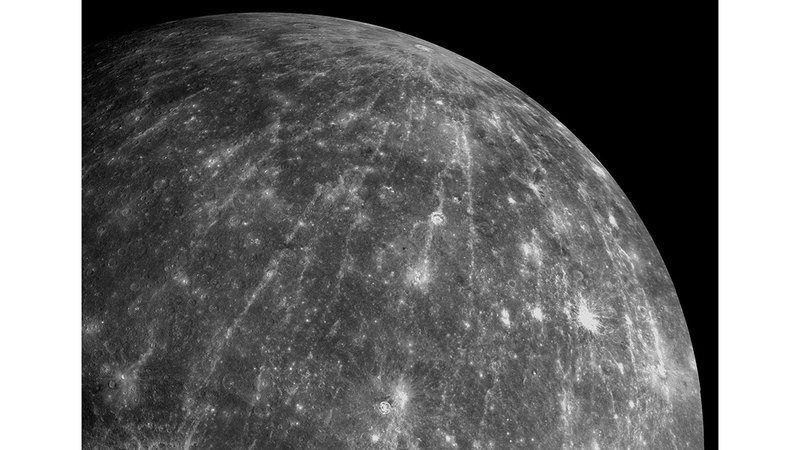
While the planet is rocky and possesses a diameter roughly 30% larger than Earth’s, researchers found that it shares almost no similarities with our home world. Instead, the data suggests a barren, airless wasteland that more closely resembles Mercury, the innermost planet of our solar system.
The lack of a detectable atmosphere has resulted in extreme temperature swings, with one side of the planet remaining scorching hot while the other is freezing cold. This volatility, combined with the absence of air, renders the world entirely uninhabitable.
“This planet is not a nice place,” said astronomer Laura Kreidberg, the Administrative Director of the Max Planck Institute for Astronomy in Germany and lead author of the study. “It is a hellish barren rock, much more like Mercury than Earth. There is no trace of an atmosphere.”
The findings were detailed in a study published last week in the journal Nature Astronomy. This discovery highlights the critical role of the James Webb Space Telescope in advancing our understanding of planetary composition, allowing scientists to distinguish between potentially habitable worlds and those that are merely desolate cosmic rocks.
The ability to analyze the surface and atmospheric conditions of distant exoplanets signals a new era of precision in space exploration, as NASA continues to refine its search for atmospheric markers in the deep reaches of space.
Further details on this rocky discovery and the cosmic revelation can be found in the full report from the Max Planck Institute.
As the James Webb Space Telescope continues its mission, the analysis of “Quacua” and other rocky worlds will likely continue to provide insights into the atmospheric evolution of planets across the galaxy.
