
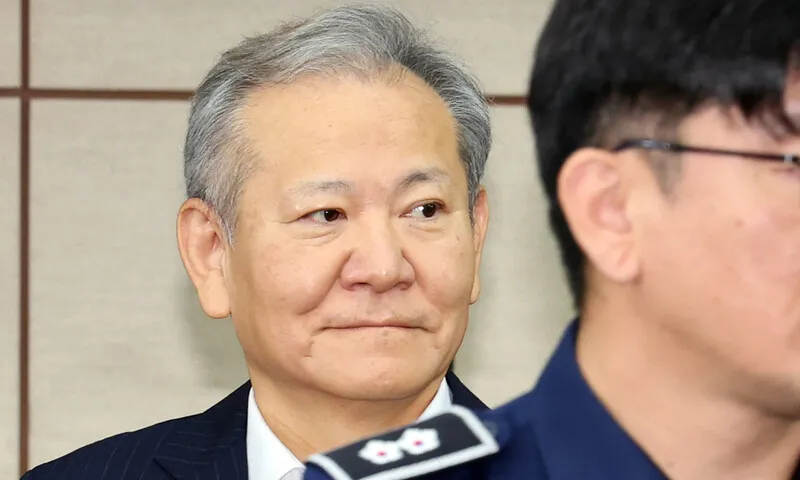
A South Korean court is set to deliver an appeal ruling on Tuesday, May 12, 2026, for former Interior and Safety Minister Lee Sang-min, who was previously sentenced to seven years in prison for his role in an attempt to silence media outlets during a state of emergency.
The Seoul High Court’s Criminal Division 1, led by Presiding Judge Yoon Sung-shik, will announce the verdict at 3:00 p.m. The case centers on Lee’s actions during the December 3 martial law declaration, where he is accused of participating in an insurrection by ordering the National Fire Agency to cut off electricity and water to news organizations critical of the administration, including the Hankyoreh, in an effort to physically block their operations.
The proceedings follow a first-instance trial in February 2026, where the court handed Lee a seven-year sentence. In that ruling, the court determined that Lee, given his high-ranking position, was well aware of the legal requirements and implications of martial law. The court further concluded that Lee issued the directives to cut utility services with the intent of disrupting the constitutional order, having been informed of the situation at the National Assembly via communications with the Commissioner General of the National Police Agency.
The prosecution, led by Special Prosecutor Cho Eun-seok, has remained firm in its sentencing request, seeking 15 years in prison during the appeal’s closing arguments on April 22, matching the original demand from the first trial.
Beyond the insurrection charges, Lee is accused of perjury. Prosecutors allege he provided false testimony during former President Yoon Suk-yeol’s impeachment trial in February, claiming he never received orders to cut off utilities from the president nor passed such instructions to the Fire Agency.
The first-instance court established a clear chain of command for the utility cuts, tracing the orders from former President Yoon Suk-yeol to former Prime Minister Han Duck-soo, then to Lee Sang-min, and finally to former Fire Commissioner Heo Seok-gon. However, the initial court did clear Lee of separate charges of abuse of power regarding the specific manner in which he directed the Fire Commissioner and local fire stations.
This case underscores the legal scrutiny surrounding the use of state power to suppress press freedom during political crises and the accountability of high-ranking officials in the execution of emergency decrees.
