

Astronomers have captured the first images of comet 3I/ATLAS, a rare interstellar visitor currently traveling through our solar system. Confirmed by NASA as posing no impact threat, the comet-only the third of it’s kind ever detected-presents a unique opportunity to study materials originating from beyond our galaxy adn learn more about planetary system formation. Despite initial images appearing faint, scientists are closely tracking 3I/ATLAS with multiple instruments, hoping to unlock further clues about its composition and origin.
The first images of comet 3I/ATLAS, currently traveling through our solar system, released by NASA today are generating discussion among scientists and space enthusiasts alike. While NASA has confirmed the comet poses no threat of impact to any planets, its arrival offers a unique opportunity to study objects originating from beyond our galaxy.
Stay informed about the latest technology news and follow everything on tek.sapo.pt
3I/ATLAS is the third interstellar object – meaning it originated outside our galaxy – identified passing through our solar system. NASA Administrator Amit Kshatriya addressed recent speculation, confirming “3I/Atlas is a comet” and expressing enthusiasm for the public’s interest in the phenomenon. This discovery underscores the ongoing search for objects that can reveal more about the formation of planetary systems and the potential for life beyond Earth.
“We are very eager to find signs of life in the universe,” Kshatriya stated, emphasizing the object’s interstellar origin and dismissing rumors that it might be an extraterrestrial spacecraft.
Multiple instruments are focused on observing the comet and tracking its trajectory, but the image NASA shared today has been met with some disappointment online. The image appears as a faint, blurry patch of light.
The images, captured by the STEREO (Solar Terrestrial Relations Observatory) between September 11th and October 2nd, are being widely discussed on social media. The mission aims to study the Sun’s activity and its influence on the solar system, and has been observing the interstellar visitor.
Another image was obtained by the Solar and Heliospheric Observatory (SOHO), a joint NASA and ESA project, between October 15th and 26th, from a distance of 237 million miles.
Many Questions, Few Definitive Answers
During a press briefing, NASA scientists explained that obtaining clear images of the comet is challenging. “Space is big, and everyone is looking [at the comet]. It’s like being at a baseball stadium – everyone with a camera is trying to take a picture of the ball, and no one has a perfect view,” one researcher explained.
See the livestream of the conference on X
Early data suggests the comet releases more carbon dioxide than water, a characteristic that requires further investigation.
“Every object we discover is a piece of the puzzle to learn more about the Universe,” said NASA Administrator Amit Kshatriya.
The comet was first discovered in July, with NASA releasing initial images in September. In recent days, China’s Tianwen 1 probe on Mars and telescopes from the Virtual Telescope Project on Earth have captured images showing the evolution of the mysterious interstellar comet 3I/ATLAS.
Since its discovery, 3I/ATLAS has captivated the scientific community, and numerous ground-based telescopes, as well as space missions, have been able to track its passage through our solar system, as seen in the gallery below.
Click on the images for a closer look
The comet’s trajectory makes continued observation difficult, but scientists have access to a variety of instruments, and those interested can also follow the interstellar traveler on the Eyes NASA website.
créditos: NASA
” data-title=”rota do 3I/Atlas – 3I/ATLAS: NASA revela o que já sabe sobre o visitante interestrelar e mostra imagens – Tek Notícias”> 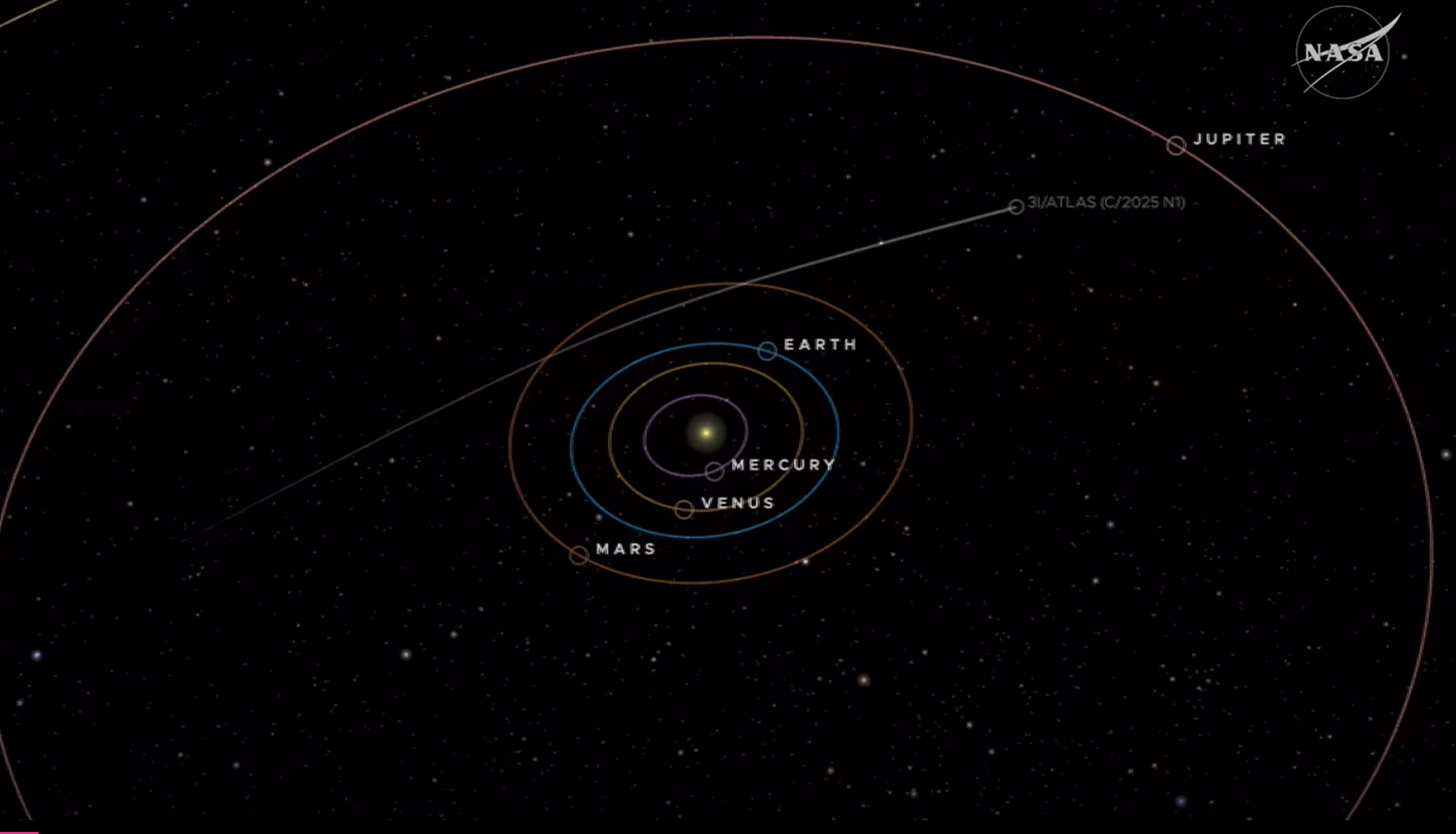
The collected data will be made publicly available, and NASA plans to share further information in the coming weeks and months.
Subscribe to the TEK Notícias newsletter and receive the main technology news in your inbox every day.
Note from the Editorial Team: This article was updated with more information. Last updated 9:22 PM.
