

Ford’s latest electric Mustang is turning heads with its jaw-dropping performance, but some critics argue the iconic muscle car’s soul is fading in its shift to battery power.
The Electric Mustang: A Powerhouse with a Split Personality
When Ford unveiled the Mustang Mach-E in 2020, it wasn’t just another electric vehicle—it was a bold statement. The automaker took one of America’s most legendary nameplates and reimagined it for the EV era. But as the Mach-E evolves, so does the debate: Is this still a Mustang, or just a fast electric SUV with a famous badge?
The latest iterations of the Mach-E deliver performance that would make even traditional muscle car fans take notice. The Mach-E GT, for instance, packs a staggering 480 horsepower in its all-wheel-drive configuration, propelling it from 0 to 60 mph in just 3.5 seconds. For comparison, that’s quicker than some of the most revered sports cars on the road today. Yet, despite these numbers, some automotive enthusiasts argue that the Mach-E lacks the raw, visceral connection that defined the original Mustang.
“It’s a great electric vehicle,” said one reviewer in a 2023 test drive of the Mach-E AWD Premium. “But is it a Mustang? That’s a harder question to answer.” The review noted that although the Mach-E excels in acceleration and handling, it doesn’t quite replicate the throaty growl of a V8 or the tactile feedback of a manual transmission—elements that have long been synonymous with the Mustang brand.
Performance vs. Identity: The Mach-E’s Growing Pains
Ford has continued to refine the Mach-E, introducing new variants like the Mach-E Rally, a high-performance version designed for off-road enthusiasts. Unveiled in early 2025, the Rally edition boasts 450 horsepower and an adaptive suspension system, making it one of the most capable electric SUVs in its class. Yet, even with these upgrades, the question persists: Does the Mach-E’s performance compensate for what some see as a loss of identity?
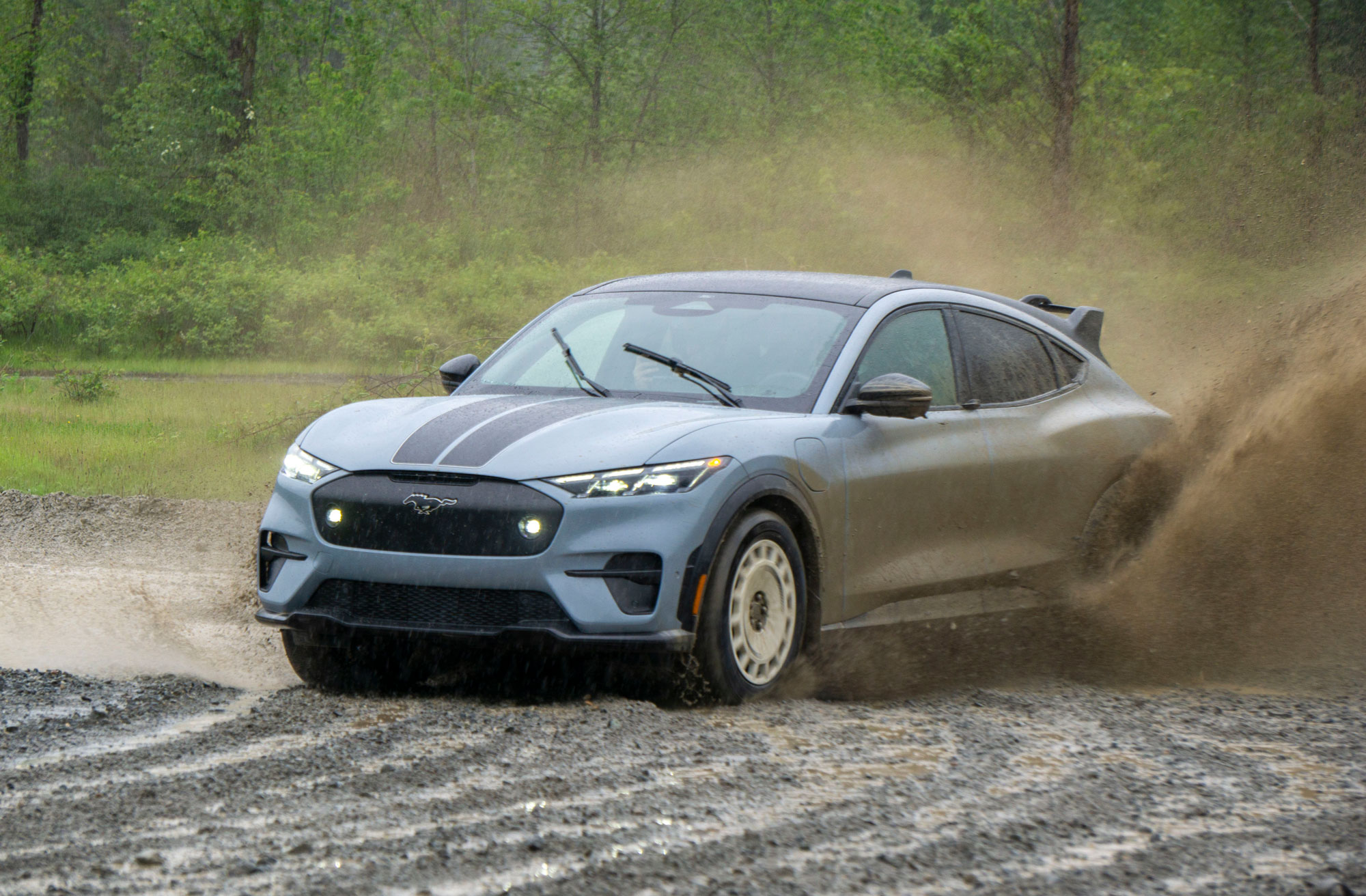
Part of the issue lies in the Mach-E’s design. While the exterior pays homage to the Mustang’s iconic styling—with its long hood, aggressive stance and tri-bar taillights—the interior tells a different story. The cabin is sleek and modern, packed with cutting-edge tech like Ford’s BlueCruise hands-free driving system and a panoramic sunroof. But for purists, these features experience more like those of a premium electric SUV than a true Mustang.
“The Mach-E is a fantastic electric vehicle,” another reviewer noted in a 2023 comparison test. “But it’s missing the soul of the Mustang. There’s no roar, no rumble—just silence and speed.” The review highlighted that while the Mach-E’s acceleration is undeniably impressive, the experience lacks the emotional engagement that has defined Mustang ownership for decades.
Ford’s Gamble: Can an Electric Mustang Win Over Purists?
Ford’s decision to electrify the Mustang was never going to be an easy sell. The Mustang has been a symbol of American automotive culture since its debut in 1964, and its transition to electric power represents a seismic shift for the brand. The Mach-E isn’t just competing with other electric SUVs—it’s competing with its own legacy.
Yet, Ford has doubled down on the Mach-E’s performance credentials. The GT Performance Edition, introduced in late 2022, pushes the boundaries even further with 480 horsepower and a 0-60 mph time of 3.5 seconds. For context, that’s faster than the Porsche Taycan 4S, a direct rival in the high-performance electric segment. These numbers suggest that Ford isn’t just dabbling in the EV space—it’s aiming to lead it.
But performance alone may not be enough to silence the critics. In a 2022 review of the Mach-E GT, one tester wrote, “It’s fast, no doubt. But where’s the character? The Mustang has always been about more than just speed—it’s about attitude, about rebellion. The Mach-E feels more like a well-engineered appliance than a muscle car.”
The Road Ahead: What’s Next for the Electric Mustang?
As Ford continues to iterate on the Mach-E, the company faces a delicate balancing act. On one hand, it must push the boundaries of electric vehicle technology to stay competitive in a rapidly evolving market. On the other, it must preserve the essence of what makes a Mustang a Mustang—a challenge that grows more complex with each new iteration.
Recent reports suggest that Ford is already working on the next generation of the Mach-E, with rumors of even more powerful variants and advanced autonomous driving features. If these developments approach to fruition, the Mach-E could solidify its place as a leader in the electric performance segment. But whether it can ever truly replace the gasoline-powered Mustangs of the past remains an open question.
For now, the Mach-E stands as a testament to Ford’s ambition—a bold attempt to redefine one of the most iconic nameplates in automotive history. Whether it succeeds in winning over skeptics may depend less on its specs and more on its ability to capture the spirit of the original Mustang. And that, as any enthusiast will tell you, is a much harder metric to measure.
As the automotive industry continues its shift toward electrification, the Mach-E serves as a case study in how legacy brands can adapt—or risk losing what made them special in the first place. For Ford, the challenge is clear: Can it build an electric Mustang that’s not just fast, but unforgettable?
