
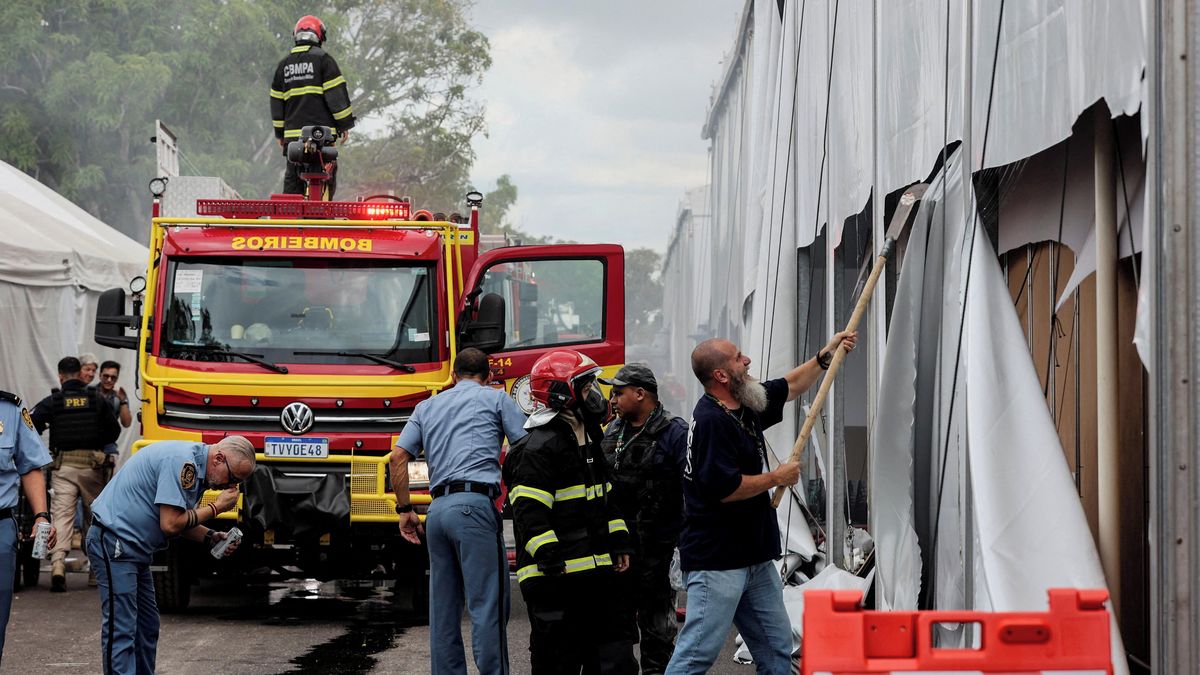
Belém, Brazil – Teh UN Climate Change Conference, COP30, currently underway in Belém, has been marked by a fire in the high-security “blue zone” thursday, resulting in 27 individuals treated for injuries adn six remaining hospitalized as of Friday [[1]]. Despite the disruption, negotiations continue at the critical summit, where world leaders are attempting to build on previous agreements – and address growing divisions – regarding global climate action [[2]].The conference, scheduled to conclude Friday but likely to be extended, is taking place at a pivotal moment in international efforts to avert the worst effects of climate change [[3]].
Six people remain hospitalized following a fire at the COP30 climate conference in Belém, Brazil, on Thursday, according to local authorities. A total of 27 individuals were treated in hospitals as a result of the blaze.
The incident occurred within the “blue zone” of the conference – the highly secured area reserved for accredited delegates and observers – but did not disrupt proceedings on Friday. The blue zone reopened Thursday evening.
The annual COP conferences are critical gatherings where world leaders attempt to forge consensus on addressing the climate crisis, and disruptions can impact delicate negotiations. In a sign of the logistical challenges caused by the fire, one bilateral agreement – between the Pacific island nation of Vanuatu and the United Nations program supporting developing countries – was signed in a local bakery, G1 reported.
While COP30 was originally scheduled to conclude on Friday, November 22, organizers now anticipate the conference may extend beyond its initial timeframe, mirroring previous UN climate summits. COP30 President Correa do Lago acknowledged to Agencia Brasil that reaching a consensus could prove difficult, potentially delaying the conference’s end date.
A draft of the final declaration released Friday morning has already drawn criticism from at least 30 countries for failing to include a “roadmap” for phasing out fossil fuels. More than 80 nations had previously identified such a roadmap as essential in combating global warming and had urged its inclusion in the final document, calling for specific timelines for reducing reliance on oil, gas, and coal.
The push for phasing out fossil fuels follows a landmark agreement reached at COP28 in Dubai in December 2023, where nearly 200 countries acknowledged the need to reduce their use. That agreement marked the first time a UN climate conference explicitly mentioned oil, gas, and coal as primary drivers of emissions. However, the commitment to move away from fossil fuels was notably absent from the agreement reached at COP29 in Baku, Azerbaijan.
The proposed declaration from Belém also emphasizes the importance of increased financial contributions from developed nations to help developing countries address the consequences of climate change. A significant increase in climate finance for developing nations was agreed upon at COP29 in Baku after extensive negotiations.
COP30, which began on November 11, is being held in Belém, a city situated at the gateway to the Amazon rainforest. A separate climate summit took place in Belém the week prior to the official start of COP30.
